
Pattern Differentiation & Treatment
TCM for Allergies & Allergic Rhinitis: Strengthening the Body Defenses
Learn how Traditional Chinese Medicine approaches allergies and allergic rhinitis. Strengthen your wei qi with herbs like Astragalus, acupressure techniques, and dietary changes for lasting relief.
The TCM View: Allergies as a Wei Qi Deficiency
In Western medicine, allergies are an overreaction of the immune system to harmless substances. In TCM, the explanation is different: allergies represent a weakness in the body's protective barrier known as wei qi (defensive qi).
Wei qi circulates just beneath the skin, acting as the body's first line of defense against external pathogens. When wei qi is strong, seasonal changes, wind, cold, and pollen pass by without effect. When wei qi is weak, the "pores" (the skin's protective openings) remain open, and external pathogens — particularly wind and cold — enter easily.
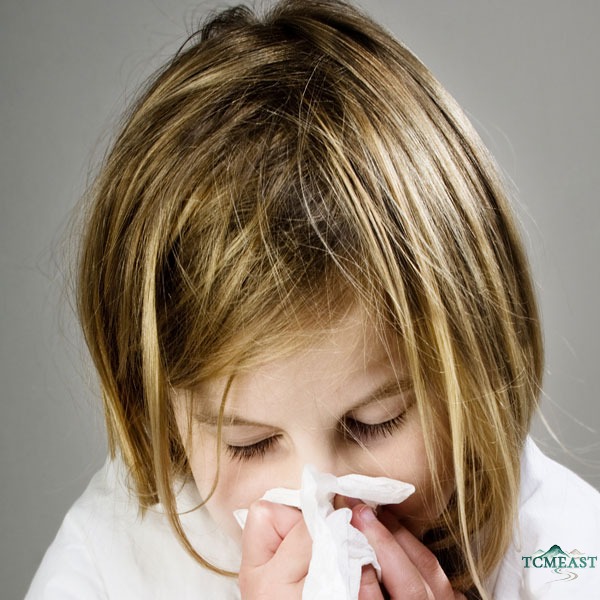
This is why allergy symptoms typically involve the upper respiratory tract: sneezing, runny nose, nasal congestion, itchy eyes, and sinus pressure. These are signs of the body unsuccessfully trying to expel an invading pathogen.
In TCM, the root treatment for allergies is not to suppress the immune response, but to strengthen the body's defensive barrier so that allergens cannot penetrate in the first place.
The Key Pattern: Lung and Spleen Qi Deficiency with Wind Invasion
Most seasonal allergies in TCM are classified as a combination of:
- Lung qi deficiency — weakens wei qi circulation to the skin and nose
- Spleen qi deficiency — reduces the body's ability to produce wei qi from food
- Wind-cold or wind-heat invasion — the external trigger that the weakened body cannot repel
The Master Formula: Yu Ping Feng San (Jade Windscreen Powder)
This is the most famous TCM formula for allergy prevention. The name is a metaphor: just as a windscreen protects a candle flame, Yu Ping Feng San protects the body from invading wind.
Three ingredients, perfectly balanced:
| Herb | Role | Action |
|---|---|---|
| Huang Qi (Astragalus) | Emperor — tonifies wei qi | Strengthens the body surface |
| Bai Zhu (Atractylodes) | Minister — strengthens Spleen qi | Supports qi production |
| Fang Feng (Ledebouriella) | Assistant — expels wind | Removes pathogens while Huang Qi holds the surface |
Together, this formula builds the body's defenses while gently clearing any wind that has already entered. It is used preventively — taken for 4-8 weeks before allergy season begins, and maintained throughout the season.
Key Herbs for Allergy Relief
Huang Qi (Astragalus) — The Immune Foundation
Sweet and warm, enters Lung and Spleen. The single most important herb for strengthening wei qi. Best used preventively over weeks to months.
Standard daily dose: 9-15g in decoction or as a tea.
Fang Feng (Ledebouriella / Saposhnikovia)
Pungent and warm, enters Bladder, Liver, and Spleen. Expels wind and relieves pain. Unique among wind-expelling herbs — it works gently and can be used long-term.
Cang Er Zi (Xanthium Fruit)
Bitter and warm, enters Lung. Specifically targets the nose — relieves nasal congestion, sinus headache, and runny nose. Often combined with Xin Yi Hua.
Caution: Raw Xanthium is mildly toxic — always use prepared (processed) form.
Xin Yi Hua (Magnolia Flower)
Pungent and warm, enters Lung and Stomach. Opens the nasal passages and relieves sinus congestion. One of the most specific herbs for nasal symptoms in TCM.
Gan Cao (Licorice Root)
Sweet and neutral. Harmonizes formulas, moderates harsh herbs, and has its own anti-inflammatory and anti-allergic properties.
Acupressure Points for Allergy Relief
Practice these daily during allergy season for best results.
Ying Xiang (LI20, Welcome Fragrance)
Location: In the nasolabial groove, beside the midpoint of the nostril.
Action: THE point for nasal congestion, runny nose, and sinus pressure.
Technique: Press with index fingers, gently rolling the point in small circles for 1-2 minutes until the nose feels clearer.
Zu San Li (ST36, Leg Three Miles)
Location: Four finger-widths below the kneecap, one finger-width outside the shinbone.
Action: Strengthens digestive qi and builds overall resistance. One of the most important points for immune health.
Technique: Press firmly for 1-2 minutes on each leg daily.
Da Zhui (DU14, Great Vertebra)
Location: On the midline of the neck, in the depression below the 7th cervical vertebra (the most prominent bone when you nod your head down).
Action: Meeting point of all yang meridians. Releases exterior wind-cold and boosts wei qi.
Technique: Gentle pressure or circular massage for 1 minute. A warm compress on this area after pressing is also beneficial.
Fei Shu (BL13, Lung Shu)
Location: 1.5 finger-widths lateral to the lower border of the 3rd thoracic vertebra.
Action: Back-shu point of the Lung. Strengthens Lung qi and regulates defensive qi.
Technique: Have a partner press firmly but gently for 1 minute on each side, or use a massage ball against a wall.
Herbal Tea for Allergy Season
Jade Windscreen Daily Tea (Astragalus & Ginger)
A simple daily tea to strengthen immunity during allergy season.
Ingredients:
- Huang Qi (Astragalus) 10g
- Bai Zhu (Atractylodes) 6g
- 3 slices fresh ginger
- 2 red dates (jujubes)
- 500ml water
Method:
- Combine all ingredients in a pot
- Add water and bring to a boil
- Reduce to a simmer for 15 minutes
- Strain and drink throughout the day
Ginger & Scallion Soup (For Acute Symptom Relief)
When allergy symptoms first appear, this warm, pungent soup can help expel the invading wind-cold.
Ingredients:
- 3-4 slices fresh ginger
- 2 chopped green onions (white part only)
- 1 tablespoon brown sugar
- 300ml water
Method:
- Simmer ginger in water for 10 minutes
- Add scallion and cook 2 more minutes
- Remove from heat, stir in brown sugar
- Drink hot and rest
Allergen-Friendly Congee
Ingredients:
- Rice 50g
- Chinese yam (dried) 15g
- Astragalus slices 10g
- 3 red dates
- 600ml water
Method:
- Simmer Astragalus in water for 20 minutes, then remove the slices
- Add rice, yam, and red dates to the Astragalus water
- Simmer for 30 minutes until congee is thick and creamy
- Serve warm with a dash of honey if desired
Seasonal Living Tips for Allergy Prevention
- Wear a scarf over your nose and mouth on windy days — This is a direct application of the "windscreen" principle. Protecting the neck and nose from wind reduces allergic triggers.
- Avoid cold, raw foods during allergy season — Raw foods weaken Spleen qi and increase phlegm production. Opt for warm, cooked meals instead.
- Sleep by 11 PM — The Lung meridian is most active between 3-5 AM. Deep sleep during this time supports Lung function and wei qi production.
- Gentle morning exercise — Light stretching or qigong helps circulate wei qi to the body surface before the day begins.
- Neti pot with salt water — While not TCM per se, nasal rinsing aligns with the TCM principle of clearing pathogens before they can penetrate deeper.
This article is for educational purposes only. Always consult a qualified practitioner before starting any herbal regimen.
