
Pattern Differentiation & Treatment
TCM for Digestion & Gut Health: Herbs, Acupressure, and Dietary Wisdom
Discover how Traditional Chinese Medicine supports digestion and gut health — strengthening Spleen qi with herbs, acupressure points for bloating and indigestion, and time-tested dietary wisdom for a healthy digestive system.
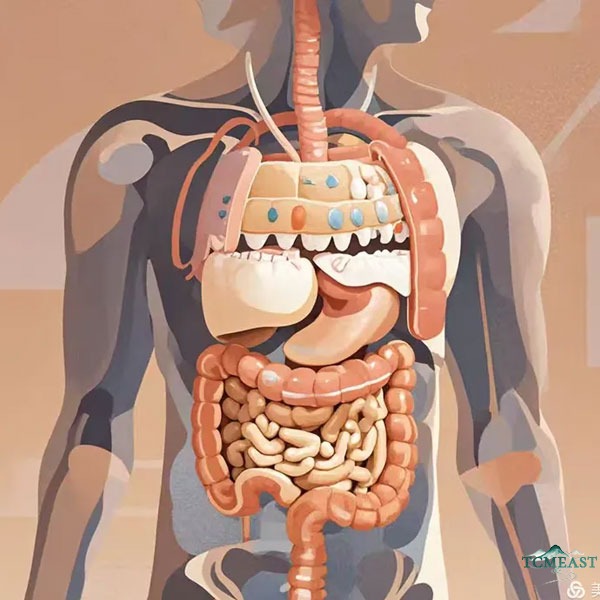
The TCM View: The Spleen as the Root of Digestion
In Traditional Chinese Medicine, the digestive system is governed by the Spleen — an organ system that goes beyond the anatomical spleen to encompass the entire process of transforming food into qi and blood. The Spleen's most important job is "transportation and transformation" — converting the food we eat into usable energy and distributing it throughout the body.
When the Spleen is strong, digestion is effortless, energy is steady, and the body is well-nourished. When the Spleen is weak, everything suffers: food sits undigested, energy flags, dampness accumulates, and over time, the entire body becomes deficient.
The modern lifestyle is uniquely hard on Spleen qi: irregular meal times, processed foods, excessive sugar, cold drinks, overthinking and worry — all of these directly impair Spleen function. This is why digestive complaints are among the most common reasons people seek TCM treatment in both China and the West.
The Key Pattern: Spleen Qi Deficiency with Dampness
Most chronic digestive issues in TCM trace back to some variation of Spleen qi deficiency, often with accompanying dampness:
| Key Signs | Tongue | Pulse |
|---|---|---|
| Poor appetite, bloating after meals, loose stools or constipation, fatigue, heavy limbs, brain fog, pale complexion, weak muscles | Pale body, possible teeth marks on edges, greasy coating | Weak, soft (ruo mai) |
Key Herbs for Digestive Health
Bai Zhu (Atractylodes macrocephala, 白术) — The Spleen Qi Builder
Bitter, sweet, and warm. Bai Zhu enters the Spleen and Stomach meridians and is the single most important herb for strengthening the Spleen's transportation and transformation function. It dries dampness while tonifying qi — a dual action that few other herbs possess.
Best for: Poor appetite, loose stools, bloating, fatigue after eating.
Standard dose: 6-15g in decoction. Bran-fried Bai Zhu (麸炒白术) is gentler and better for long-term use.
Chen Pi (Tangerine Peel, 陈皮) — The Qi Mover
Pungent, bitter, and warm. Chen Pi is the classic herb for moving stagnant qi in the digestive tract. Its aromatic quality "wakes up" the Spleen and its drying quality eliminates dampness.
Best for: Bloating, belching, nausea, a feeling of fullness after eating.
Standard dose: 3-10g in decoction, added in the last 5 minutes.
Shan Yao (Chinese Yam, 山药) — The Gentle Tonic
Sweet and neutral. Shan Yao is unique among digestive herbs because it is safe even for infants and severely debilitated patients. It gently tonifies Spleen, Lung, and Kidney qi without causing stagnation.
Best for: Chronic poor appetite, diarrhea, weak digestion in children or the elderly.
Standard dose: 10-30g in decoction or congee. Also used as a daily food.
Mai Ya (Germinated Barley, 麦芽)
Sweet and neutral, enters Spleen and Stomach. Promotes digestion of starches, reduces stagnation, and is especially useful for poor appetite from overeating. Also benefits the Liver by soothing qi stagnation.
Best for: Starch indigestion, abdominal distension, poor appetite.
Shen Qu (Medicated Leaven, 神曲)
Sweet, pungent, and warm. A fermented preparation made from six grains, Shen Qu promotes the digestion of all types of food and is especially effective when combined with other digestive herbs.
The Master Formula: Si Jun Zi Tang (Four Gentlemen Decoction)
The foundation of all Spleen-strengthening formulas. Simple, balanced, and profoundly effective.
| Herb | Dose | Role |
|---|---|---|
| Ren Shen (Ginseng) | 6g | Emperor — strongly tonifies Spleen qi |
| Bai Zhu (Atractylodes) | 9g | Minister — strengthens Spleen, dries dampness |
| Fu Ling (Poria) | 9g | Assistant — drains dampness, calms spirit |
| Gan Cao (Licorice) | 3g | Envoy — harmonizes all herbs |
Combined with a small amount of Chen Pi (3g), this becomes Yi Gong San — "Extraordinary Merit Powder" — with enhanced qi-moving action.
Acupressure Points for Healthy Digestion
Zu San Li (ST36, Leg Three Miles, 足三里)
Location: Four finger-widths below the kneecap, one finger-width toward the outside of the shinbone.
Action: The most important digestive point in the body. Strengthens Spleen and Stomach qi, builds overall vitality, and regulates the immune system. In classical TCM, it was taught that stimulating this point daily is sufficient to maintain digestive health.
Technique: Press firmly with your thumb for 1-2 minutes on each leg. A warm sensation descending the leg is a good sign. Best done before meals.
Zhong Wan (CV12, Middle Cavity, 中脘)
Location: On the midline of the abdomen, midway between the navel and the bottom of the breastbone.
Action: Front collecting point of the Stomach. Directly regulates Stomach qi, relieves bloating, nausea, and acid reflux.
Technique: Gentle circular massage with the palm for 2-3 minutes. For bloating, press in a clockwise direction. For nausea, press in a counterclockwise direction.
Tian Shu (ST25, Celestial Pivot, 天枢)
Location: Two finger-widths to either side of the navel.
Action: Front collecting point of the Large Intestine. Regulates bowel movements — useful for both constipation and diarrhea.
Technique: Press with both thumbs simultaneously for 1-2 minutes.
Pi Shu (BL20, Spleen Shu, 脾俞)
Location: 1.5 finger-widths lateral to the lower border of the 11th thoracic vertebra.
Action: Back-shu point of the Spleen. Directly tonifies Spleen qi and strengthens the digestive system.
Technique: Best stimulated by a partner or using a massage ball against a wall. Press firmly for 1 minute on each side.
Tea and Congee Recipes for Digestive Health
Chen Pi & Ginger Digestive Tea
A simple, warming tea for bloating and digestive sluggishness.
Ingredients:
- 1 small piece aged Chen Pi (about 2g)
- 3 slices fresh ginger
- 1 red date (jujube)
- 300ml water
Method:
- Rinse the Chen Pi briefly and place in a cup with ginger and red date
- Pour boiling water over the ingredients
- Steep for 10 minutes
- Sip slowly after meals
Chinese Yam & Lotus Seed Congee
A nourishing breakfast congee that gently strengthens the Spleen.
Ingredients:
- 50g rice
- 20g dried Chinese yam (or 100g fresh yam)
- 15g lotus seeds (dried)
- 5 red dates
- 800ml water
Method:
- Soak lotus seeds for 2 hours (or overnight)
- Combine all ingredients in a pot
- Bring to a boil, then simmer for 40 minutes until thick
- Serve warm with a pinch of salt
Four Gentlemen's Soup (Si Jun Zi Tang Soup)
A nourishing soup based on the classic formula, adapted for daily consumption.
Ingredients:
- 10g dried Chinese yam
- 10g Fu Ling
- 8 red dates
- 100g chicken breast or lean pork
- 3 slices fresh ginger
- 800ml water
Method:
- Blanch the meat in boiling water for 2 minutes, drain
- Combine all ingredients in a pot
- Bring to a boil, then reduce to a simmer for 1.5 hours
- Season with a pinch of salt
- Drink the broth and eat the solids
TCM Dietary Principles for Healthy Digestion
- Eat warm, cooked food — Raw and cold foods weaken Spleen qi. Warm foods are partially pre-digested and require less energy from the Spleen.
- Chew thoroughly — Digestion begins in the mouth. TCM teaches that the Spleen processes what the mouth prepares. Thorough chewing is the first act of digestive support.
- Regular meal times — The Spleen works best on a predictable schedule. Irregular eating patterns confuse the Spleen's rhythm.
- Smaller portions, more frequent meals — Overwhelming the Spleen with large meals creates dampness and stagnation.
- Reduce raw vegetables, increase cooked greens — In TCM, raw vegetables are "cold" and "damp" — they weaken digestive fire. Lightly steaming or stir-frying vegetables makes them easier to digest.
- Limit sugar and dairy — Both are considered dampness-producing foods in TCM. Excess dampness impairs Spleen function and leads to bloating, loose stools, and fatigue.
- Avoid drinking large amounts of water with meals — Fluids dilute digestive enzymes and weaken the Spleen's "digestive fire." Sip warm water between meals instead.
Daily Digestive Self-Care Routine
Morning (7-9 AM — Stomach hour):
- Drink a cup of warm water with a slice of ginger
- Eat a warm breakfast (congee, oatmeal, or soup — not cold cereal or yogurt)
Midday (11 AM - 1 PM — Heart hour, but Spleen's strongest period):
- Eat your largest meal when digestive fire is at its peak
- Walk slowly for 10-15 minutes after eating
Afternoon (1-3 PM — Small Intestine hour):
- Avoid snacking — let the Small Intestine do its work
Evening:
- Eat a light dinner (soup or congee) at least 3 hours before sleep
- Massage Zhong Wan (CV12) in a clockwise direction 36 times
This article is for educational purposes only. Always consult a qualified practitioner before starting any herbal regimen.
