
Stir-Fries
Stir-Fried Celery and Lily Bulbs
Stir-fried celery and lily bulbs is a minimalist vegetable dish defined by its clarity, crispness, tenderness, and purity of color – the vibrant green of celery contrasting beautifully with the pristine white of lily bulbs. On the palate, the refreshing crunch of celery interplays with the delicate crispness of lily bulbs, while celery's slight herbal bitterness is gently balanced by the subtle sweetness of lily. Lightly seasoned with just garlic and salt, this dish celebrates the natural flavors of its ingredients – a true embodiment of "light cooking, premium ingredients," beloved by those who appreciate clean eating.
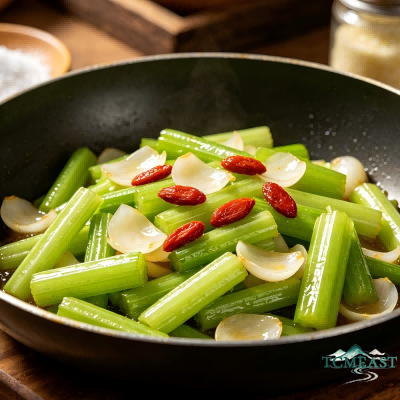
Main Ingredients
- Celery 300g
- Fresh lily bulbs 150g
- Garlic 2 cloves
- Goji berries 10g
- Cooking oil 15ml
- Salt to taste
- A pinch of chicken bouillon or vegetable bouillon a pinch of
Steps
Remove celery leaves (save for other uses). Wash and cut into 4-5cm sections. If using thick-stemmed celery, split in half lengthwise before cutting. Separate fresh lily bulbs into petals, gently rinse to remove sand and debris, and drain. Soak goji berries in warm water until soft, then drain.
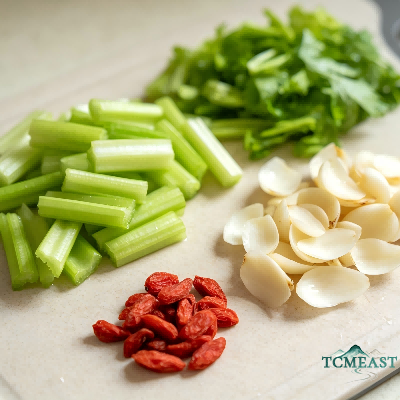
Bring water to a boil with a few drops of oil and a pinch of salt to preserve green color. Blanch celery for 30-40 seconds (or about 1 minute for thick-stemmed celery). Immediately transfer to ice water, drain, and set aside. (Lily bulbs do not need blanching – stir-frying them directly preserves their crisp, sweet texture.)
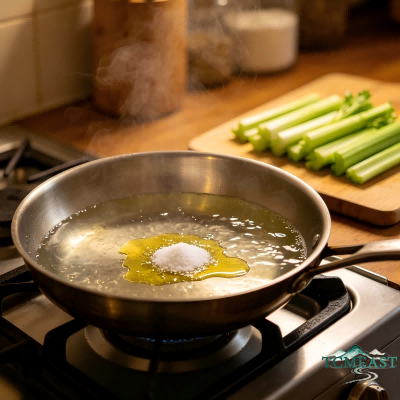
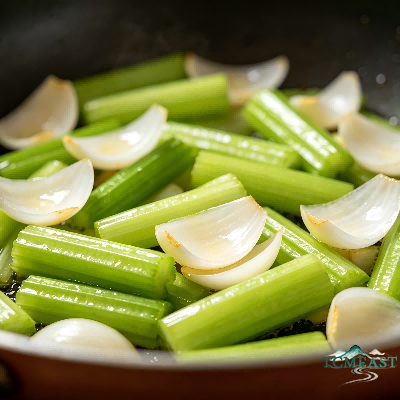
Heat oil in a wok over low heat, add garlic slices, and sauté until fragrant. Increase to medium-high heat, add celery, and stir-fry for about 30 seconds until evenly coated with oil.
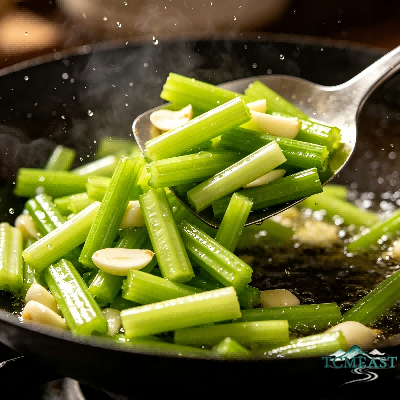
Add lily petals and stir-fry quickly for about 1 minute until they become slightly translucent at the edges and just cooked through. (Do not overcook – lily bulbs will turn soft and mushy.)
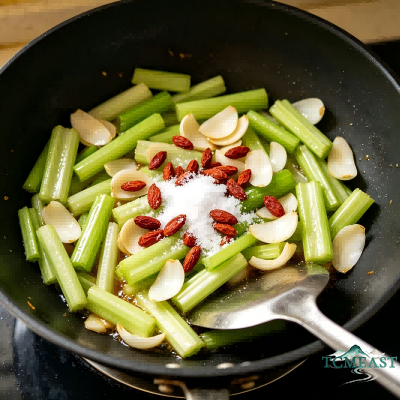
Add soaked goji berries, salt, and a pinch of bouillon (if using). Stir-fry quickly to combine evenly. Serve immediately.
TCM Notes
Liver-calming & sleep-promoting (celery's core benefit): Celery, cool in nature, is rich in apigenin and volatile oils – it calms liver yang, alleviating headaches, dizziness, and redness of the eyes caused by liver-yang hyperactivity. Its natural sedative compounds help soothe nerves, reducing anxiety and improving sleep. Lung-moistening & mind-calming (lily bulb's core benefit): Fresh lily bulbs, slightly cool in nature, are rich in mucilage and lilioside – they nourish lung yin, relieve dry cough, soothe restlessness, and calm the mind. Together, celery and lily bulbs create a powerful dual-action dish for "clearing heat and calming the spirit." Blood pressure support: Celery is rich in potassium and apigenin, which help dilate blood vessels and lower blood pressure. Its dietary fiber also promotes sodium excretion, further supporting healthy blood pressure levels. Digestive health & detox: Celery provides insoluble fiber, while lily bulbs offer soluble fiber and mucilage – together they promote intestinal motility, soften stools, relieve constipation, and help adsorb intestinal toxins. Vitamins & minerals: Celery is rich in vitamin K, vitamin C, and folate; lily bulbs provide various amino acids, B vitamins, and minerals (calcium, phosphorus, iron) – contributing to overall micronutrient intake.
Suitable for:Those with high blood pressure needing dietary support Those with liver-yang hyperactivity – headaches, dizziness, red eyes Those suffering from insomnia, anxiety, nervous tension, or restlessness Those with lung-dry cough or throat irritation Those with constipation or needing digestive detox support Health-conscious individuals on a light diet or weight management plan Menopausal women (calming, nourishing yin, relieving dryness)
Not suitable for:Those with spleen-stomach deficiency-cold, loose stools, or diarrhea (Use with caution!) : Both celery and lily bulbs are cool-natured. Consuming them may worsen abdominal cold and diarrhea in those with weak digestion. If you wish to eat this dish, add extra ginger during stir-frying to balance the cooling nature. Those with low blood pressure (Use with caution) : Celery has a significant blood pressure-lowering effect. Excessive consumption may cause dizziness and fatigue in hypotensive individuals – limit portion size. Those with acute wind-cold colds (Use with caution) : Symptoms include chills, fever, and clear white phlegm – cooling foods may worsen cold symptoms. Those allergic to celery or lily bulbs (Avoid) (rare). Those with kidney disease (Moderate portion) : Celery is high in potassium – kidney patients should control intake under medical guidance.
