
Stews
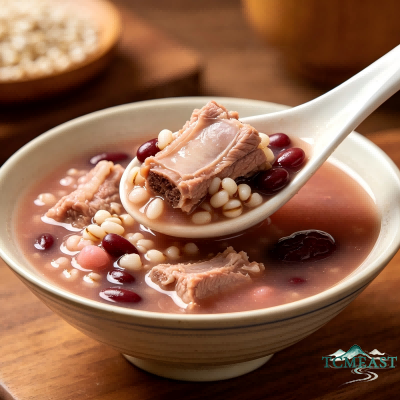
Coix Seed, Small Red Bean and Pork Rib Soup
Coix seed, small red bean and pork rib soup is a classic Cantonese medicinal soup that perfectly combines "spleen-strengthening and dampness-relief" with "nourishing and strengthening." Coix seeds strengthen the spleen, drain dampness, clear heat, and ease tendons; small red beans promote diuresis, reduce edema, and expel toxins – together they are the "golden duo" for dampness relief. The addition of pork ribs enriches the broth with umami and provides high-quality protein to nourish the body without causing deficiency from excessive dampness-draining. Slowly simmered, the soup turns a clear reddish color, with chewy coix seeds, creamy small red beans, and tender ribs – a mild, sweet flavor with a subtle citrusy aroma from the tangerine peel. Known as the "model soup that drains dampness without harming the body and tonifies without aggravating dampness," it is especially suitable for humid spring-summer seasons, rainy spells, or for modern lifestyles with prolonged air-conditioning exposure and accumulated internal dampness.
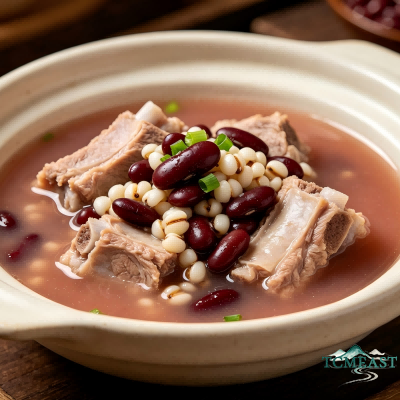
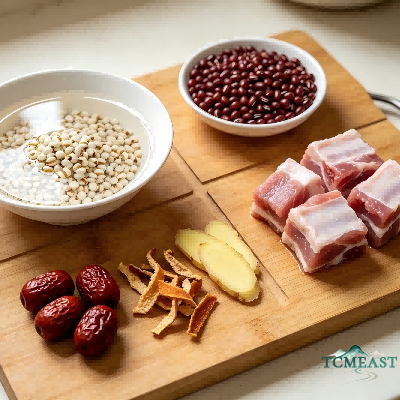
Main Ingredients
- Pork ribs (spare ribs preferred) 400g
- Coix seeds (Job's tears seeds) 50g
- Small red beans (slender shape, NOT round adzuki beans) 50g
- Fresh ginger 5 slices 5 slices
- Dried tangerine peel 1 small strip
- Candied dates 2 pcs 2 pcs
- Salt to taste
- Water approx. 2.5L
Steps
Rinse coix seeds and small red beans separately, then soak in water for 4-6 hours (or overnight in the fridge) to fully hydrate. Cut ribs into approx. 5cm sections and soak in water for 30 minutes, changing the water 2-3 times to remove blood. Slice ginger. Soak dried tangerine peel in warm water until soft, then scrape off the white pith (to reduce bitterness). Rinse candied dates or red dates.
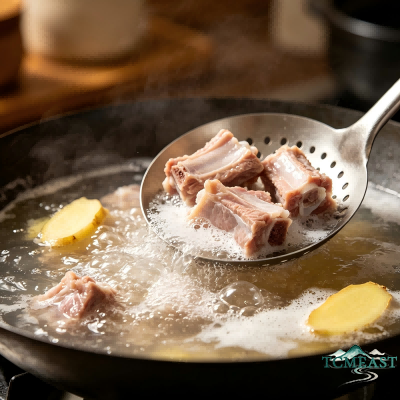
Place ribs in a pot with cold water and 2 slices of ginger. Bring to a boil, skimming off foam. Boil for about 3 minutes, then remove and rinse with warm water. Drain.
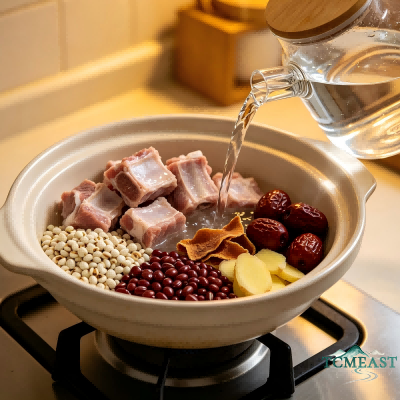
Place the blanched ribs, soaked coix seeds and small red beans, tangerine peel, candied dates (or red dates), and remaining ginger slices into a clay pot. Add water (approx. 2.5L). Bring to a boil over high heat, then reduce to low heat, cover, and simmer for 1.5-2 hours until the small red beans are tender and bursting, the coix seeds turn translucent, the ribs are fall-off-the-bone tender, and the broth thickens with a reddish hue.
Add salt to taste 10 minutes before serving (adding salt too early toughens the meat). Stir well and serve hot. The coix seeds and small red beans are edible – soft and starchy.
TCM Notes
Spleen-strengthening, dampness-draining & edema-reducing (core benefit): Small red beans are rich in saponins (0.2%-0.5%) with clear diuretic action, promoting excess fluid metabolism and reducing edema. Coix seed esters and polysaccharides regulate fluid metabolism and improve dampness-excess constitution. Together, they form the foundational herb pair for TCM dampness-related conditions. Heat-clearing, tendon-soothing & joint relief: Coix seeds, slightly cool in nature, clear damp-heat – beneficial for joint redness, swelling and stiffness. Small red beans detoxify and expel pus, aiding skin issues like acne and eczema of damp-heat origin. Strengthening bones & supplementing protein: Pork ribs provide animal protein, heme iron and calcium – supporting physical strength, anemia improvement, and bone health, preventing nutritional deficiency during long-term dampness-relief diets. Gut microbiota regulation & stool improvement: Dietary fiber in coix seeds (8%-10%) and resistant starch in small red beans act as prebiotics, promoting beneficial gut bacteria while reducing excessive intestinal water reabsorption – improving both diarrhea and sticky stools. Blood sugar & lipid modulation: Coix seed polysaccharides help regulate blood glucose; dietary fiber and plant sterols in red beans bind bile acids, reducing cholesterol reabsorption and lowering blood lipids.
Suitable for:Typical "dampness-excess" constitution: body heaviness, fatigue, foggy-headedness, thick greasy tongue coating, sticky stools that are hard to flush Those with edema, puffy eyelids in the morning, or swollen legs in the afternoon Office workers with sedentary lifestyles, lack of exercise, and prolonged AC exposure Anyone needing regular dampness prevention during humid seasons or rainy weather People with high cholesterol or mild hyperglycemia (adjunctive support) Those with damp-heat type acne, eczema or other skin conditions (with accompanying dietary adjustments) Gout patients in remission (coix seeds promote uric acid excretion, but red beans contain moderate purine – consume in moderation)
Not suitable for:Pregnant women (especially first trimester – Strictly avoid!):Coix seeds may stimulate uterine smooth muscle contraction – risk of miscarriage. Strictly contraindicated. Yin-deficient constitution with fluid depletion (Use with caution):Symptoms include dry mouth, dry skin, constipation, hot palms/feet, red tongue with little coating – diuretic formula will worsen fluid loss. Spleen-stomach deficiency-cold with loose stools (Use with caution):Coix seeds remain cool (even after toasting) and small red beans promote diuresis – may worsen cold abdominal pain and diarrhea. If consuming, toast coix seeds until dark golden, double the ginger amount (up to 10g), and avoid long-term continuous use. Severe constipation (Use with caution):The diuretic effect of small red beans reduces intestinal moisture, potentially worsening difficulty in passing stools. Hypotension (Use with caution):Diuretic effect may reduce blood volume and further lower blood pressure. Frequent urination or nocturia (non-dampness type):Diuretic action will worsen frequency – avoid. Kidney dysfunction (Under medical supervision):Small red beans are high in potassium – patients needing potassium restriction should limit intake. Those allergic to coix seeds, small red beans, or pork (rare).
