
Stews
Chinese Cabbage & Frozen Tofu Stew
Chinese Cabbage & Frozen Tofu Stew is a quintessential Northeastern Chinese homestyle dish – the ultimate winter comfort food. The cabbage is sweet, juicy, and aids digestion; frozen tofu, after freezing, develops a dense honeycomb-like structure that soaks up the savory broth like a sponge, releasing a burst of flavor with every bite. The light sweetness of cabbage perfectly complements the rich, chewy texture of the tofu. Simple, budget-friendly, and packed with quality protein and vitamins, this dish warms both the stomach and the heart.
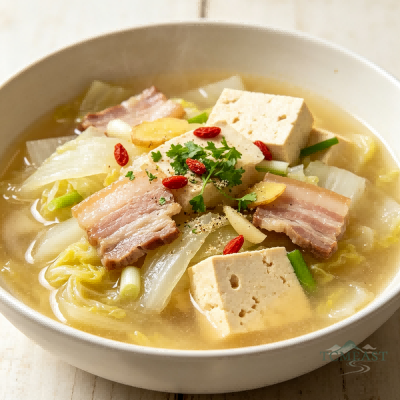
Main Ingredients
- Chinese cabbage (Napa cabbage) 500g
- Frozen tofu 300g
- Pork belly 100g
- Fresh ginger 4 slices
- Spring onion 1 stalk
- Garlic 3 cloves
- Goji berries as needed
- Cilantro some
- Cooking oil as needed
- Cooking wine 1 tbsp
- Light soy sauce 1 tbsp
- Dark soy sauce a dash
- Salt to taste
- White pepper powder a pinch
- Star anise as needed
Steps
Thaw frozen tofu naturally or in warm water. After thawing, gently squeeze out excess water (about 60-70% dry). Cut into 3-4cm chunks. Note: Lightly squeezing allows the tofu to better absorb the broth, but don't squeeze completely dry – leaving some moisture keeps the interior tender. Rinse 500g of cabbage and drain. Separate the white stalks (hard part) from the green leaves (soft part). Slice the stalks diagonally into thin pieces (about 2-3cm wide). Tear or cut the leaves into large chunks. Note: Separating stalks and leaves is crucial – stalks go in first, leaves later. Slice pork belly thinly (if using). Slice ginger, section spring onion, and slice garlic.
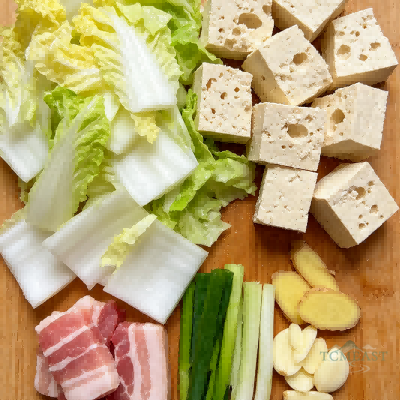
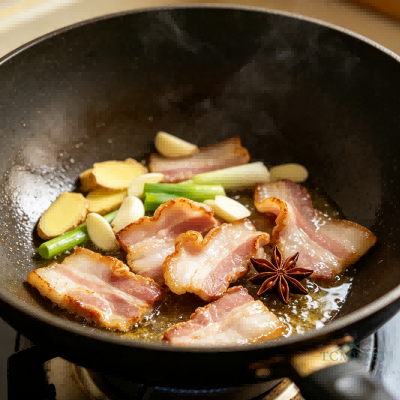
Heat oil in a wok or stew pot. Add pork belly and stir-fry over medium-low heat until golden and crispy (rendered pork fat is the source of the rich flavor). Add ginger, spring onion, garlic, and star anise (optional), stir-frying until fragrant.
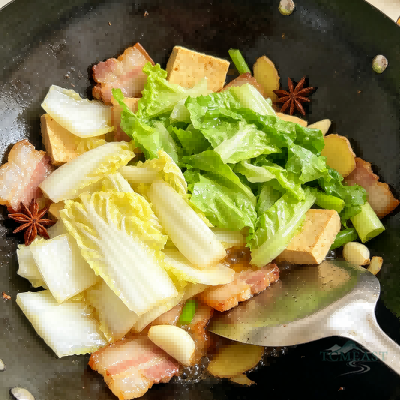
Add the white stalks first, stir-fry over medium-high heat for 2-3 minutes until the edges soften and turn slightly translucent. Then add the green leaves, continue stir-frying for 1-2 minutes until the leaves wilt and shrink.
Add cooking wine, light soy sauce, and a dash of dark soy sauce (optional). Add enough water or stock (about 500-600ml) to cover the ingredients. Bring to a boil, then add the frozen tofu chunks and gently mix. Cover and simmer over medium heat for 10-15 minutes until the cabbage is soft and translucent, and the frozen tofu has absorbed the broth and puffed up. Note: Gently press the tofu down with a spatula to ensure it's fully submerged and absorbs the liquid.
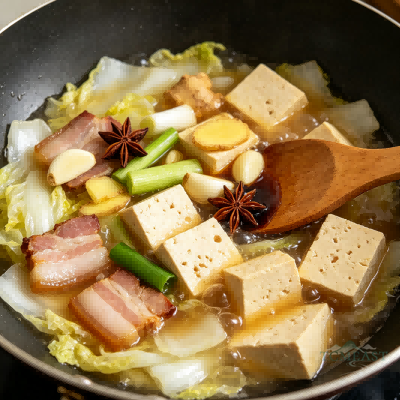
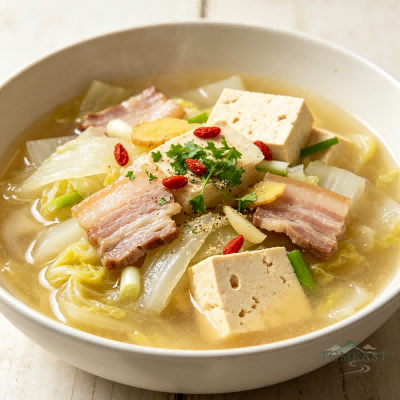
Add salt to taste (add salt only at the very end – adding it early causes the cabbage to release too much water). Sprinkle with white pepper. Gently incorporate, turn off the heat, transfer to a bowl, and garnish with goji berries and cilantro.
TCM Notes
Chinese Cabbage: Contains only about 13-18 kcal per 100g, with over 95% water content. Rich in vitamin C (approx. 28-47mg/100g), dietary fiber (approx. 0.8-1.2g), potassium (approx. 130mg/100g), and calcium. In TCM, cabbage clears heat, relieves irritability, and promotes digestion. Frozen Tofu: Freezing alters the protein structure, creating a dense honeycomb of pores. Contains approximately 15-20g protein and 240-280mg calcium per 100g (significantly higher than regular tofu due to concentration). Rich in isoflavones and plant sterols. Purine content: approximately 50-70mg per 100g – moderate-low. Pork (optional): Provides heme iron and animal protein, enriching the broth and enhancing iron absorption from the cabbage. Synergistic Effect: Cabbage provides vitamin C to enhance iron absorption; frozen tofu supplies calcium and plant protein. Total approx. 280-350 kcal (depending on pork), 20-25g protein – a low-fat, nourishing homestyle dish.
Suitable for:General population for daily meals, suitable for all ages Those with poor digestion, poor appetite, or abdominal bloating Those needing calcium supplementation (children, elderly, pregnant women) Those sensitive to cold and needing a warming winter dish Those in weight management (omit pork for a very low-calorie version) Those with hypertension or hyperlipidemia
Not suitable for:Gout / Hyperuricemia patients: Frozen tofu and meat broth contain moderate purine; avoid during acute flare-ups; during remission, eat the tofu but discard the broth Those with severe renal insufficiency: Protein and potassium intake must be restricted Those with Spleen-Stomach Cold or prone to diarrhea: Cabbage and tofu are cooling; add generous ginger and white pepper Those allergic to soy: Avoid frozen tofu Those with goiter or iodine deficiency: Consume in moderation