
Body & Nature
Massage Therapy: A Guide to Common Manipulation Techniques
Massage uses pushing, kneading, pressing, tapping, and rolling techniques to relieve pain, reduce swelling, improve circulation, and regulate nerve function. Learn the key manipulations and their therapeutic effects.
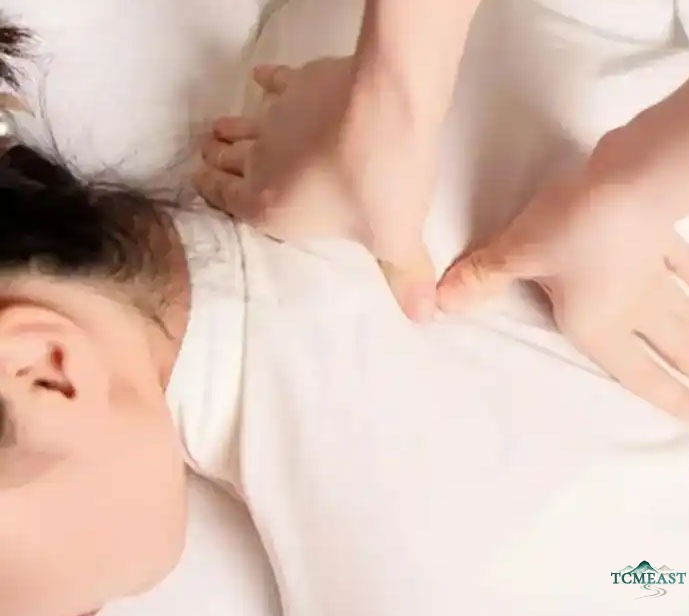
Massage is a form of folk physical therapy with an extremely broad range of indications. It includes bone-setting massage, traumatology massage, pediatric massage, meridian massage, zang-fu organ massage, emergency massage, health-preserving massage, acupressure massage, and more.
The therapeutic mechanisms of massage therapy are as follows: first, it causes local vasodilation and increases the circulation of blood and lymph, thereby improving the nutritional state of local tissues, promoting metabolism, and facilitating the absorption of retained fluids or pathological exudates. Second, it induces the flow of blood from deep tissues toward the body surface, or causes a portion of blood to pool locally, or produces hyperemia in deep tissues, thereby reducing hyperemia elsewhere in the body or in other areas and promoting the dissipation of pathological products. Third, it regulates muscle function, enhances muscle elasticity, tension, and endurance, alleviates pathological tension, and promotes the elimination of toxic metabolic byproducts. Fourth, it influences nerve function — either exciting or calming the nerves, invigorating the spirit, or relieving fatigue — thereby achieving the goal of treatment.
Methods of Operation
There are many types of massage manipulations used in clinical practice, with different schools and varying movements — reportedly numbering from several dozen to even over a hundred. However, those in common use generally number no more than twenty to thirty. In practical application, these manipulations follow certain patterns. Based on the direction of the applied force, they can be divided into the following five categories.
I. Pushing and Kneading Category (Plane-Force Manipulations)
This category includes the pushing method, kneading method, circular rubbing method, friction method, and wiping method.
- Pushing Method: Using the fingers or palm to push forward and backward, up and down, or left and right on a certain area or acupoint of the body. The force applied in the pushing method must start light and gradually become heavier, with the amount of force determined according to the area being treated. When the force is heavy, the effect reaches the muscles and internal organs; when the force is light, the effect reaches the subcutaneous tissues. The general frequency is 50–150 times per minute, beginning slightly slowly and gradually accelerating. According to different areas and disease conditions, the pushing method can be divided into thumb pushing, palm pushing, elbow-tip pushing, and fist pushing. The main effects of the pushing method are relaxing the sinews and activating blood, resolving spasms and relieving pain, increasing skin elasticity, promoting muscle growth, eliminating fatigue, and relaxing the muscles.
- Kneading Method: Using the fingers or the palmar surface of the hand to perform a circular kneading motion on a certain part of the body. The force of the kneading method is generally not great, reaching only the subcutaneous tissues, though heavy kneading can reach the muscles. The frequency is relatively slow, 50–100 times per minute, generally proceeding from light to heavy and then back to light. This manipulation is relatively gentle and is often used on painful areas or after strong manipulative stimulation; it can also be used to relax muscles and relieve local spasms. During the operation, the fingers and palm should closely adhere to the skin without moving relative to it, while the subcutaneous tissues are kneaded, with the range of motion gradually expanding. The main effects of the kneading method are dispersing swelling and relieving pain, activating blood and resolving stasis, dispersing accumulations and regulating qi, and aiding digestion.
- Circular Rubbing Method (Mo Fa): Using the fingers or palm to perform a rotary rubbing motion on the skin surface in a clockwise or counterclockwise direction over a certain area or acupoint of the body. During the operation, the fingers or palm should not adhere tightly to the skin, but rather perform a rotary rubbing motion on the skin surface. The force applied is gentle and superficial, reaching only the skin and subcutaneous layer. The frequency is determined according to the needs of the disease condition; generally, a slow rate is 30–60 times per minute, and a fast rate is about 100–200 times per minute. This method is commonly used at the beginning of a massage, on areas with relatively intense pain, or after strong manipulations to relax the muscles. The main effects of the circular rubbing method are regulating qi and activating blood, dispersing swelling and relieving pain, dispersing accumulations and guiding out stagnation, fortifying the spleen and harmonizing the stomach, regulating and supplementing the zang-fu organs, and enhancing skin elasticity.
- Wiping Method: A manipulation in which the fingers or palm are placed flat against the area to be massaged and then wiped to one side with even pressure. The force can be superficial, affecting the skin, or deep, affecting the muscles. The intensity is not great, and the effect is gentle. It is generally performed with both hands simultaneously, but can also be done with one hand. The main effects of the wiping method are opening the orifices, calming the spirit, refreshing the head and eyes, dilating blood vessels, and increasing skin elasticity.
- Friction (Scrubbing) Method: A manipulation in which the fingers or palm are rubbed back and forth on the skin. The force is superficial, acting only on the skin and subcutaneous layer. The frequency is relatively high, reaching 100–200 times per minute. It elicits a considerable skin reaction, and often the skin must be rubbed until it becomes red, yet without abrading it. Therefore, a medium is often used for lubrication during the operation to prevent skin damage. The main effects of the friction method are supplementing qi and nourishing blood, activating blood and unblocking collaterals, accelerating blood circulation, dispersing swelling and relieving pain, dispelling wind and eliminating dampness, and warming the meridians and dispersing cold.
II. Pressing and Tapping Category
This category includes the pressing method, nail-pressing method, plucking method, vibrating method, flicking method, patting and hammering method, stamping method, and rolling method.
- Pressing Method: Using the fingers or palm to press downward with force on a certain area or acupoint of the body. The depth of pressing can range from the superficial skin and flesh to deep bone, joints, and some internal organs. During the operation, the pressing force should progress from light to heavy. After the treated area has a certain sensation of pressure, maintain it for a period of time, then slowly release. It can also be performed as a rhythmic press-and-release. The main effects of the pressing method are unblocking the meridians and activating the collaterals, dispersing stasis and relieving pain, and correcting deformities.
- Nail-Pressing Method: Using the thumb, middle finger, or index finger to apply deep and sustained nail pressure on a certain area or acupoint of the body. The nail-pressing method produces relatively strong stimulation and is often used for acupoint stimulation massage. During the operation, the force must progress from small to large, so that the effect proceeds from shallow to deep. When applied to an acupoint, there may be an intense sensation of soreness and distention known as the "obtaining qi" response. The main effects of the nail-pressing method are stimulating acupoints, unblocking the meridians, dispersing swelling and stasis, calming the spirit and tranquilizing the mind, and opening the orifices.
- Plucking Method: This involves embedding the fingertip into the gaps of soft tissue and then performing a transverse plucking motion. The stimulation of the plucking method is very strong, with a local reaction of soreness and distention. The force used should be within the patient's tolerance. Another related method is called the scraping method, which also uses the fingertip to locate a hypertrophic or indurated area in the soft tissue and perform a scraping and plucking manipulation. The main effects of the plucking and scraping methods are relieving muscle spasm, releasing tissue adhesions, relaxing sinews and unblocking collaterals, lubricating joints, and dispersing swelling and relieving pain.
- Vibrating Method: A manipulation in which the fingertip or palm is pressed firmly against a certain area or acupoint of the body and performs a sustained tremor. During the operation, it relies primarily on the sustained muscular force of the forearm and hand to concentrate power at the fingertip or palm, producing a vibrating force that causes the massaged area to tremble in response. The force must be solid and the frequency rapid during the operation, giving a sensation of penetration into the deep tissues. The main therapeutic effects of the vibrating method are relaxing the muscles, regulating the nerves, resolving spasms and relieving pain, and eliminating fatigue.
- Flicking Method: A method of flicking and striking a certain part of the body with the dorsal surface of the fingers. When flicking, the thumb or middle finger hooks the index finger, and the index finger then flicks and slips off, causing the dorsal surface of the index finger to strike the affected area with force. The intensity of the flicking should progress from light to heavy, and the force should be springy and elastic, preferably not causing pain. The main effects of the flicking method are promoting joint mobility, relaxing muscles, dispelling wind and dispersing cold, and eliminating fatigue.
- Patting and Hammering Method: The method of lightly and deftly patting a certain part of the body with the fingers or palm is called the patting method. The method of hammering a certain part of the body with a hollow fist or the lateral aspect of the fist is called the hammering method. The force of the patting method is relatively light and is mostly used on the thoracic cage, back, and superficial joint areas. The hammering method uses heavier force, which can reach the muscles, joints, and bones. Light and slow hammering can stretch and relax the sinews and bones; heavy and rapid hammering can excite the muscles. The main effects of the hammering method are moving qi and activating blood, relaxing muscles, dispelling wind and dispersing cold, eliminating muscle fatigue, and relieving local soreness and distention.
- Stamping Method (also called the foot-treading method): A method in which the sole of the foot treads on a certain area of the body and performs various movements. It can be applied with both feet pressing simultaneously, or with the two feet pressing alternately. The force must be appropriate and must never be excessive. The frequency should be slow. This method is often used on the lumbosacral region and the proximal areas of the limbs, and is commonly applied in the treatment of lumbar intervertebral disc disorders. It combines several manipulations — pressing, kneading, and pushing — with relatively high intensity. This method must be applied with caution and is not suitable for the elderly, the weak, or children.
- Rolling Method: A manipulation in which the dorsal surface of the hand exerts force and rolls on the body. During the operation, the metacarpophalangeal joints are slightly flexed, and the part of the dorsal surface of the hand near the little finger is closely applied to the treatment area. The wrist and palm are continuously oscillated, performing a coordinated movement of forearm rotation and wrist joint flexion and extension. To concentrate the rolling force on the fingers, slightly flex the wrist before rolling, with each finger slightly extended, and the dorsal surface of the hand lying flat against the massaged area to assist in generating force.
