
Wisdom of TCM
Anti-Aging Herbs in Chinese Medicine: Ancient Wisdom for Longevity
Explore the most powerful anti-aging herbs in Traditional Chinese Medicine. From Goji berries to Ginseng and Reishi — learn how these longevity tonics work, how to use them, and the lifestyle practices that kept ancient Chinese sages youthful.
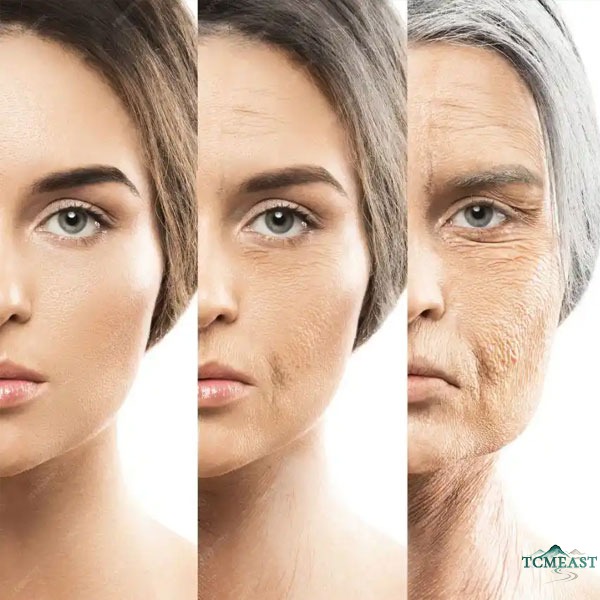
The TCM View: Aging as Essence Depletion
In Traditional Chinese Medicine, aging is not simply a matter of accumulating birthdays. It is the gradual depletion of the body's fundamental resources: Kidney essence, qi, and yin. The subtle sages of ancient China observed that some people aged quickly while others remained youthful well into their later years. The difference, they concluded, was in how well these people preserved and nurtured their constitutional resources.
The Huangdi Neijing describes the aging process clearly. Kidney essence begins to decline around age 35-40 in men and 35 in women. As essence declines, so does the body's ability to regenerate — the skin wrinkles, the hair grays, the bones weaken, and the mind slows.
But this process is not inevitable. TCM offers a well-developed system of longevity herbs that slow this depletion, combined with lifestyle practices that reduce unnecessary consumption of essence.
The Three Treasures of Longevity
Kidney Essence — The Root of Youth
In TCM, Kidney essence (jing) is the deepest currency of life. It determines the basic rate of aging. Herbs that nourish Kidney essence are therefore the most important anti-aging substances in the Chinese materia medica.
Qi — The Fuel
Qi is the active energy that drives all life processes. When qi is abundant, cellular repair functions properly, the immune system is strong, and energy is steady.
Yin — The Moisture
Yin is the body's cooling, moistening, and nourishing substance. Yin deficiency accelerates aging by allowing the body to dry out, heat up, and lose elasticity.
The Five Most Important Anti-Aging Herbs
1. Gou Qi Zi (Goji Berry, 枸杞子)
Sweet and neutral. Goji berry is the most accessible and widely used anti-aging herb in TCM. It nourishes both Liver blood and Kidney essence simultaneously. The famous Shennong Bencao Jing states: "Long-term use lightens the body and prevents aging."
Anti-aging actions: Antioxidant protection, immune enhancement, vision preservation, blood sugar regulation.
How to use: 6-15g daily as food — in tea, congee, soup, or simply chewed.
2. Ren Shen (Panax Ginseng, 人参)
Sweet, slightly bitter, and warm. Ginseng is the supreme tonic for qi. It delays aging by maintaining the body's vital energy. The Shennong Bencao Jing says: "Ginseng brightens the eyes, opens the heart, sharpens the intellect. Long-term服用 lightens the body and extends the years."
Anti-aging actions: Adaptogenic effect, cognitive enhancement, immune modulation, improved cellular energy.
How to use: 3-9g in decoction (as a periodic course, not continuously). 1-3g powder form for daily maintenance.
3. Ling Zhi (Reishi Mushroom, 灵芝)
Sweet and neutral-pan. Reishi is classified as a superior herb that "extends the years and prevents aging." It is unique in that it simultaneously tonifies qi and calms the spirit — addressing both the physical and mental dimensions of aging.
Anti-aging actions: Immune modulation, anti-inflammatory, neuroprotection, sleep enhancement, stress reduction.
How to use: 1.5-3g of spore powder or concentrated extract daily.
4. He Shou Wu (Fo-Ti, 何首乌)
Bitter, sweet, astringent, and slightly warm. He Shou Wu is the specific herb for graying hair and age-related decline in Kidney essence. Its name (literally "Mr. He's black hair") reflects its reputation for reversing premature aging signs.
Anti-aging actions: Hair darkening, bone strengthening, cholesterol reduction, neuroprotection.
How to use: 10-20g prepared decoction. Use only the processed form (制何首乌).
5. Huang Qi (Astragalus, 黄芪)
Sweet and warm. Astragalus is the anti-aging herb for the Spleen and Lung — it maintains the body's ability to produce energy and defend against disease. It is particularly important for preserving immune function as we age.
Anti-aging actions: Telomere protection (research shows astragaloside IV activates telomerase), immune enhancement, energy support.
How to use: 9-15g daily as tea.
Anti-Aging Herbal Combinations
Goji & Chrysanthemum Daily Eye Tea
For aging eyes — dryness, blurriness, tired eyes.
Ingredients: Goji berries 6g, chrysanthemum flowers 3g. Steep in hot water.
Ginseng & Astragalus Energy Decoction
For aging with declining energy.
Ingredients: Ren Shen 6g, Huang Qi 15g, 3 red dates. Simmer 25 minutes.
He Shou Wu & Goji Hair-Building Soup
Ingredients: Prepared He Shou Wu 10g, Goji 10g, Dang Gui 6g, chicken thighs. Simmer 1.5 hours.
Acupressure for Longevity
Zu San Li (ST36)
Called the "longevity point" in many Asian cultures. Daily stimulation is said to prolong life by strengthening the Spleen and Stomach qi, which form the foundation of post-natal vitality.
Yong Quan (KI1)
The "Gushing Spring" point is considered a longevity point when massaged daily. It connects to the Kidney meridian and preserves Kidney essence.
Bai Hui (DU20)
Meeting point of all yang channels. Regular stimulation lifts the spirit and preserves cognitive function.
TCM Lifestyle Practices for Longevity
- Qi gong or tai chi daily — Gentle movement practice is considered the single most effective longevity practice in TCM.
- Eat to 80% fullness — Overeating depletes Spleen qi and accelerates aging. The TCM principle is to stop eating before you feel full.
- Early to bed, early to rise — Aligning sleep with the natural rhythms of day and night preserves yang energy.
- Moderation in all things — The concept of "zhong he" (central harmony) teaches that extremes of any kind accelerate aging.
