
Wisdom of TCM

Gua Sha for Beginners: Tools, Technique and Skin Benefits
Learn what gua sha is, how to choose a tool, how to perform a safe face and body routine, and what those temporary marks really mean. A practical beginner's guide.

Cupping Therapy Explained: Benefits, Risks and What to Expect
What cupping therapy actually does, why it leaves marks, which conditions it suits best, and what to expect from a session. A clear, evidence-aware guide from a TCM perspective.

Anti-Aging Herbs in Chinese Medicine: Ancient Wisdom for Longevity
Explore the most powerful anti-aging herbs in Traditional Chinese Medicine. From Goji berries to Ginseng and Reishi — learn how these longevity tonics work, how to use them, and the lifestyle practices that kept ancient Chinese sages youthful.
The Characteristics of Visceral Manifestation Theory
Visceral manifestation theory (Zang-Xiang) embodies two core characteristics. The first is a holistic view centered on the five zang organs, which organizes all internal organs, sensory orifices, bodily constituents, and mental activities into five functional systems — heart, liver, spleen, lung, and kidney — integrated through meridians, the dynamics of the five elements, and correspondence with the external environment to form a unified organic whole. The second is a spatiotemporally conceived structural-functional model, in which the qi of the zang organs waxes and wanes in accordance with season, time of day, and directional orientation, emphasizing functional dynamics over detailed morphology — its essence being a multi-entity structure centered on systemic function.
The Formation of Visceral Manifestation Theory (Zang-Xiang)
The formation of visceral manifestation theory (Zang-Xiang), marked by the completion of the Huangdi Neijing, rests on four foundations: the accumulation of ancient anatomical knowledge (as seen in the Lingshu and dissection practices under Wang Mang); long-term observation of human physiological and pathological phenomena ("inspecting the exterior to infer the interior"); repeated validation through medical practice (supplementing organs through corresponding animal organs, treating zang by draining fu); and the methodological influence of ancient Chinese philosophy — qi monism, yin-yang, and five elements theory. This theoretical construction evolved from solid anatomy to a functional paradigm, representing the ancients' synthesis of objective observation and subjective reasoning.
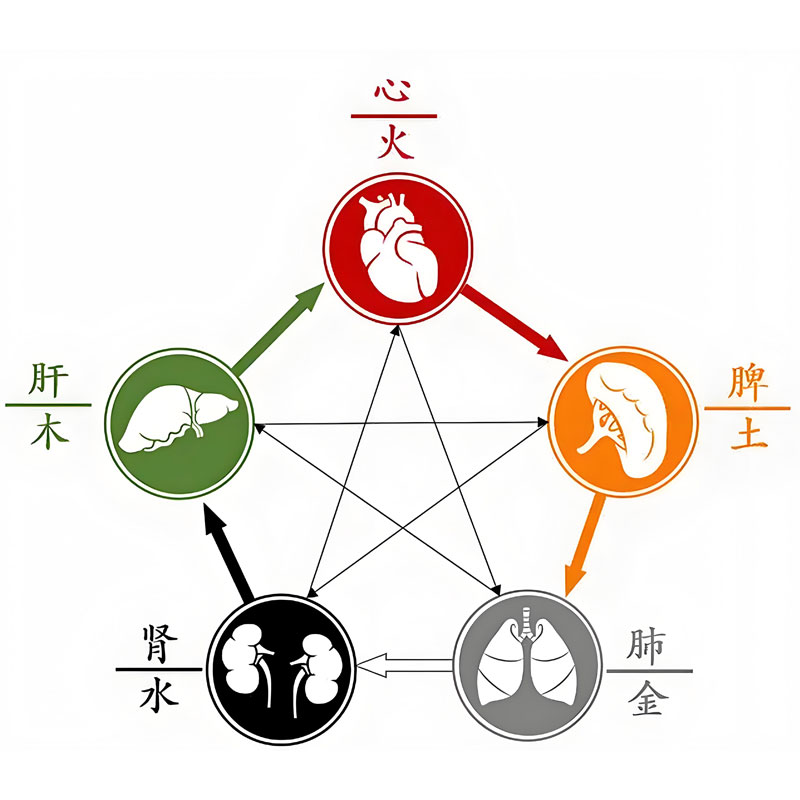
The Classification of Zang-Fu Organs and Their Physiological Characteristics
Chinese medicine classifies the internal organs into three categories: the five zang, the six fu, and the extraordinary fu organs. The five zang (heart, lung, spleen, liver, kidney) store essence qi — “they store and do not drain; they are full but not solid.” The six fu (gallbladder, stomach, small intestine, large intestine, bladder, sanjiao) transmit and transform substances — “they drain and do not store; they are solid but not full.” The extraordinary fu organs (brain, marrow, bone, vessel, gallbladder, uterus) resemble the zang in function while differing from the fu in morphology, likewise storing without draining. This article draws on classical sources to explain their physiological characteristics and the clinical significance of the principle that “zang diseases tend toward deficiency, fu diseases tend toward excess.”
The Basic Concept of Visceral Manifestation (Zang-Xiang)
“Zang-Xiang” (Visceral Manifestation) first appeared in the Suwen · Liujie Zangxiang Lun (Basic Questions: Treatise on the Six-Juncture Visceral Manifestations). “Zang” refers to the internal organs — five zang, six fu, and extraordinary fu organs. “Xiang” denotes their external physiological and pathological manifestations, anatomical images, and correspondences with natural phenomena. Zang is the internal essence; Xiang is the external reflection. Their organic unity forms the unique TCM cognitive method of “measuring the zang from their manifestations” and “inspecting the exterior to infer the interior.” This article draws on classical sources to explicate the fundamental meaning of Zang-Xiang and its core position within TCM theory.
Visceral Manifestation [Zang-Xiang]
Visceral manifestation theory (Zang-Xiang) is the core of the TCM theoretical system. Using the methodology of “inspecting the exterior to infer the interior,” it studies the morphology, physiological functions, pathological changes, and interrelationships of the zang-fu organs, and explains their holistic connections with the body, sensory orifices, emotions, fluids, and the external environment. It is the systematic theory through which Chinese medicine understands human physiology and pathology, providing the theoretical foundation for clinical pattern differentiation and treatment.
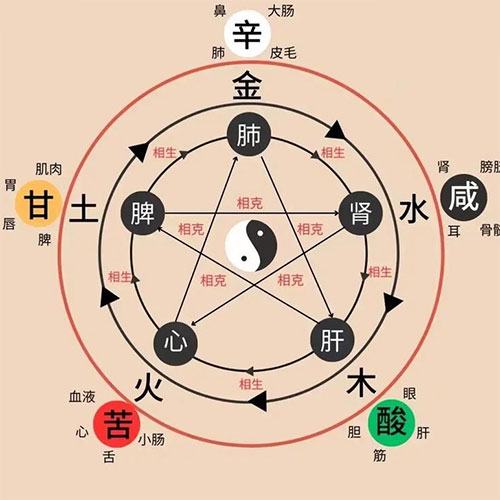
The Theory of the Five Elements (Wu Xing)
The Five Elements (Wu Xing) theory is an ancient Chinese philosophical framework studying the properties, characteristics, and generating-restraining laws of wood, fire, earth, metal, and water, embodying rudimentary system theory. This article explains how it permeates TCM, serving as a methodology for interpreting the relationship between humans and nature, the integrity of the human body, and inter-organ connections, and is broadly applied in clinical diagnosis, pathological analysis, herbal treatment, and acupoint combination—forming a cornerstone of TCM theory.
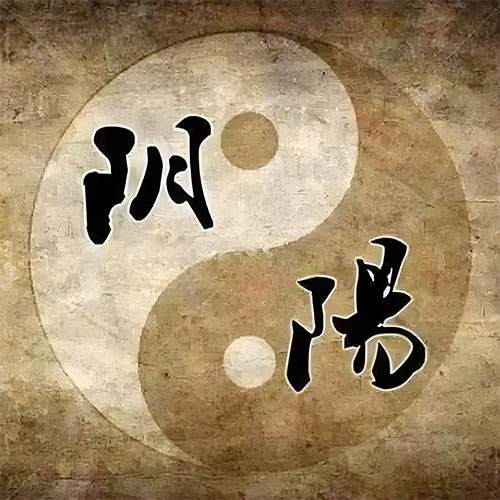
The Theory of Yin-Yang (Yin-Yang Theory)
Yin Yang theory is an ancient Chinese philosophical concept studying the nature and movement patterns of yin and yang, forming the core methodology of TCM. This article details their relationships of opposition, interdependence, waxing-waning balance, and mutual transformation, explaining how they illuminate life activities, pathological changes, and guide diagnosis, treatment, and prevention. As stated in the Lingshu, “Understanding yin and yang resolves confusion and awakens one from stupor.”

The Meaning and Composition of the Basic Theory of Traditional Chinese Medicine
Basic Theory of Traditional Chinese Medicine is the cornerstone of the TCM discipline. It systematically expounds the philosophical foundations including qi essence, yin-yang, and five elements theories, delves into the visceral manifestation, meridian, and essence-qi-blood-body-fluids systems, and covers core principles of disease causation, pathogenesis, health preservation, and treatment. This overview provides an essential guide for understanding life activities, disease prevention, and clinical practice.
