
Congees
Astragalus and Codonopsis Millet Porridge (Qi-Boosting TCM Porridge)
Astragalus and Codonopsis millet porridge is a classic TCM medicinal diet centered on "tonifying the middle qi and reinforcing the vital foundation." Astragalus is known as the "chief of qi tonics," while Codonopsis is the "essential spleen-tonifying herb." Used together, they create a synergistic effect, amplified by the stomach-nourishing "grain spirit" of millet. This porridge carries the subtle beany aroma of astragalus and the sweet aftertaste of codonopsis – smooth, thick, and neither bitter nor greasy. This is not an everyday casual porridge but a customized "energy charging station" for those with qi-deficiency. When you feel profoundly fatigued, too weary to speak, or sweat easily with minimal exertion, a warm bowl delivers a gentle yet lasting stream of "vital energy" – the ultimate expression of TCM's wisdom that "food therapy surpasses herbal therapy."
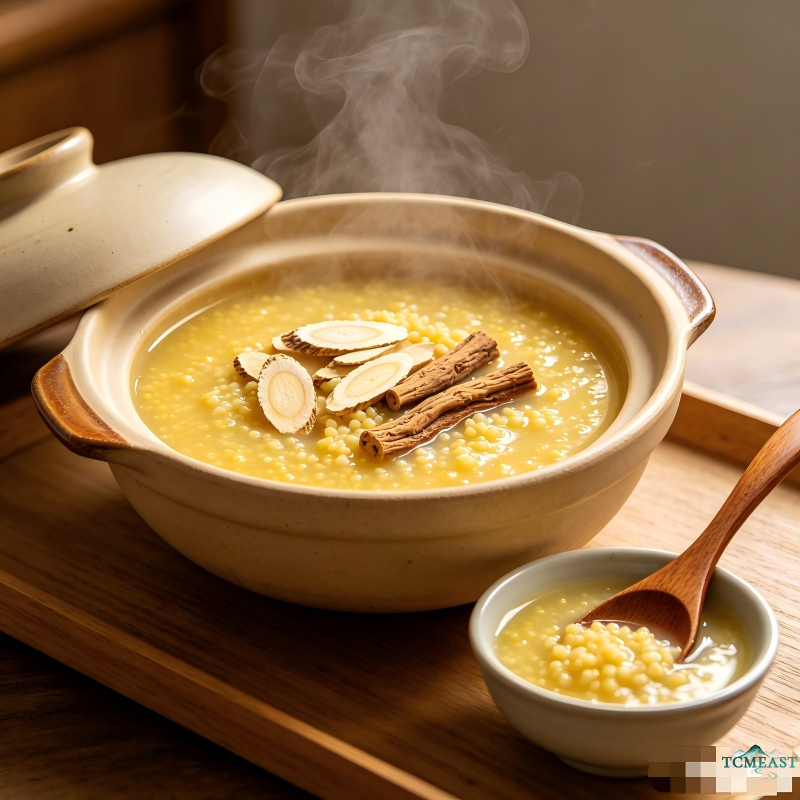
Main Ingredients
- Millet 100g
- Dried Astragalus roo 15g
- Dried Codonopsis root 15g
- Red dates 3 pcs(approx. 10g,)
- Goji berries 5g
- Fresh ginger slices 2 pcs
- Water 1.2-1.4L
Steps
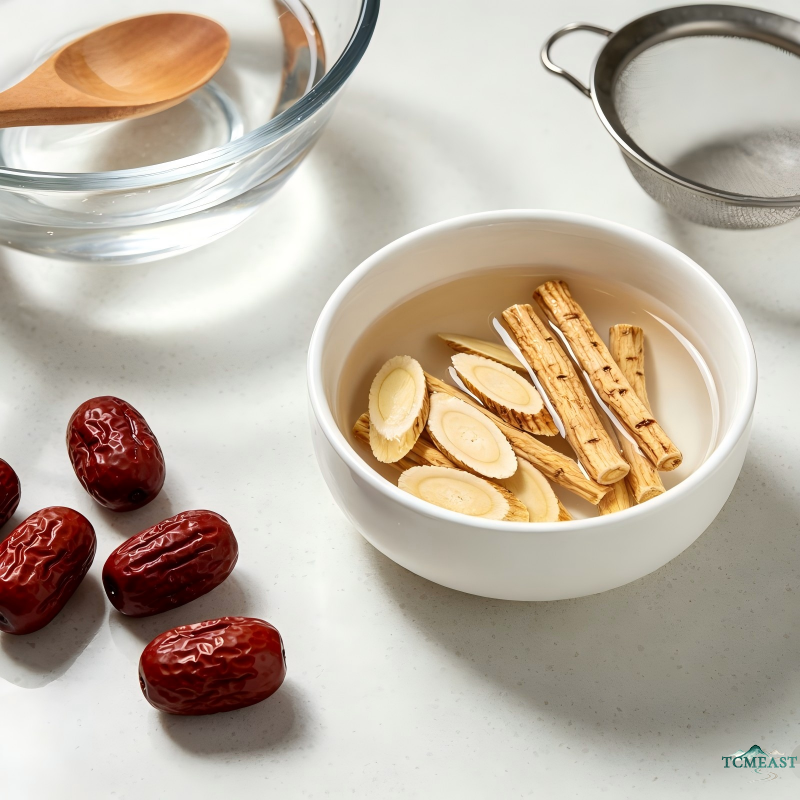
Quickly rinse astragalus and codonopsis roots with clean water to wash off surface dust, then soak them in warm water for 10 minutes to release active nutrients. Wash red dates and remove pits, set aside for later use.Rinse millet lightly twice. Do not rub excessively to prevent nutrient loss, then drain and set aside.
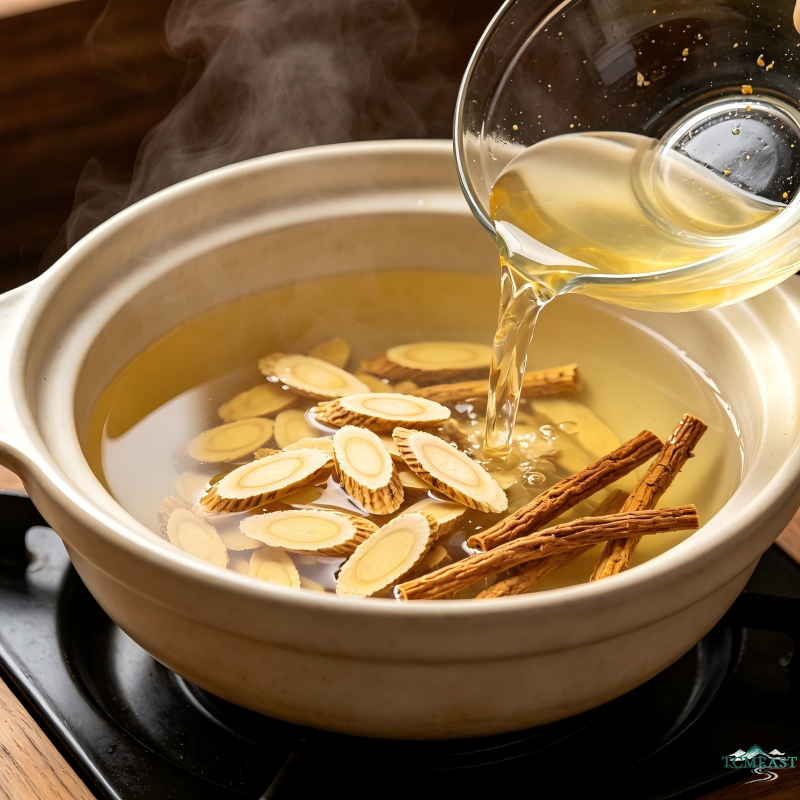
Pour the soaked astragalus and codonopsis roots together with their soaking water into a clay pot, add sufficient clean water. Bring to a boil over high heat, then turn to low heat and simmer for 15 minutes. Remove the herbal residues and keep only the broth.
Add millet and pitted red dates to the herbal broth, bring to a rolling boil over high heat and stir constantly to avoid sticking to the pot bottom.
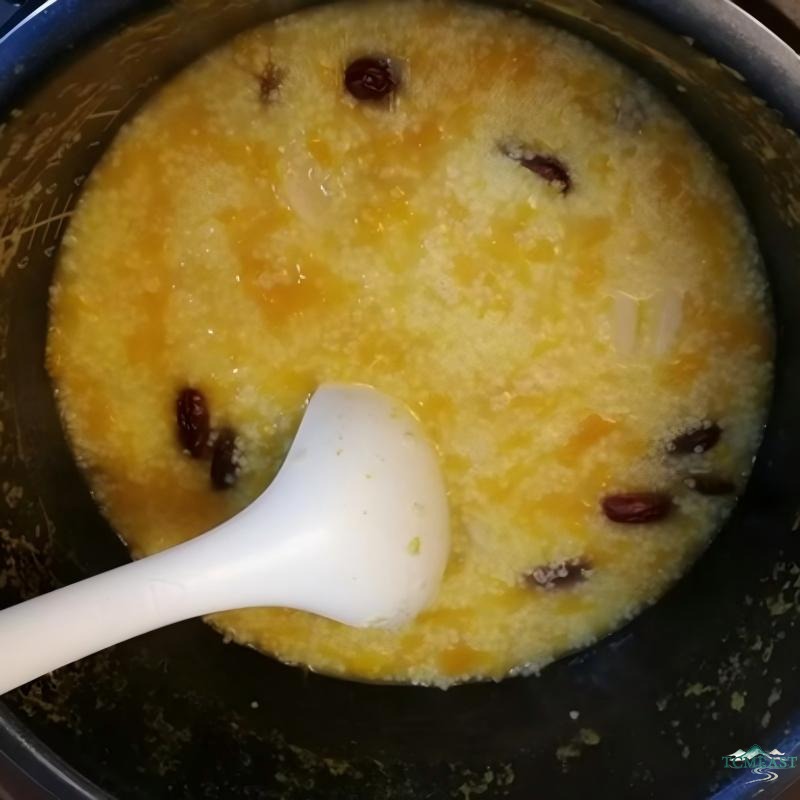
Turn to the lowest heat and simmer slowly for 25–35 minutes, stirring frequently throughout. Cook until the millet grains burst open and the porridge thickens with a creamy rice layer on top.
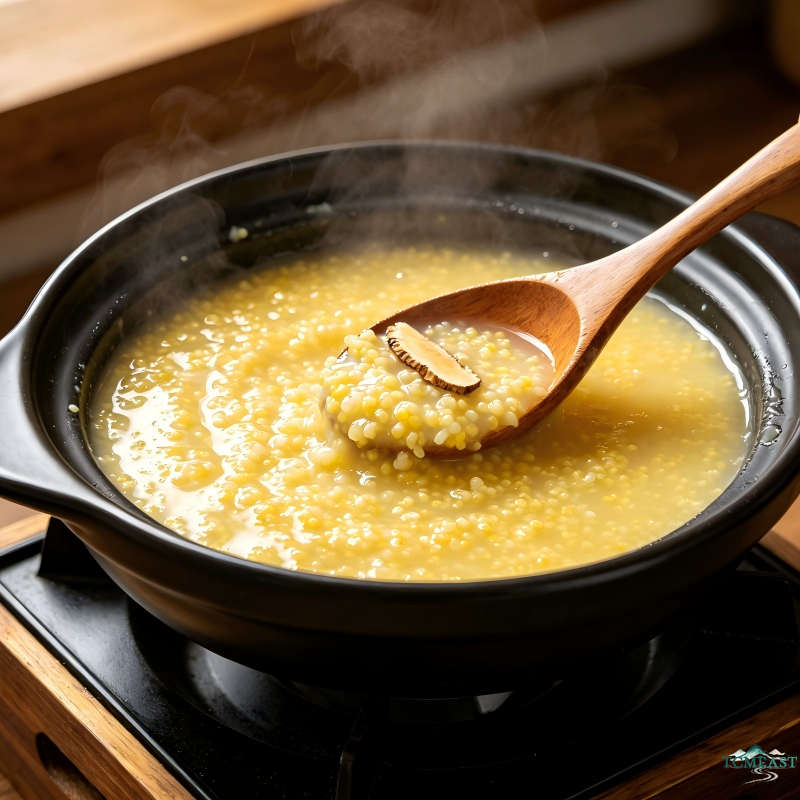
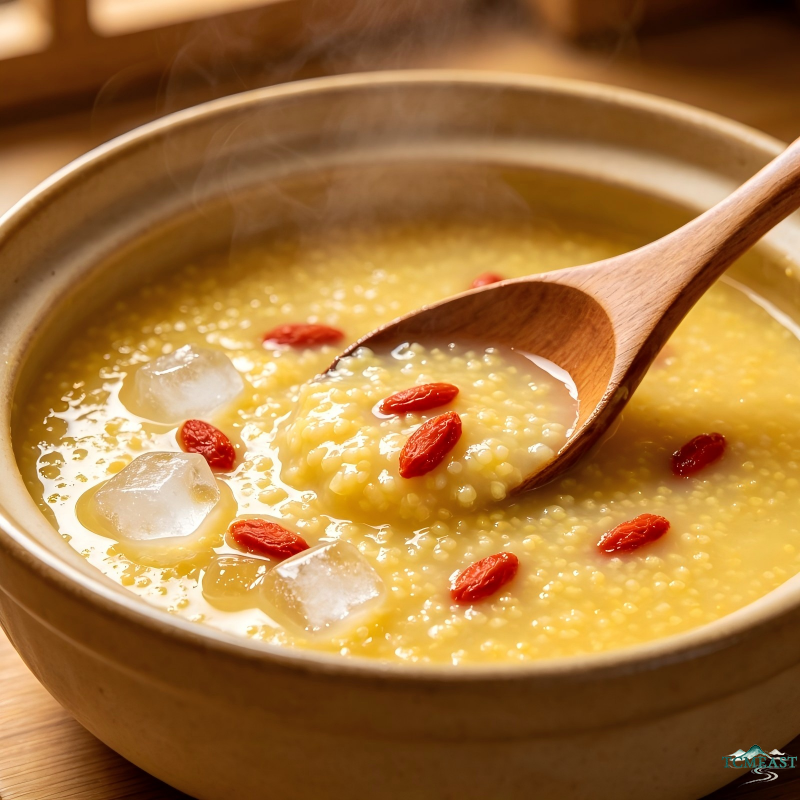
Add goji berries 5 minutes before turning off the heat. Stir in a little rock sugar if you prefer sweetness, then cover and let it stand for 5 minutes to absorb the flavors.
TCM Notes
Core effect – deep qi tonification and yang-lifting:Astragalus polysaccharides and astragaloside IV significantly enhance immune function, improve myocardial contractility and microcirculation, and notably lift sinking qi – benefiting conditions like gastroptosis, rectal prolapse and uterine prolapse;Codonopsis polysaccharides and saponins increase red blood cell and hemoglobin counts, combat fatigue and hypoxia – the pair works synergistically with a "1+1>2" effect. Spleen harmonizing and dampness transforming:Millet is rich in B vitamins (especially B1 and B2) and minerals, repairing gastric mucosa and promoting digestive secretion;astragalus and codonopsis together regulate gut microbiota, improving poor appetite and loose stools caused by spleen deficiency. Surface-stabilizing, sweat-reducing and immune-boosting:Astragalus "secures the exterior," tightening pores and reducing spontaneous sweating (sweating without exertion);sterols in codonopsis enhance macrophage phagocytosis and raise serum immunoglobulin levels – ideal for those prone to seasonal colds. Anti-fatigue and anti-aging:Atractylenolides and syringin in codonopsis provide significant anti-hypoxia and anti-stress effects;selenium and flavonoids in astragalus act as powerful antioxidants, scavenging free radicals, protecting vascular endothelium and delaying tissue aging. Blood pressure and blood sugar regulation:Astragalus has a bidirectional blood pressure effect (mildly pressor at low doses, depressor at high doses);codonopsis polysaccharides improve insulin sensitivity;millet has a low GI (~55) – together they help stabilize post-meal blood glucose.
Suitable for:Typical qi-deficiency constitution:persistent fatigue, reluctance to speak, weak voice, pale complexion, sweating easily with minimal movement, dizziness Those with weak spleen and stomach, poor appetite, post-meal bloating, or loose stools Individuals with low immunity, frequent seasonal colds, or recurring respiratory infections Those with sinking middle qi (e.g., gastroptosis, rectal prolapse, uterine prolapse, chronic diarrhea) Post-surgery recovery, post-critical-illness convalescence, or weakness after chemo/radiotherapy Chronic fatigue syndrome and mental workers with sleep deprivation Those with hypotension (dizziness upon standing)
Not suitable for:Acute external-excess conditions (Absolute contraindication):Wind-cold, wind-heat colds, COVID-19 with fever, sore throat, yellow phlegm, body aches – TCM states "do not tonify while the superficial pathogen is unresolved," as tonics will trap the pathogen inside, worsening or prolonging illness. Yin-deficiency with fire-excess or internal excess-heat:hot palms/feet, dry mouth/throat, night sweats, red tongue with little coating, dry stools, facial flushing – astragalus is mildly warm and will aggravate heat and consume yin. Poorly controlled hypertension (Caution):Astragalus has pressor effects (especially at low doses). If BP ≥160/100mmHg with significant fluctuations, avoid or use only under TCM practitioner guidance with balancing herbs. Acute bleeding or bleeding tendency:active peptic ulcer bleeding, acute cerebral hemorrhage, excessive/continuous menstrual flow – astragalus dilates blood vessels and promotes circulation, potentially worsening bleeding. Pregnant and breastfeeding women:Both herbs stimulate circulation and tonify qi – insufficient safety data for fetuses/infants; strictly avoid unless prescribed by a doctor. Acute cholecystitis, gallstones with acute flare-ups, or severe liver qi stagnation:Qi tonics may increase stagnation, worsening hypochondriac distension and pain. Those allergic to legumes (Astragalus family) or Campanulaceae (Codonopsis family) – rare but possible.