
Congees
Chrysanthemum and Goji Berry Millet Porridge (Liver-Clearing & Eye-Nourishing Congee)
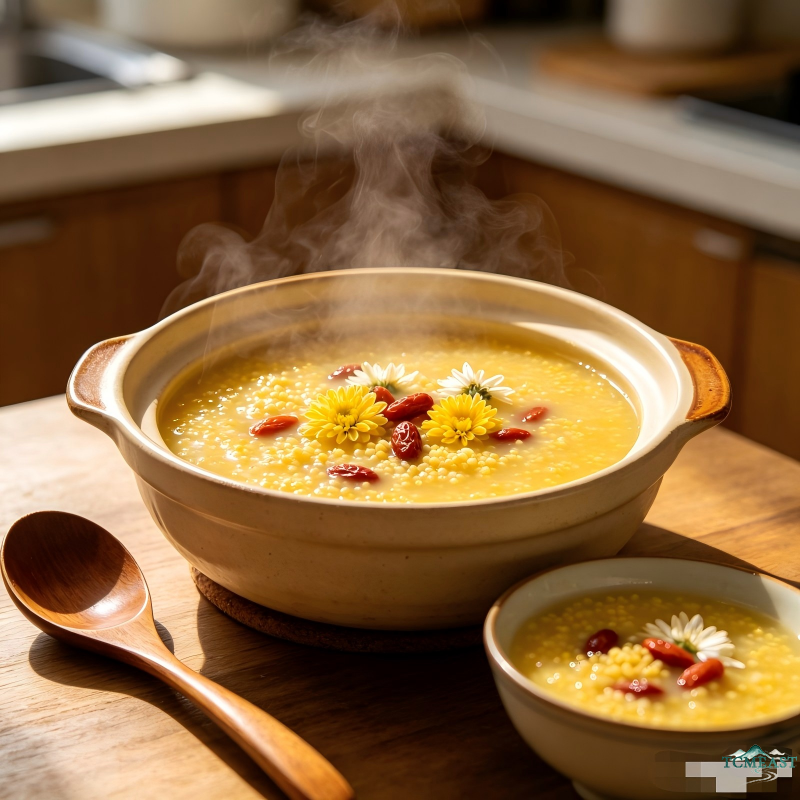
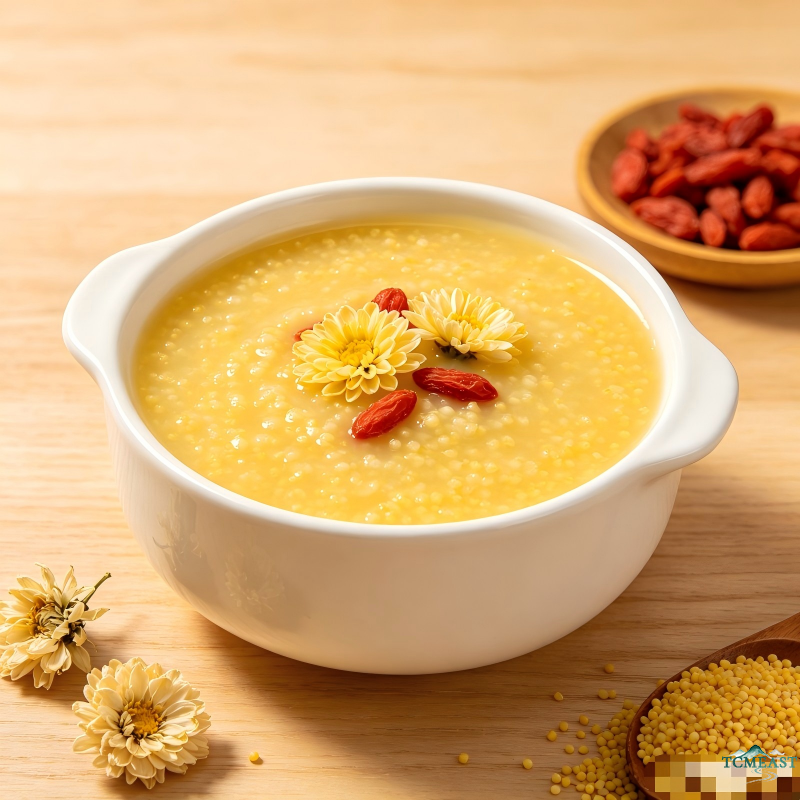
Chrysanthemum and goji berry millet porridge is an elegant wellness congee that combines liver-clearing, eye-nourishing, stomach-warming and mind-calming benefits. In a bowl of golden millet, the crisp fragrance of chrysanthemum dances with the sweet-tangy notes of goji berries. Green, golden and red hues intertwine beautifully. On the palate, the mild nuttiness of millet comes first, followed by the refreshing floral lift of chrysanthemum, finishing with the lingering sweetness of goji berries – layered yet harmonious. Unlike heavy, greasy tonic porridges, this one takes a "gentle clearing" approach – perfect for spring-summer liver-fire relief and autumn dryness prevention. It's a modern-day "eye-refreshing bowl" for anyone staring at screens all day. One bowl feels like a soothing herbal steam for your eyes, leaving them clear and revitalized from within.
Main Ingredients
- Millet 100g
- Dried chrysanthemum flowers 8g
- Goji berries 10g
- Rock sugar 15g
- Water 1.2L
Steps
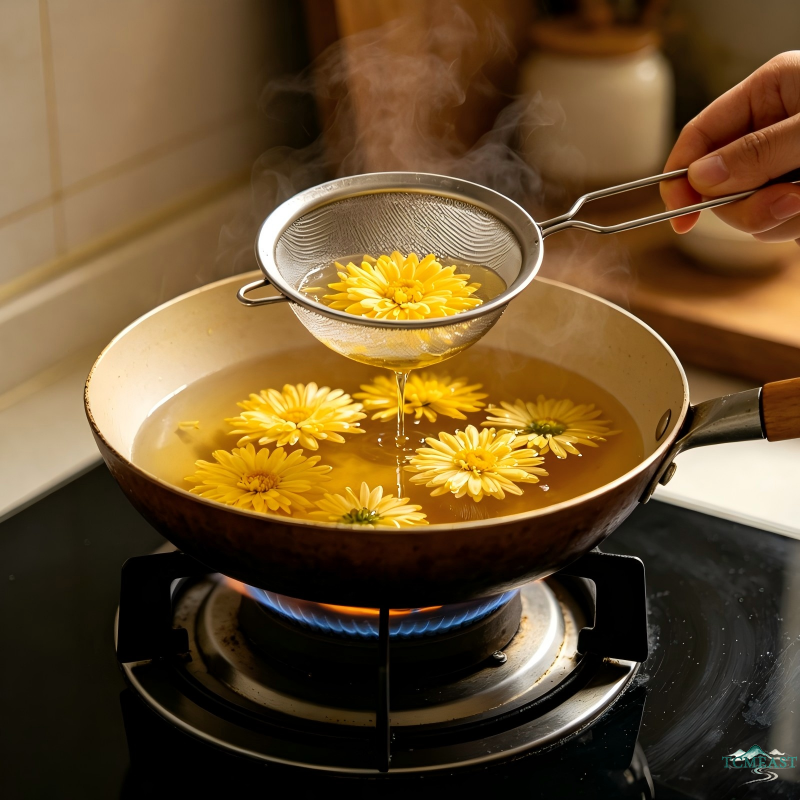
Place dried chrysanthemum flowers in a small pot with 400ml water. Bring to a boil, then reduce to a gentle simmer for 5 minutes (do not exceed 8 minutes to avoid releasing bitterness). Turn off the heat, cover and steep for 2 minutes. Strain through a fine sieve, reserving the clear golden tea liquid. Discard the spent flowers.Rinse millet once or twice (do not over-wash or scrub vigorously, as this removes surface B vitamins). Drain well.
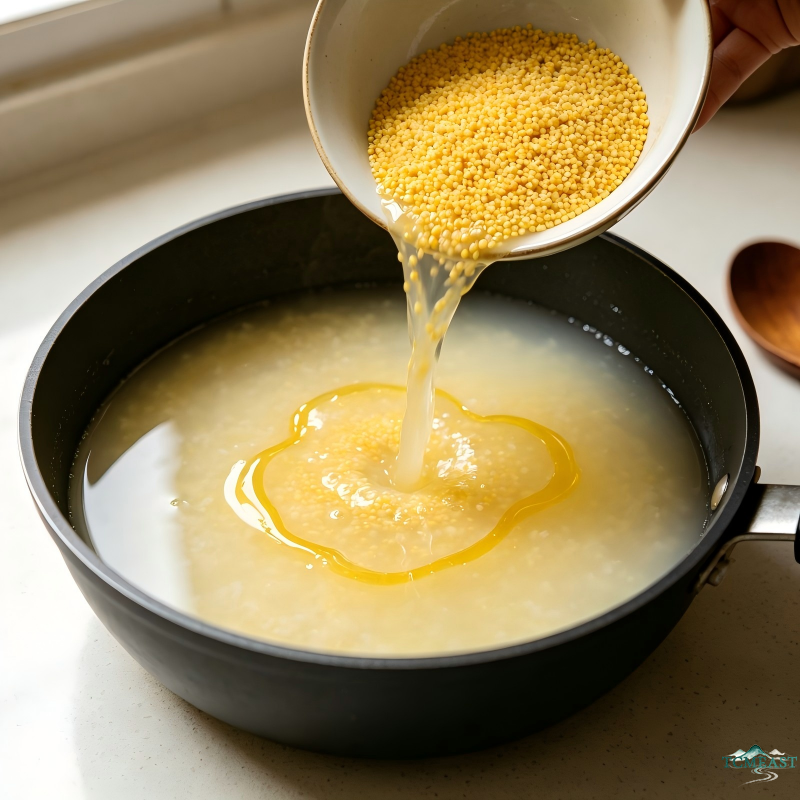
Pour the chrysanthemum tea into the cooking pot and add enough plain water to reach a total of 1.2L. Bring to a rolling boil, then slowly sprinkle in the millet. Stir in one direction a few times to prevent sticking.
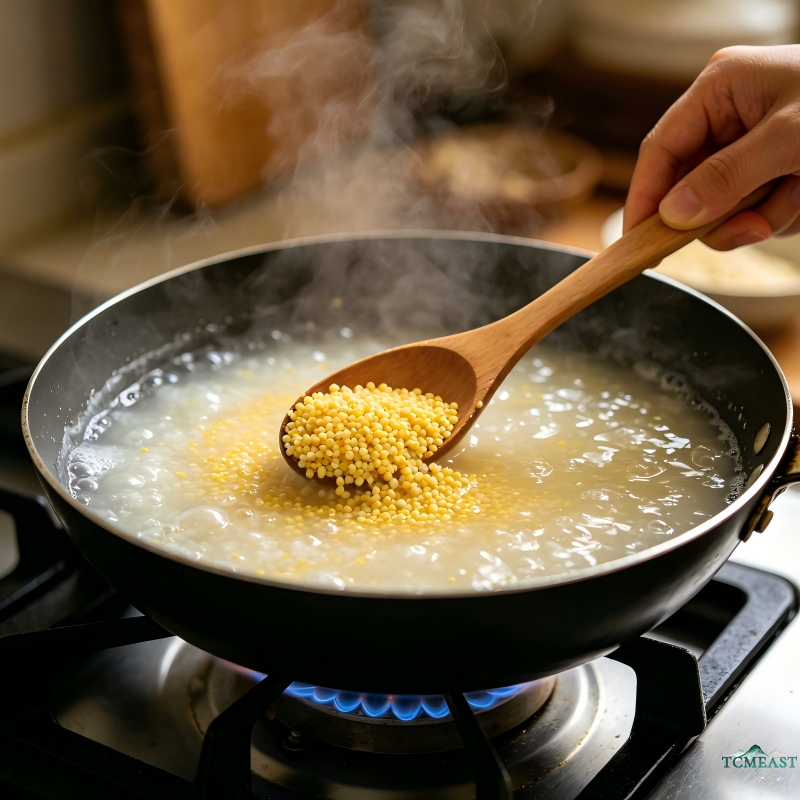
Once boiling again, reduce to low heat, cover with a slight gap, and cook for 25-30 minutes, stirring occasionally (about every 5 minutes), until the millet grains burst open, the porridge thickens, and a glossy layer of "rice oil" forms on top.
In the last 5 minutes, add goji berries and rock sugar. Stir evenly, allowing residual heat to dissolve the sugar fully and rehydrate the berries until plump.
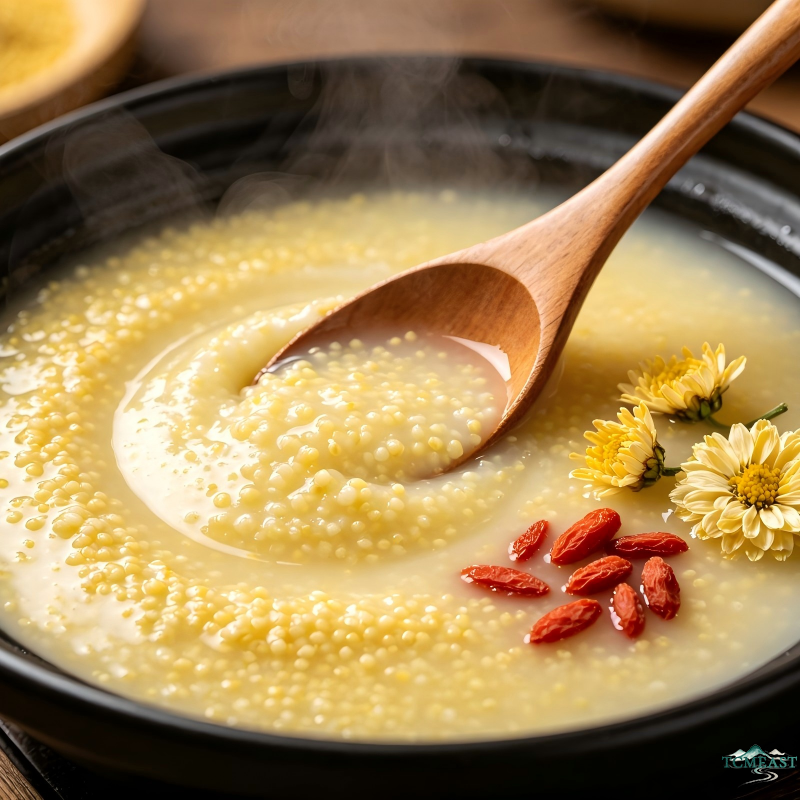
Turn off the heat, cover tightly, and let rest for 5-8 minutes to let the chrysanthemum aroma infuse thoroughly with the millet. Serve warm, garnished with a few whole edible chrysanthemum petals if desired.
TCM Notes
Core effect – liver-clearing, eye-nourishing & wind-heat dispersing:Chrysanthemum is rich in flavonoids (e.g., luteolin glycoside, apigenin) with powerful antioxidant and anti-inflammatory properties – it dilates ocular microvessels, improves retinal blood supply, and alleviates eye strain and dryness;zeaxanthin and goji polysaccharides in goji berries specifically accumulate in the retinal macula, absorbing blue light and protecting optic nerve cells – their combined vision-protective effect is exceptional. Heat-clearing, fire-descending & liver-soothing:Chrysanthemum, slightly cool in nature, enters the liver meridian – it clears stagnant liver-heat, relieving red, swollen eyes, headaches, dizziness and irritability;goji berries nourish liver-yin – one clears, one nourishes, preventing the cool nature from depleting yin. Stomach-soothing, mind-calming & sleep-promoting:Millet is rich in tryptophan (~190mg per 100g), a precursor to melatonin and serotonin, which sedates the central nervous system and improves sleep onset;the "rice oil" on millet is packed with B vitamins and mucopolysaccharides, forming a protective film on the gastric mucosa for gentle stomach care. Antioxidant & anti-aging:Chlorogenic acid in chrysanthemum and carotene in goji berries synergistically scavenge free radicals, reduce oxidative DNA damage, and delay skin aging and vascular endothelial senescence. Trace mineral supplementation:Goji berries supply iron, zinc and selenium;millet provides magnesium, phosphorus and potassium;chrysanthemum offers potassium and calcium – together they maintain electrolyte balance, stabilize blood pressure and support nerve transmission.
Suitable for:Office workers and students who stare at computer/phone screens for long hours (eye fatigue, dry-eye tendency) Those with exuberant liver-fire (red, swollen eyes, excessive eye discharge, bitter dry mouth, irritability) People needing heat-clearing and yin-nourishing care during spring-summer or autumn dryness seasons Those with mild insomnia, difficulty falling asleep, or restless dream-filled sleep Individuals with hypertensive tendencies (adjunctive liver-calming and yang-suppressing support) Mental workers under high stress, excessive brain strain or nervous tension Middle-aged and elderly people who need gentle "clear-tonifying" rather than heavy warm-tonifying
Not suitable for:Spleen-stomach deficiency-cold or severe cold-dampness constitution (use with caution):Symptoms include intolerance to cold, abdominal pain, diarrhea triggered by cold foods, loose stools, pale and scalloped tongue – chrysanthemum's cool nature will worsen cold-deficiency. If consuming, add 3 slices of fresh ginger or 3 red dates to the pot to balance the coolness, and do not consume continuously for long periods. Acute wind-cold colds (Absolute contraindication):Symptoms include chills, fever without sweating, headache, body aches, clear runny nose, white phlegm – chrysanthemum is only indicated for wind-heat colds. Using it for wind-cold "adds cold to cold," trapping pathogens and worsening the condition. Hypotension patients (caution):Chrysanthemum has a clear blood pressure-lowering effect (by dilating peripheral vessels). If your BP is below 90/60mmHg, consuming this may increase dizziness and fatigue. Start with a small portion and monitor your blood pressure. Diarrhea or acute enteritis patients:Goji berries have a mild laxative effect (moistening the intestines);chrysanthemum is cool and may upset the stomach – together they can aggravate diarrhea. Pregnant women (avoid in first trimester):Chrysanthemum is slightly cool and promotes circulation while goji berries are mildly warm – but the overall nature is cool. Avoid large amounts in early pregnancy;consult a TCM practitioner if needed. Those allergic to Asteraceae plants (chrysanthemum, dandelion, ragweed, etc.) – may develop skin rashes or respiratory allergies.
