
Herbal Teas
Chrysanthemum and Goji Berry Tea
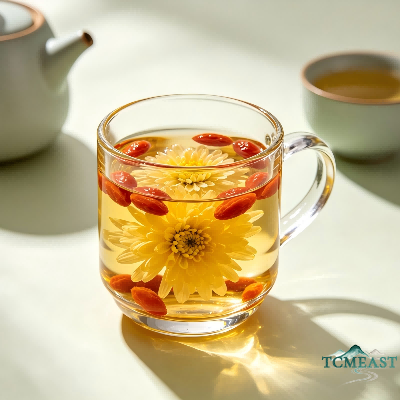
Chrysanthemum and goji berry tea is a traditional Chinese herbal tea originating from the classic text Good Prescriptions of Chinese Medicine. Chrysanthemum, slightly cold in nature, disperses wind-heat and calms the liver to improve vision. Goji berries, neutral in nature and sweet in taste, nourish the liver and kidneys and brighten the eyes. One clears, one nourishes – this classic combination clears liver-fire while replenishing liver-yin, embodying the principle of "clearing and tonifying simultaneously". The tea has a clear, pale yellow color, with a delicate floral aroma and a sweet, refreshing aftertaste. It is especially suitable for modern individuals who spend long hours in front of computers and phones, experiencing dry, tired eyes. It is an indispensable "eye-care companion" in the office and at home.
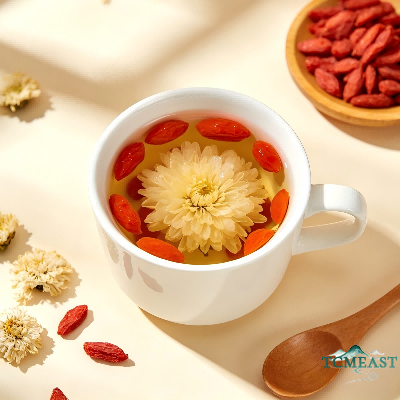
Main Ingredients
- Dried chrysanthemum flowers (Hangzhou white chrysanthemum or fetal chrysanthemum preferred) 5-10g (about 5-10 flowers)
- Goji berries (Ningxia goji preferred) 10-15g (about 15-20 berries)
- Boiling water 300-500ml
- Rock sugar to taste
Steps
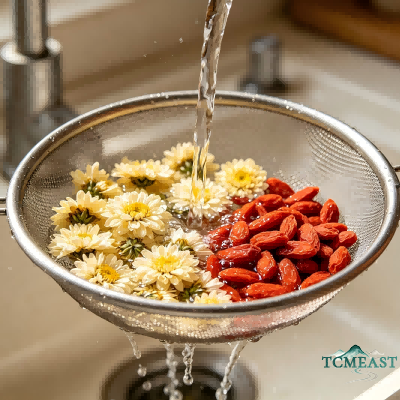
Quickly rinse the chrysanthemum flowers and goji berries with water to remove surface dust.
Place the rinsed chrysanthemum and goji berries into a teapot or cup, and pour in freshly boiled water.
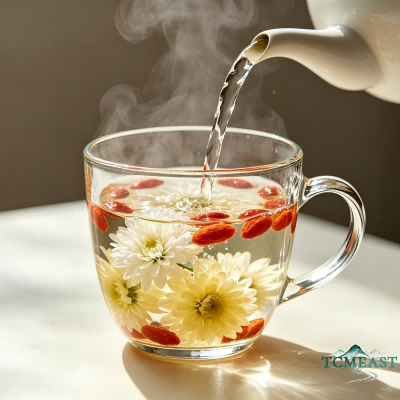
Cover and steep for 5-10 minutes to allow the fragrance and sweetness to fully release. If using a thermos, steep for about 15 minutes.
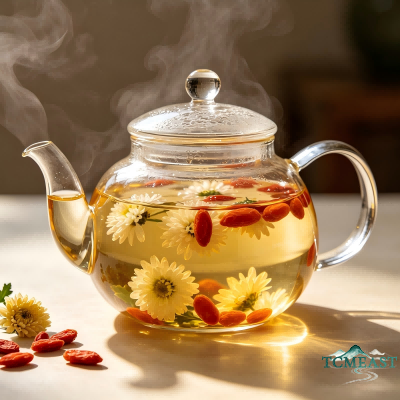
When the tea cools to below 60°C (not scalding), add honey or rock sugar to taste.
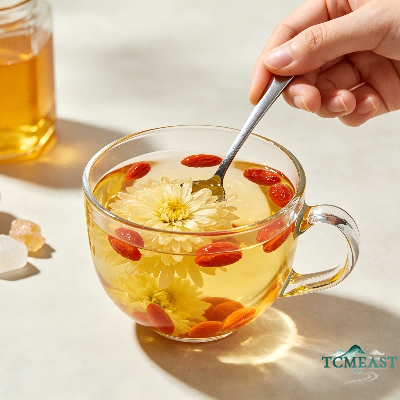
It is recommended to drink 1-2 cups per day. Consume immediately after brewing and avoid leaving it for too long. Can be re-brewed 5-7 times.
TCM Notes
Liver-clearing & vision-improving (core benefit): Flavonoids in chrysanthemum inhibit capillary inflammation in the eyes, reducing congestion from eye strain. Beta-carotene in goji berries converts to vitamin A in the body, participating in the synthesis of rhodopsin in retinal photoreceptor cells and improving dark adaptation. Together, they effectively relieve dry eyes and blurred vision. Nourishing the liver and kidneys: Goji berry polysaccharides nourish liver and kidney yin, improving symptoms such as dizziness, tinnitus, and weak knees caused by liver-kidney yin deficiency. Clearing heat and reducing fire: Chrysanthemum clears liver-fire and disperses wind-heat, relieving red, swollen, painful eyes, headaches, dizziness, and irritability caused by exuberant liver-fire. Nutrient-rich: Contains betaine, amino acids, carotene, vitamins B1, B2, C, calcium, phosphorus, iron, and other nutrients. Antioxidant & anti-aging: Flavonoids in chrysanthemum and polysaccharides in goji berries help scavenge free radicals.
Suitable for:Office workers and students who use computers and phones for long periods (eye strain, dry eyes, vision fatigue) Those with exuberant liver-fire (red, swollen eyes, bitter dry mouth, irritability) Those with liver-kidney yin deficiency (dizziness, blurred vision, weak knees, tinnitus) Those with high blood pressure or high cholesterol (adjunctive support) General population for daily wellness
Not suitable for:Those with spleen-stomach deficiency-cold (Use with caution!):Symptoms include cold intolerance, abdominal pain, loose stools, stomach pain after eating cold foods – chrysanthemum is slightly cold in nature and may worsen deficiency-cold symptoms. If consuming, reduce chrysanthemum to 3-5g and add 2-3 red dates or a little rock sugar to balance the cold nature. Those with wind-cold colds (Avoid!):Symptoms include chills, fever, thin white phlegm, clear runny nose – the cooling tea will worsen the condition. Those with diarrhea or acute enteritis (Avoid!):Chrysanthemum has a mild laxative effect that may aggravate diarrhea. Those with yang deficiency or cold extremities (Use with caution):The tea is cooling and may worsen yang deficiency symptoms. Pregnant women (Use with caution):Chrysanthemum is cold in nature – excessive consumption may cause abdominal discomfort. Those with heat constitution or hypertension (Limit intake):Goji berries are strongly nourishing – excessive consumption may cause上火 (excessive internal heat). Teenagers under 18 (Limit intake):Plant hormones in goji berries may affect endocrine balance.