
Herbal Teas
Mulberry Leaf and Chrysanthemum Tea
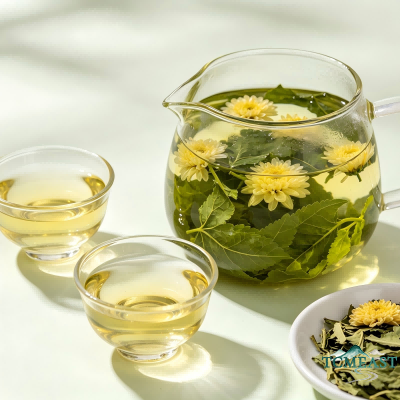
Mulberry leaf and chrysanthemum tea is a classic herbal tea with roots in traditional Chinese medicine. Mulberry leaves, cold in nature, are known for dispersing wind-heat, moistening the lungs, and clearing the liver to improve vision. Chrysanthemum, slightly cold in nature, clears heat, calms the liver, and brightens the eyes. Both act on the lung and liver meridians, and when combined, they create a synergistic effect. Mulberry leaves clear lung heat and moisten dryness to treat upper-body wind-heat, while chrysanthemum clears liver fire and calms liver yang – together, they both expel external wind-heat and clear internal liver fire. The tea has a clear, pale yellow color, with a unique sweet and refreshing taste from the mulberry leaves and a delicate floral aroma from the chrysanthemum. It is especially suitable for dry autumn days, or for those who stay up late or overwork their eyes.
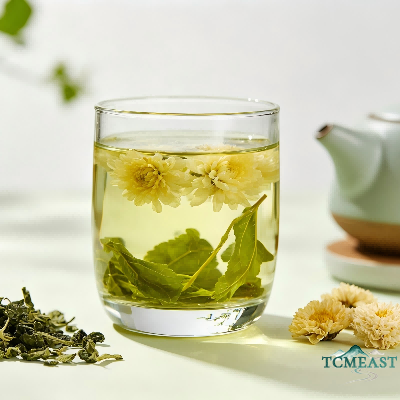
Main Ingredients
- Mulberry leaves (frosted mulberry leaves preferred) 3-5g
- Dried chrysanthemum flowers (Hangzhou white chrysanthemum preferred) 3-5g (about 5-8 buds)
- Boiling water 300-500ml
- Rock sugar or honey to taste
Steps
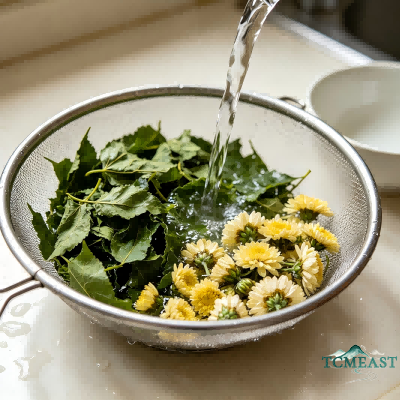
Quickly rinse the mulberry leaves and chrysanthemum flowers with water to remove surface dust, then drain.
Place the mulberry leaves and chrysanthemum flowers into a teacup or teapot. Pour in boiling water at 95℃-100℃.
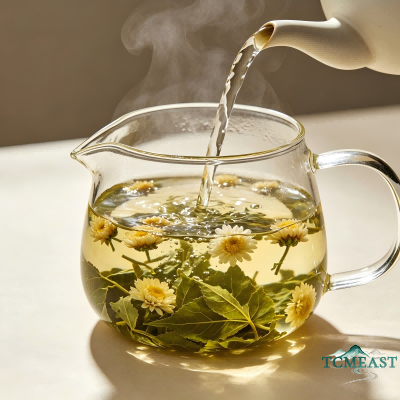
Cover and steep for 5-10 minutes to allow the flavors to fully release.
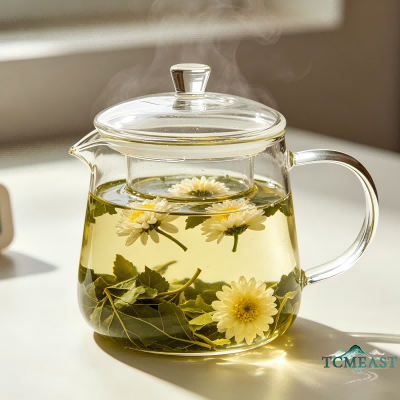
When the tea cools to about 50℃-60℃, add rock sugar or honey to taste.
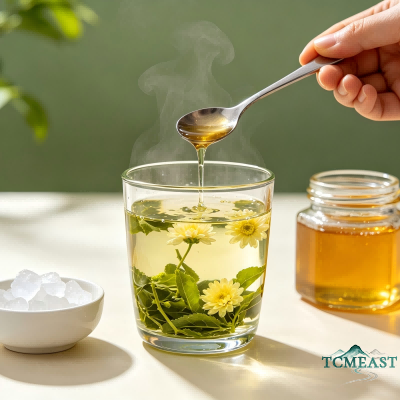
It is recommended to drink 1-2 servings per day as a tea substitute. Consume immediately after brewing. Can be re-brewed 2-3 times.
TCM Notes
Dispersing wind-heat (core benefit): Both mulberry leaves and chrysanthemum are pungent and cool in nature, used to release the exterior and disperse wind-heat pathogens. They help relieve fever, headache, sore throat, and cough caused by wind-heat colds. Clearing the liver and improving vision (core benefit): Both act on the liver meridian, dispersing liver wind-heat and clearing liver fire to improve vision. Mulberry leaves clear lung heat, moisten dryness, and calm liver yang; chrysanthemum clears liver heat, improves vision, and detoxifies. Together, they enhance eye health, effectively relieving dry eyes, blurred vision, and red, swollen eyes. Moistening the lungs: Mulberry leaves clear lung heat and moisturize lung dryness, relieving coughs and dry coughs with little phlegm caused by lung heat or dryness. Calming liver yang: Both mulberry leaves and chrysanthemum help calm hyperactive liver yang, improving dizziness, headaches, and tinnitus caused by liver yang rising. Antioxidant & nutrient-rich: Chrysanthemum is rich in vitamin A; mulberry leaves contain flavonoids. Together, they provide antioxidant benefits, helping to scavenge free radicals and slow aging.
Suitable for:Office workers and students who use computers and phones for long periods (eye strain, dry eyes, vision fatigue) Those in the early stages of wind-heat colds (fever, headache, sore throat, dry cough) Those with exuberant liver fire (red, swollen eyes, headaches, dizziness, irritability) Those prone to dryness and heat in autumn Those with high blood pressure or dizziness (adjunctive support) General population for daily wellness
Not suitable for:Those with spleen-stomach deficiency-cold (Use with caution or avoid!):Symptoms include cold intolerance, abdominal pain, loose stools, and stomach pain after eating cold foods – both mulberry leaves and chrysanthemum are cold in nature and may worsen deficiency-cold symptoms. If consuming, add goji berries or red dates to balance the cold nature, and limit continuous consumption to 5 days. Those with wind-cold colds (Avoid!):Symptoms include chills, fever, thin white phlegm, and clear runny nose – this tea is specifically for wind-heat colds and may worsen wind-cold conditions. Those with low blood pressure (Use with caution or avoid):This tea has a mild blood pressure-lowering effect and may further reduce blood pressure, worsening dizziness and fatigue. Pregnant women and women during menstruation (Use with caution):The tea is cooling in nature – pregnant women should consume with caution; menstruating women may experience changes in menstrual flow. Those with allergies (Avoid!):Those allergic to mulberry leaves or chrysanthemum may experience rashes, itching, or breathing difficulties. Avoid before bedtime: The tea has a diuretic effect – drinking it before bed may cause frequent urination and disrupt sleep.
