
Soups
Kelp and Soybean Soup
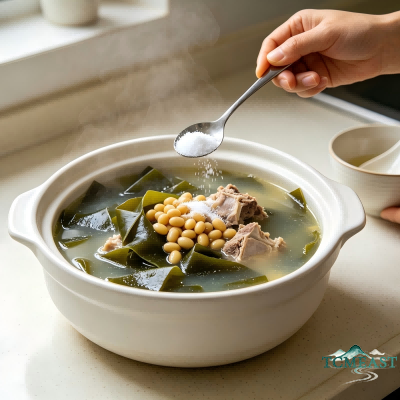
Kelp and soybean soup is a light, savoury, and nourishing home-style soup. Kelp is rich in iodine and dietary fibre, helping to soften hardness, dissipate nodules, and reduce edema. Soybeans are rich in plant protein and lecithin, strengthening the spleen and supplementing nutrition. Slowly simmered together, the ocean freshness of kelp and the nutty richness of soybeans blend into a clear, warming broth. This soup is low in fat and high in fibre – especially suitable for those needing iodine supplementation, lipid management, or edema relief.
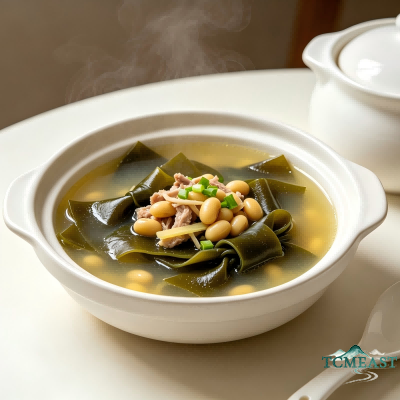
Main Ingredients
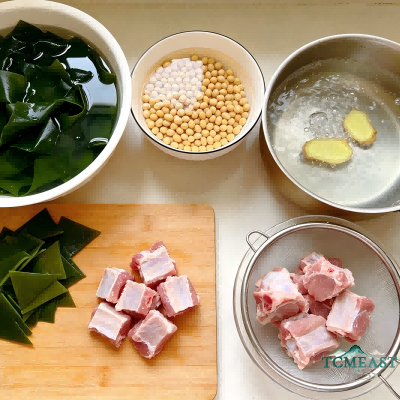
- Dried kelp 30g
- Soybeans 80g
- Pork bones (or lean pork) 200-300g
- Fresh ginger 3-5 slices
- Candied dates 1-2 pcs
- Salt to taste
- Water approx. 1.5-2L
Steps
Soak dried kelp in cold water for 2-3 hours, rinse thoroughly to remove sand, and cut into strips or diamond shapes. Soak soybeans in water for at least 4 hours (or overnight), then rinse. Blanch pork bones in cold water with 2 slices of ginger, bring to a boil, skim off foam, boil for 3-5 minutes, then rinse with warm water.
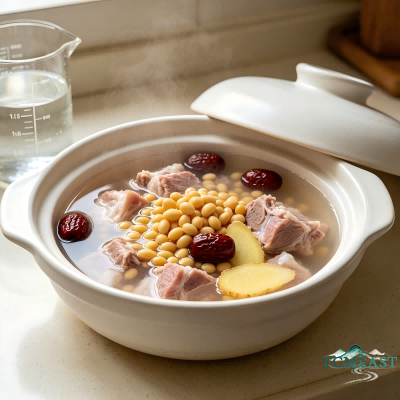
Place the soaked soybeans, pork bones (if using), remaining ginger slices, and candied dates (if using) into a clay pot. Add water (approx. 1.5-2L). Bring to a boil over high heat, then reduce to low heat, cover, and simmer for 1-1.5 hours until the soybeans are tender.
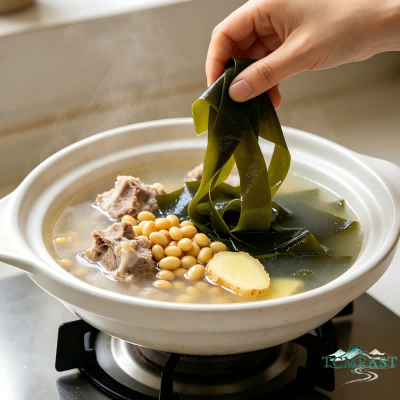
Add the prepared kelp and continue simmering for about 30 minutes until the kelp is soft and has released its flavour.
Add salt 10 minutes before serving (adding salt too early makes the beans harder to soften). Stir well and serve hot.
TCM Notes
Iodine & mineral supplementation (core benefit of kelp): Kelp is rich in iodine (approx. 240mg per 100g dried), making it a natural iodine supplement that supports thyroid health. It also provides calcium, iron, potassium, and other minerals. High-quality plant protein (core benefit of soybeans): Soybeans contain about 36% high-quality plant protein, essential amino acids, and lecithin – helping to lower cholesterol and protect cardiovascular health. Diuretic, edema-reducing & softening hardness: Kelp is cold in nature and salty in taste, acting on the liver, stomach, and kidney meridians – it helps reduce edema and soften hard masses, providing supportive benefits for goiter and swelling. Promoting intestinal motility (dietary fibre): Both kelp and soybeans are rich in dietary fibre, helping to promote bowel movements and detoxify the body. Supporting healthy blood pressure & lipids: Alginate and mannitol in kelp have mild blood pressure- and lipid-lowering effects. Soy isoflavones and plant sterols help regulate blood lipids.
Suitable for:Those needing iodine supplementation (e.g., iodine-deficiency goiter) Vegetarians needing plant protein and calcium supplementation Those with high blood pressure or high cholesterol Those with edema, puffiness, or poor urination Those with constipation or slow intestinal motility General population for daily wellness
Not suitable for:Those with hyperthyroidism (Graves' disease) (Strictly avoid!): Kelp is extremely high in iodine – consumption will worsen the condition. Those with spleen-stomach deficiency-cold or diarrhea (Use with caution!): Kelp is cold in nature and soybeans are gas-producing – may worsen diarrhea, abdominal coldness, or bloating. Add extra ginger to balance. Those with acute gout flare-ups (Use with caution!): Soybeans and kelp contain moderate purines – strictly limit during acute attacks. Those with kidney dysfunction (Under medical supervision): Soybeans are high in protein and potassium – patients needing protein or potassium restriction should consult a doctor. Those allergic to kelp or soybeans (Avoid).
