
Herbal Teas
Astragalus and Codonopsis Tea (Huang Qi Dang Shen Qing Cha)
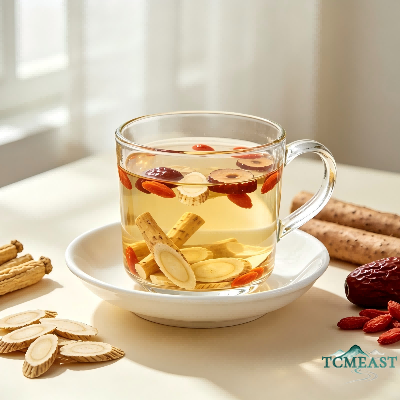
Astragalus and codonopsis tea is a classic "number one qi-tonifying" tea with roots in traditional Chinese medicine. Astragalus is known for "tonifying qi, raising yang, and securing the exterior", while codonopsis excels at "strengthening the spleen, benefiting the lungs, nourishing blood, and generating fluids". Both act on the spleen and lung meridians – one lifts yang and secures the exterior, the other strengthens the spleen and generates fluids. Together, they tonify the middle qi and fortify the body's foundation. The tea has a clear, pale yellow color with a mild, sweet, and slightly nutty flavor. It is especially suitable for office workers who feel fatigued, weak, or have low immunity – a true "energy charger" for the office and home.
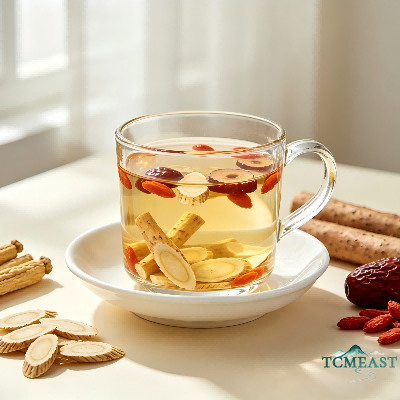
Main Ingredients
- Astragalus root (Huang Qi) 5-10g
- Codonopsis root (Dang Shen) 5-10g
- Boiling water 300-500ml
Steps
Quickly rinse the astragalus and codonopsis with water to remove surface dust.
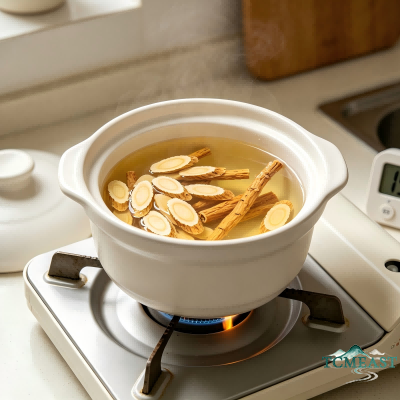
Brewing method (convenient): Place the rinsed herbs into a thermos or teacup. Pour in hot water at 85℃-95℃. Cover and steep for 15-20 minutes. Can be re-brewed until the flavor fades. Decoction method (more potent): Place the herbs into a clay pot or herbal kettle with water. Bring to a boil over high heat, then reduce to low heat and simmer for 15-20 minutes. Turn off the heat and let steep for another 15 minutes without lifting the lid.
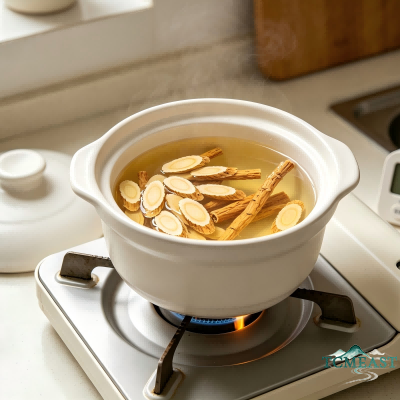
Best consumed between 9-11 AM (the Spleen meridian time). Drink 3-4 days per week. Daily intake should not exceed 10g of each herb.
TCM Notes
Tonifying the middle qi, strengthening the spleen & benefiting the lungs (core benefit): Astragalus tonifies qi and raises yang, relieving mental fatigue and dizziness. Codonopsis tonifies the middle and nourishes the spleen and stomach. Together, they significantly improve poor appetite, indigestion, and post-meal bloating caused by spleen qi deficiency. Securing the exterior, stopping sweating & boosting immunity: Astragalus "secures the exterior" and strengthens the defensive qi, helping those who sweat easily or catch colds frequently. Modern research confirms that both herbs enhance immune function. Nourishing blood & generating fluids: Codonopsis contains iron, amino acids, and polysaccharides that increase hemoglobin and support hematopoiesis. Combined with astragalus, it nourishes qi and blood, relieving dizziness, pale complexion, and cold intolerance. Anti-fatigue & memory support: Helpful for those with chronic fatigue and poor memory.
Suitable for:Those with spleen qi deficiency – chronic fatigue, shortness of breath, lethargy Those with weak defensive qi – excessive sweating, frequent colds Those with poor appetite, indigestion, or post-meal bloating Those with qi-blood deficiency – sallow or pale complexion, dizziness Elderly individuals with low immunity and sub-healthy populations Those recovering from illness or postpartum Office workers with chronic fatigue from desk jobs
Not suitable for:Those with colds, fevers, or acute inflammation (Strictly avoid!): These tonic herbs may trap pathogens in the body and worsen the condition. Those with excess heat or heat constitution (Avoid!): Symptoms include dry mouth, sore throat, constipation, yellow greasy tongue coating – these warming tonics will worsen internal heat. Those with yin deficiency with fire-excess (Avoid!): Symptoms include hot palms/feet, night sweats, red tongue with little coating. Those with high blood pressure (Use with caution or avoid!): May affect blood pressure. Pregnant women (Avoid or consult a doctor!): May affect the fetus. Women during menstruation (Use with caution): May affect menstrual flow. Those allergic to astragalus or codonopsis (Avoid!): May cause rashes, itching, or other allergic reactions. Those with damp-heat or phlegm-heat constitution (Avoid!): Symptoms include thick greasy tongue coating, bitter sticky mouth. Those taking Veratrum (Avoid!): Codonopsis is incompatible with Veratrum.
