
Congees
Black Bean Congee
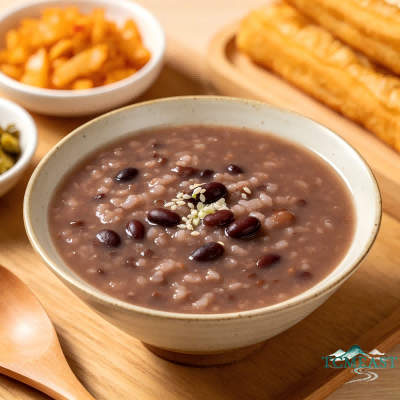
Black Bean Congee is a traditional Chinese wellness porridge made with black soybeans as the star ingredient, paired with glutinous rice (or black rice), red dates, and other nourishing ingredients, slowly simmered to creamy perfection. In Traditional Chinese Medicine, "black foods enter the Kidney meridian." Black soybeans are neutral in nature, sweet in taste, channeling to the Spleen and Kidney meridians. Known as the "Kidney Grain," they are celebrated for nourishing kidney yin, strengthening the spleen, promoting diuresis, invigorating blood, detoxifying, and darkening hair while brightening the eyes. Combined with the warming smoothness of glutinous rice, the blood-nourishing properties of red dates, and the liver-supporting benefits of goji berries, this congee delivers a harmonious blend of flavors and benefits. The porridge is thick, fragrant, mildly sweet, and suitable for all ages. Black Bean Congee is not only an excellent breakfast choice but also an ideal therapeutic meal for winter nourishment, postpartum recovery, and those whose kidneys are stressed by late nights. In Fujian, Guangdong, and other regions, it is often enjoyed as a seasonal health food during the Winter Solstice or the Beginning of Winter.
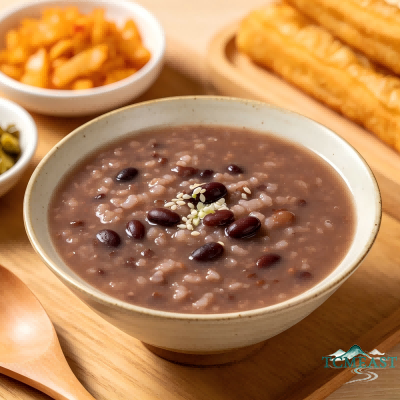
Main Ingredients
- Black soybeans (green-kernel variety preferred) 80g
- Glutinous rice or black rice 50g
- Red dates (pitted) 6-8 pieces (approx. 30g)
- Goji berries 10g
- Rock sugar or brown sugar To taste (approx. 15-25g, adjust as desired)
- Water Approx. 1200-1500ml
Steps
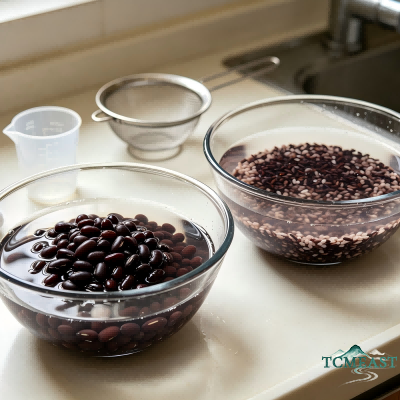
Rinse black soybeans thoroughly, then soak in sufficient cold water for at least 6-8 hours (ideally overnight). In summer, refrigerate while soaking to prevent spoilage. After soaking, the beans should double in size, with softened skins that are ready to break down easily during cooking.Rinse glutinous rice (or black rice) and soak in cold water for 2-3 hours. If short on time, a minimum of 30 minutes will help.
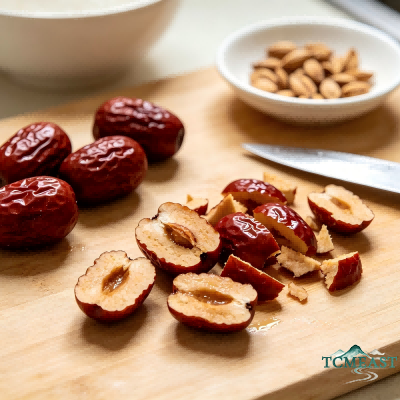
Rinse red dates, remove pits, and cut into small pieces or tear them open (pitting ensures safe eating and releases more date flavor into the congee).
Stovetop method: Place the soaked black soybeans, glutinous rice (or black rice), and red dates into a clay pot or stainless steel pot. Add sufficient water (approx. 1200-1500ml). Bring to a boil over high heat, then reduce to low heat and simmer for 1-1.5 hours. Stir occasionally to prevent sticking. The congee is ready when the black beans can be easily crushed between your fingers and the porridge is thick. Pressure cooker / Instant Pot method: Place all ingredients except goji berries into the pot, add water, and pressure-cook for 25-30 minutes after reaching pressure. Release pressure naturally before opening.
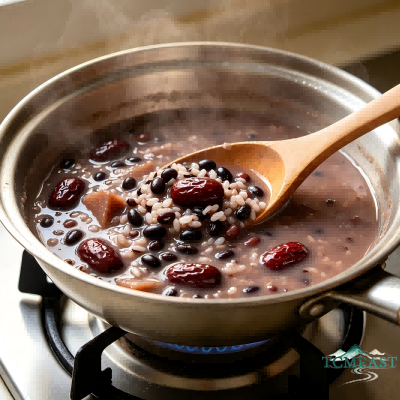
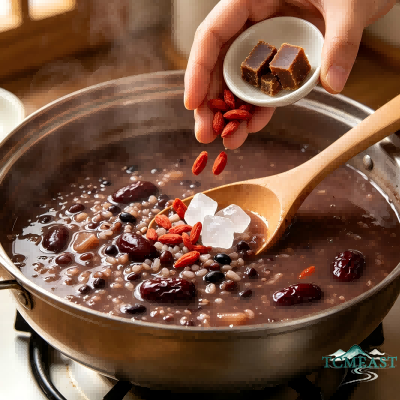
Once the congee is thick and creamy, add goji berries and rock sugar (or brown sugar). Cook for another 5-8 minutes until the sugar is fully dissolved. Brown sugar offers more warming and blood-tonifying benefits compared to rock sugar, making it especially suitable for women postpartum or during winter.
Turn off the heat, cover, and let the congee rest for 10-15 minutes. The residual heat will further meld the flavors and create an even silkier consistency.
TCM Notes
Black soybeans are often called the "King of Beans" for their exceptional nutritional profile. Per 100g, they contain approximately 36g of protein, 16g of fat (mostly unsaturated fatty acids), 23g of carbohydrates, and 10g of dietary fiber. They are rich in anthocyanins (potent antioxidants), vitamin E, B-complex vitamins (especially B1, B2, B6), folic acid, and minerals such as calcium, phosphorus, magnesium, iron, zinc, and selenium. Their calcium content is nearly twice that of yellow soybeans, and their iron content is notably high. From a TCM perspective: Black soybeans: Sweet and neutral, entering the Spleen and Kidney meridians. Nourish kidney yin, strengthen the spleen, promote diuresis, clear heat, and detoxify. Helpful for kidney deficiency-related lower back pain, edema, night sweats, and premature graying of hair. Glutinous rice: Warms the middle burner, replenishes qi, strengthens the spleen, and warms the stomach, adding viscosity and nourishment. Red dates: Tonify qi and blood, calm the spirit, and moderate the slight coolness of black beans. Goji berries: Nourish the liver and kidney, and improve eyesight. From a modern nutritional perspective: The isoflavones in black soybeans have estrogen-like effects that benefit women's hormonal balance; anthocyanins scavenge free radicals and slow aging; high dietary fiber supports healthy gut microbiota and relieves constipation.
Suitable for:Those with kidney deficiency (lower back soreness, frequent nighttime urination, premature graying) Those with insufficient qi and blood (pale complexion, fatigue, dizziness, cold hands and feet) Postpartum women and those recovering from illness (brown sugar version recommended) Middle-aged and older adults (bone health support and anti-aging) Those who stay up late frequently, work under high stress, or overuse their brain Those with constipation (high dietary fiber promotes bowel motility) Vegetarians (excellent source of plant-based protein) Those who feel cold easily, especially in autumn and winter
Not suitable for:Those with poor digestion or severe bloating: Black beans contain oligosaccharides (e.g., stachyose) that may cause gas. People with weak GI function should consume sparingly or cook with aged tangerine peel. Those with acute kidney disease or severe renal insufficiency: Protein and potassium intake must be tightly controlled. Consult a doctor before consuming. Those in acute gout flare-up: Black beans are moderately high in purines (approx. 137mg per 100g). Avoid during acute attacks; consume in small amounts during remission. Those allergic to soy products Infants under 1 year of age: Digestive systems are not fully developed; not recommended. Those taking thyroid medication (levothyroxine): Soy products may interfere with absorption. Maintain a gap of at least 4 hours between consumption.
