
Herbal Teas
Pomegranate juice
Pomegranate juice is a completely natural fruit juice beverage made by hand-pressing or mechanically squeezing fresh pomegranates. Often hailed as the "liquid ruby," the pomegranate (Punica granatum) originates from Persia (modern-day Iran) and was introduced to China during the Han Dynasty by Zhang Qian. The translucent, ruby-like arils are sweet and slightly sour in taste, warm in nature, and channel to the Lung, Kidney, and Large Intestine meridians. They are known for promoting salivation, relieving thirst, astringing, stopping diarrhea, and arresting bleeding. Freshly pressed pomegranate juice is a brilliant crimson-red, with a refreshingly tangy and sweet taste and a complex flavor profile. Rich in pomegranate polyphenols, anthocyanins, ellagic acid, and vitamin C — with an antioxidant capacity 2-3 times higher than green tea and red wine — it is widely regarded as the "King of Antioxidants." A glass of fresh pomegranate juice daily effectively scavenges free radicals, delays aging, and protects cardiovascular health, making it an unmissable seasonal beauty drink for autumn and winter.
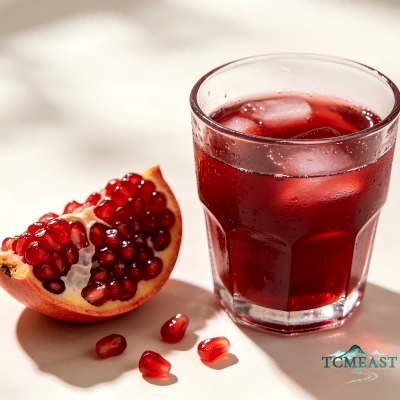
Main Ingredients
- Fresh pomegranates (soft-seed variety preferred) 1-2 pieces (approx. 400-600g, yielding 200-300ml of juice)
- Purified/filtered water 50-100ml
- Fresh lemon juice A few drops (approx. 5ml, prevents oxidation and preserves color)
- Honey or maple syrup To taste
- Ice cubes As needed
Steps
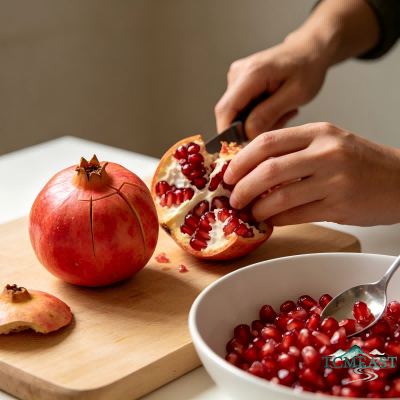
Wash and dry the pomegranate. Using a paring knife, cut a square or circular incision around the crown (calyx) about 1 cm deep, and remove the "lid." Gently score the outer skin along the internal white membranes (usually 4-5 sections). Following these lines, break the pomegranate into wedges with your hands, and gently tap the skin with a wooden spoon — the arils will fall out naturally. This method is cleaner than direct chopping and prevents damage to the arils.
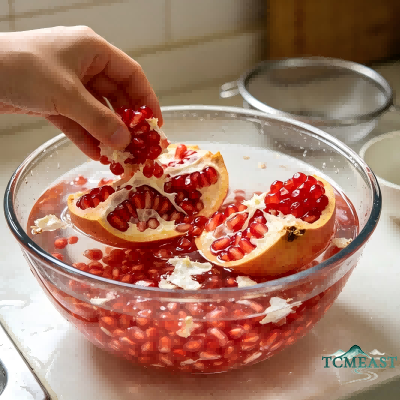
Fill a large bowl with water. Submerge the pomegranate wedges in the water and gently rub the red arils off the white pith and membranes with your fingers. The arils will sink to the bottom while the pith and skin fragments float to the surface. Skim off the floating debris, then drain the arils. This method prevents juice splatter stains on clothing and ensures a cleaner separation.
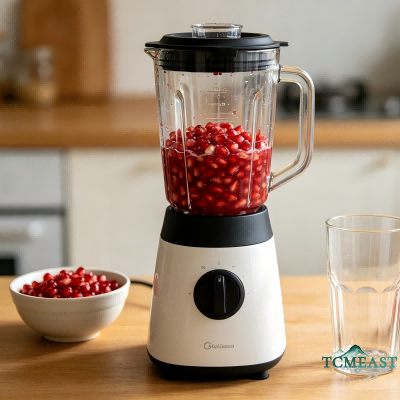
Manual squeezing method (retains pulp fiber): Place the arils in a thick zip-lock bag, gently roll and crush them with a rolling pin, then snip a small corner of the bag and squeeze the juice directly into a glass. Blender/Juicer method (higher yield): Place the arils into a blender or juicer, add a small amount of purified water (approx. 50ml to help the machine run), and blend on low speed for 30-60 seconds until the arils are completely crushed and juiced.
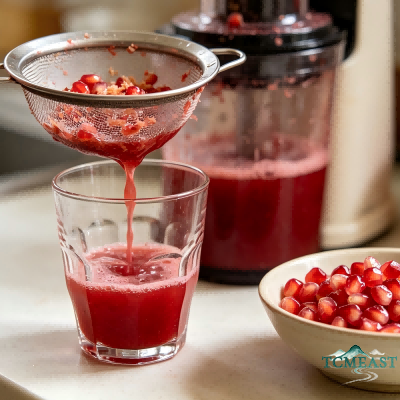
Strain the blended mixture through a fine-mesh sieve or cheesecloth to remove seed fragments and coarse fiber. If using soft-seed pomegranates and prefer a textured mouthfeel, you may skip straining or strain only once.
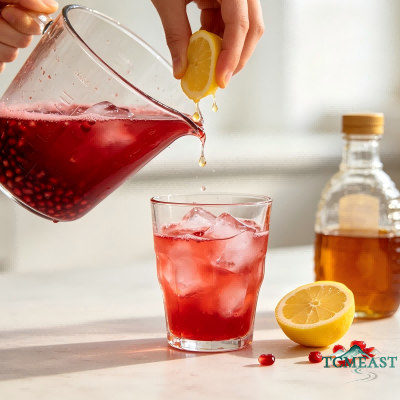
Add a few drops of fresh lemon juice to the strained pomegranate juice (this prevents oxidation and preserves the bright red color). Add honey or maple syrup to taste. Pour into a glass, add ice cubes, or refrigerate for 30 minutes before serving for the best refreshing taste.
TCM Notes
Key Active Compounds in Pomegranate: Pomegranate polyphenols (ellagic acid, gallic acid, etc.): Exceptionally high antioxidant activity — DPPH free radical scavenging capacity is 3 times that of green tea. Anthocyanins (pelargonidin-3-glucoside, etc.): Give pomegranate its vivid red color and protect vascular endothelium. Punicalagin: A unique, highly active polyphenol in pomegranate with significant anti-inflammatory and antibacterial effects. Traditional Chinese Medicine Perspective: Pomegranate is sweet and sour in taste, warm in nature, channeling to the Lung, Kidney, and Large Intestine meridians. It promotes salivation, relieves thirst, moistens the lungs, astringes the intestines, stops diarrhea, and arrests bleeding. It is a dietary aid for dry mouth, chronic diarrhea, and uterine bleeding. Pomegranate peel is more astringent and focuses on stopping diarrhea, while the juice focuses on moistening and relieving thirst. Modern Medical & Nutritional Research: Powerful antioxidant & anti-aging: Pomegranate juice has an ORAC (Oxygen Radical Absorbance Capacity) value of up to 2,900 units per 100g, effectively eliminating free radicals, slowing cellular aging, and reducing wrinkle formation. Cardiovascular protection: Daily consumption can lower both systolic and diastolic blood pressure, improve atherosclerosis, and reduce LDL (bad cholesterol) oxidation. Anti-inflammatory & joint protection: Pomegranate polyphenols inhibit inflammatory cytokines like COX-2, offering adjunctive relief for rheumatoid arthritis. Memory enhancement: Studies show that daily consumption improves episodic memory in middle-aged and older adults. Antimicrobial activity: Pomegranate juice has an inhibitory effect on various bacteria (e.g., E. coli, Staphylococcus aureus).
Suitable for:Health-conscious individuals seeking antioxidants and anti-aging benefits (natural skincare) Those at high risk of cardiovascular disease (hypertension, hyperlipidemia, atherosclerosis) Those experiencing dry mouth and sore throat during autumn dryness Those with low immunity and prone to colds Middle-aged and older adults (memory enhancement, prevention of cognitive decline) Those needing hydration and electrolyte replenishment after exercise Generally suitable for most people in moderation
Not suitable for:Diabetics: Pomegranate has a relatively high sugar content (approx. 18.7g/100g). Despite a low GI of around 35, portion control is strict (no more than 100ml per serving, unsweetened). Those with hyperacidity, gastric ulcers, or duodenal ulcers: The organic acids may irritate the gastric mucosa and worsen discomfort. Those with constipation: The astringent properties of pomegranate may exacerbate constipation. Those with dental caries (cavities): The juice is acidic and contains sugar; rinse your mouth immediately after drinking. Those with hypotension: Pomegranate juice has a blood-pressure-lowering effect; excessive intake may cause blood pressure to drop too low. Those taking specific medications: Pomegranate juice may affect the metabolism of statin drugs (e.g., atorvastatin), ACE inhibitor blood pressure medications, and warfarin. Consult your doctor before consuming if on these medications. Those allergic to pomegranate (rare but possible) Infants under 1 year old: Not recommended due to potential allergies or gastrointestinal distress. Women during menstruation: Pomegranate is warm and astringent. Those with cold constitution and menstrual cramps should consume in moderation, and avoid chilled juice.