
Congees
Red Bean, Lotus Seed, and Lily Bulb Congee
Red Bean, Lotus Seed, and Lily Bulb Congee is a classic Chinese wellness porridge that combines three major therapeutic effects: strengthening the spleen and expelling dampness, calming the heart and spirit, and moistening the lungs and stopping coughs. Made with red beans (adzuki beans), lotus seeds, and dried lily bulbs as the main ingredients, slowly simmered with glutinous rice (or japonica rice). Red beans are neutral in nature, sweet and sour in taste, and channel to the Heart and Small Intestine meridians. They are known for promoting diuresis, reducing swelling, detoxifying, expelling pus, strengthening the spleen, and stopping diarrhea — Li Shizhen called them the "Grain of the Heart." Lotus seeds, as previously detailed, strengthen the spleen, stop diarrhea, tonify the kidneys, consolidate essence, and calm the heart. Lily bulbs are sweet in taste, slightly cold in nature, and channel to the Heart and Lung meridians. They are known for nourishing yin, moistening the lungs, clearing the heart, and calming the spirit. The Shennong Bencao Jing records that they "treat pathogenic qi, abdominal distension, and heart pain, promote urination and defecation, and tonify the middle and supplement qi." The three combined — red beans expel dampness and nourish blood, lotus seeds strengthen the spleen and calm the spirit, and lily bulbs moisten the lungs and clear the heart — achieve a synergistic effect of nourishing the "Heart, Spleen, and Lungs" simultaneously. The porridge is thick, creamy, and smooth, with a rich texture from the mealy red beans, soft lotus seeds, and sweet lily bulbs. It is particularly suitable for those suffering from dampness during the late summer-autumn transition, restlessness with insomnia, and dry cough due to lung dryness, earning the title of the "Three-Organ Nourishing Heart-Calming Congee."
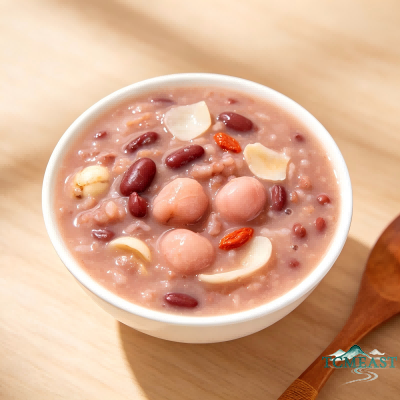
Main Ingredients
- Red beans (adzuki beans; small dark variety preferred for diuresis) 50-60g
- Lotus seeds (core-removed; white variety preferred) 25-30g
- Dried lily bulbs (Longya or Lanzhou variety) 15-20g
- Glutinous rice (or japonica rice/regular rice) 80g
- Rock sugar (or brown sugar) 15-25g
- Goji berries 5g
- Water Approx. 1500-1800ml
- Aged tangerine peel 1 small strip (approx. 2g)
Steps
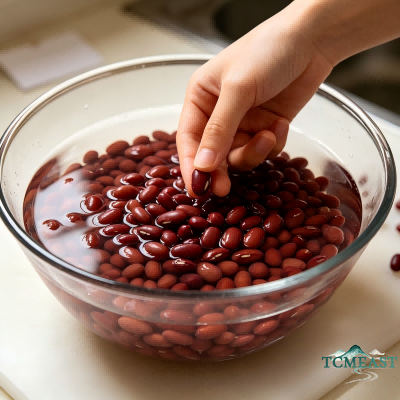
Rinse red beans thoroughly, cover with plenty of cold water, and soak for 4-6 hours (overnight in the refrigerator recommended) until they double in size and are soft to the touch with no hard core. Insufficient soaking will prevent the beans from becoming mealy and tender.
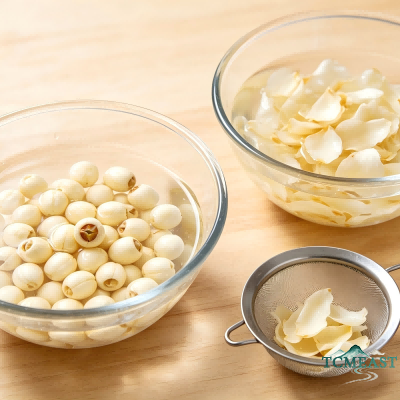
Rinse lotus seeds and soak in cold water for 2-3 hours until fully swollen (remove cores if not already done). Soak dried lily bulbs in warm water (approx. 40°C / 104°F) for 30-60 minutes until softened and pliable, then drain. Do not soak lily bulbs for too long, or they will disintegrate during cooking.
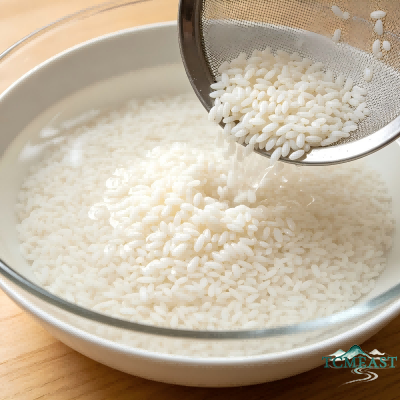
Rinse glutinous rice and soak in cold water for 30 minutes, then drain.
Add approximately 1500-1800ml of water to a pot and bring to a boil. Add the soaked red beans, return to a boil, then reduce to medium-low heat and cook for 30-40 minutes until the beans begin to split and release their starchy pulp.
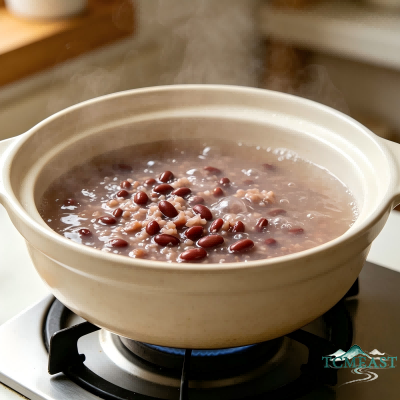
Add the soaked glutinous rice and lotus seeds to the pot. Bring to a boil again, then reduce to low heat and simmer for 25-30 minutes. Stir occasionally to prevent sticking.
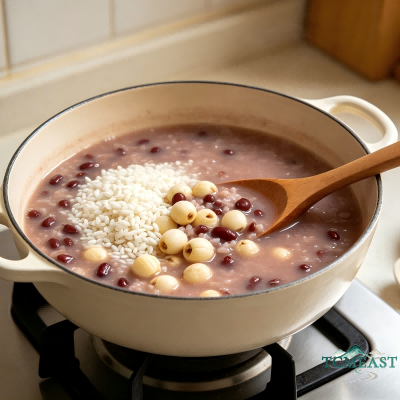
When the rice grains have bloomed and the porridge starts to thicken, add the soaked lily bulbs and tangerine peel (if using). Continue simmering over low heat for 15-20 minutes until the lily bulbs are translucent and tender, the red beans are mealy, and the lotus seeds are soft.
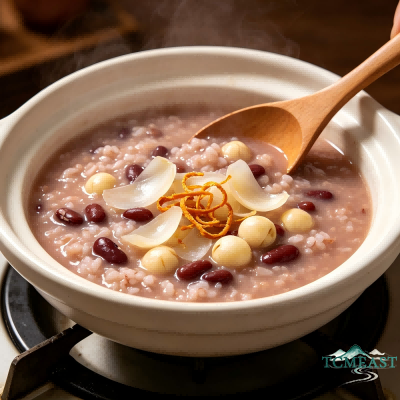
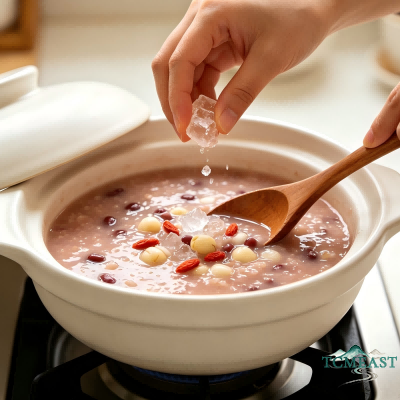
Add rock sugar (or brown sugar) and stir until fully dissolved (about 3-5 minutes). Turn off the heat, add goji berries (if using), cover, and let the porridge rest for 10-15 minutes. The residual heat will further thicken the porridge and meld the flavors.
TCM Notes
Nutritional Value of Lotus Seeds (per 100g dried) : Protein 17.2g, Calcium 97mg, Phosphorus 550mg, rich in liensinine and glycosides (sedative and calming). Lily bulbs are rich in alkaloids such as colchicine, which have anti-inflammatory and anti-fatigue effects. Traditional Chinese Medicine Perspective: Red beans: Sour and sweet, neutral, channel to the Heart and Small Intestine. Promote diuresis, reduce swelling, detoxify, expel pus, strengthen the spleen, stop diarrhea, and nourish blood. Lotus seeds: Sweet and astringent, neutral, channel to the Spleen, Kidney, and Heart. Strengthen the spleen, stop diarrhea, tonify the kidney, consolidate essence, and calm the heart. Lily bulbs: Sweet, slightly cold, channel to the Heart and Lung. Nourish yin, moisten the lungs, clear the heart, and calm the spirit. Tangerine peel (if used): Regulates qi, strengthens the spleen, dries dampness, and resolves phlegm, counteracting the richness of the beans. Modern Nutrition Research: Dampness relief and swelling reduction: The high potassium-to-sodium ratio (860:1) in red beans effectively eliminates excess body water, alleviating edematous obesity. Sleep improvement: Liensinine from lotus seeds and glycosides from lily bulbs act synergistically on the CNS to shorten sleep latency and reduce nighttime awakenings. Lung-moistening and cough relief: The mucilage from lily bulbs coats the throat mucosa, relieving dry autumn coughs. Blood-building and skincare: Red beans provide plant-based iron and B-vitamins, improving sallow complexion. Gut health regulation: High dietary fiber (7.5g/100g from red beans) promotes intestinal motility and relieves constipation.
Suitable for:Those with excessive internal dampness (thick greasy tongue coating, heavy body feeling, sticky stools) Those with insomnia, excessive dreaming, restlessness, frequent waking, and neurasthenia Those with dry cough without phlegm and itchy throat during autumn dryness Those with spleen deficiency (diarrhea, poor appetite, indigestion) Those with qi-blood deficiency, sallow complexion, and mild anemia Those with menopausal syndrome accompanied by restlessness and insomnia Those with edematous obesity requiring diuresis Middle-aged and older adults (for daily spleen, heart, and lung nourishment) Generally suitable for regular consumption by most people (neutral nature)
Not suitable for:Diabetics: Glutinous rice and rock sugar raise blood sugar quickly; consume with caution or without sugar, and replace glutinous rice with plain rice or oat rice. Those with wind-cold cough (clear thin phlegm, chills, no sweating): Lily bulbs are slightly cold and may worsen cold-type coughs. Those with severe spleen-stomach deficiency cold (loose stools, abdominal cold pain): Red beans and lotus seeds are slightly cooling (especially with lily bulbs). Add 2-3 slices of fresh ginger and tangerine peel to neutralize the coldness. Those with frequent urination or excessive nighttime urination: The diuretic effect of red beans may worsen symptoms. Those with poor digestion or severe bloating: Red beans and lotus seeds are rich in oligosaccharides that may cause gas; consume in small amounts and always add tangerine peel. Those taking cardiac glycoside medications (e.g., digoxin): Red beans may affect drug blood concentration — consult a doctor. Those allergic to red beans, lotus seeds, or lily bulbs Infants under 1 year old: Not recommended.
