
Stir-Fries
Celery with Peanuts
Celery with Peanuts is an incredibly popular classic Chinese cold appetizer. Renowned for its crisp, refreshing, palate-cleansing taste, it consistently holds the "C位" (center stage) on Northern Chinese family dinner tables and banquet cold-platter platters. The celery stalks are crisp, tender, and vibrantly green, retaining their natural aroma and satisfying crunch after a quick blanch. The peanuts (often called "longevity fruits") are boiled until soft, chewy, and infused with savory broth, creating a perfect textural contrast with the celery. With one green and one white (or reddish from red-skinned peanuts), one crunchy and one soft, combined with fragrant garlic, aged vinegar, and aromatic sesame oil, simple seasonings unlock a world of flavor. This dish is excellent for clearing liver heat, lowering blood pressure, strengthening the spleen, nourishing the stomach, and moistening the lungs. It is the ultimate palate-cleanser after heavy, greasy winter meals and a perfect side dish for any season.
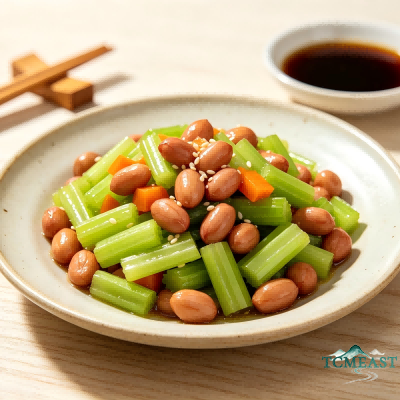
Main Ingredients
- Celery (western or local fragrant variety) 300g
- Raw peanuts (red-skinned preferred) 150g (dried weight)
- Carrot 1/2 piece (approx. 50g)
- Garlic (minced) 3 to 4 cloves
- Light soy sauce 2 tbsp (approx. 15ml)
- Aged black vinegar (or aromatic vinegar) 2 tbsp (approx. 15ml)
- Salt Approx. 3-5g
- White sugar Approx. 5g
- Sesame oil 1-2 tbsp (approx. 10ml)
- Sichuan peppercorn oil (or chili oil) A small amount (approx. 5ml)
- Star anise 1 piece
- Cinnamon bark
- Bay leaves
Steps
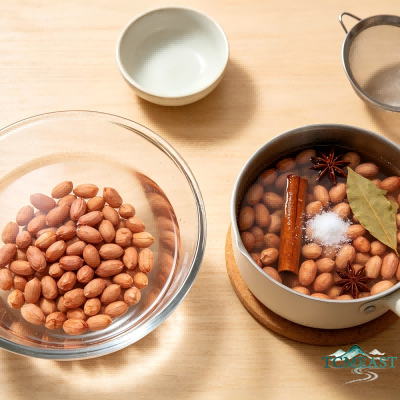
Rinse the peanuts, discarding any hollow, moldy, or broken ones. Place in a bowl, cover with plenty of cold water, and soak for 2-3 hours (or overnight in the refrigerator) until fully hydrated and the skins are slightly wrinkled. Transfer the soaked peanuts (along with the soaking water, or use fresh water) to a pot. Add star anise, cinnamon, bay leaves, and a little salt (approx. 2g). Bring to a boil over high heat, then reduce to medium-low heat and cook for 20-25 minutes (adjust to preference — up to 30 minutes for softer, mealier peanuts). After boiling, do not remove immediately; let them cool naturally in the cooking liquid to absorb the flavors (at least 30 minutes). Drain well and set aside.
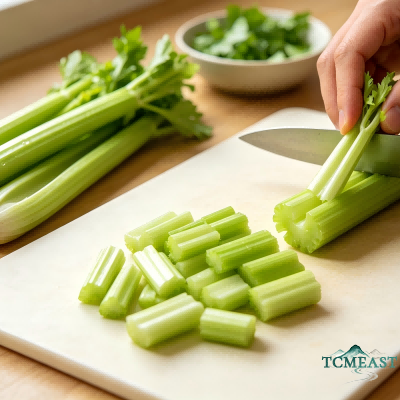
Remove the leaves from the celery (reserve for other uses, like egg drop soup). Wash the stalks thoroughly. Key operation: Snap each stalk from the root end toward the tip, peeling away the tough fibrous strings on both sides. This is the secret to achieving a tender-crisp texture without any chewy strings. Lightly tap the de-stringed stalks with the back of a knife to flatten them slightly (this helps absorb flavors), then slice diagonally into 3-4 cm sections.
Peel the carrot, slice into thick pieces, then cut into diamond-shaped slices or small strips similar in size to the celery pieces. Blanch for 1 minute, then remove and plunge into cold water.
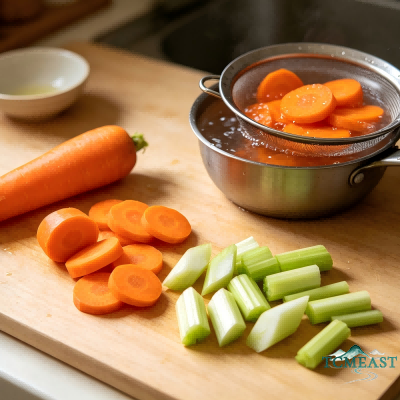
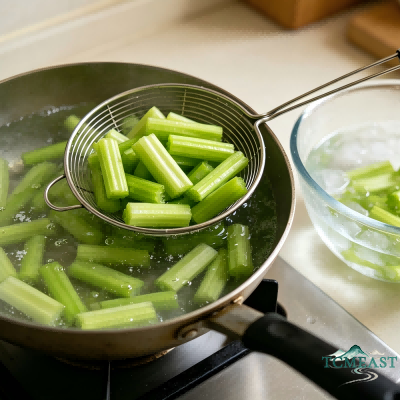
Bring water to a boil in a pot, adding a pinch of salt and a few drops of cooking oil (this keeps the color vibrant). Once boiling, add the celery pieces and blanch over high heat for 30-50 seconds (remove as soon as it's just cooked — do not overcook, or it will turn yellow and limp). Immediately transfer to an ice water bath to "shock" it. Once completely cooled, drain thoroughly. Shocking locks in the vibrant green color and the signature crunchy texture.
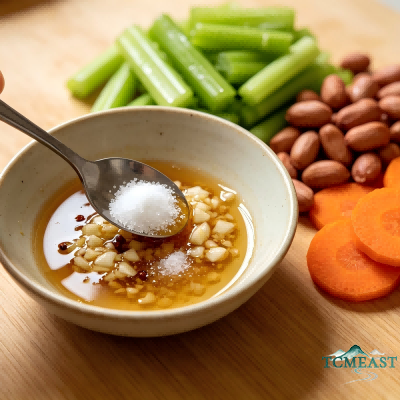
In a small bowl, combine the minced garlic, light soy sauce, black vinegar, sugar, remaining salt (approx. 2-3g), sesame oil, and Sichuan peppercorn oil (if using). Stir well until the sugar and salt are fully dissolved.
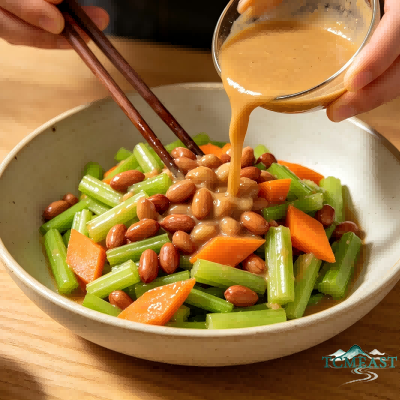
Place the drained celery, carrot (if using), and boiled peanuts into a large mixing bowl. Pour the dressing over the ingredients. Gently toss to combine (using chopsticks or gloved hands), ensuring every piece is evenly coated. Let it rest for 5-10 minutes to allow the flavors to meld. Plate and serve.
TCM Notes
Celery is rich in Apigenin and 3-n-Butylphthalide. The former has anti-inflammatory, sedative, and blood-pressure-lowering effects, while the latter is responsible for celery's distinctive aroma and helps relax vascular smooth muscle. Peanut skins are rich in anthocyanins and resveratrol, providing antioxidant and mild blood-clotting effects. Traditional Chinese Medicine Perspective: Celery: Sweet, slightly bitter, cooling in nature, channels to the Liver, Stomach, and Lung meridians. Calms the liver, clears heat, dispels wind, promotes diuresis, lowers blood pressure, and calms the spirit. Helps with Liver-yang hyperactivity symptoms like headaches, dizziness, red face, and irritability. Peanuts: Sweet, neutral, channels to the Spleen and Lung. Strengthen the spleen and stomach, moisten the lungs, resolve phlegm, nourish and regulate qi, and promote blood production and lactation. The red skin especially helps tonify blood and arrest bleeding. Modern Nutrition Research: Blood pressure regulation: Apigenin combined with a high-potassium, low-sodium profile helps dilate blood vessels and reduce blood pressure. Cardiovascular protection: Monounsaturated fats and vitamin E in peanuts work synergistically as antioxidants, lowering LDL ("bad") cholesterol. Brain health: Lecithin and cephalin in peanuts are essential nutrients for the nervous system, helping delay brain aging. Gut health: The combined high dietary fiber (1.6g from celery + 8.5g from peanuts) effectively promotes intestinal motility and relieves constipation. Hydration and dryness relief: With a water content of over 95%, celery effectively alleviates dry mouth during autumn and winter.
Suitable for:Those with high blood pressure and high cholesterol (natural "blood-pressure-lowering" dish) Those with constipation or sluggish bowel movements (high-fiber, motility-promoting) Those on a weight loss or weight management plan (extremely low calorie, high satiety) Those with poor appetite or summer heat irritability (refreshing and appetizing) Mental workers and students (peanuts nourish the brain) Those with anemia or pale complexion (peanut skins tonify blood) Middle-aged and older adults (vascular softening and anti-aging) Generally suitable as a daily side dish for most people
Not suitable for:Those in acute gout flare-ups: Peanuts are moderately high in purines (approx. 95mg/100g); avoid during acute attacks. May consume in small amounts (<30g) during remission. Those with severe hyperlipidemia or dyslipidemia: Peanuts are extremely high in fat; intake must be strictly controlled (no more than 20 peanuts per serving), and they should be boiled (not fried). Those allergic to peanuts (can cause anaphylactic shock; strictly forbidden) Those with spleen-stomach deficiency-cold, chronic diarrhea, or loose stools: Celery is cooling and may worsen gastrointestinal discomfort; blanch celery longer and add extra minced ginger to neutralize. Those with hypotension: Celery lowers blood pressure; excessive consumption may cause blood pressure to drop too low. Those with peptic ulcers (gastric or duodenal): Celery's coarse fiber may irritate ulcers; avoid during acute phases. Those taking anticoagulant medications (e.g., warfarin): Celery is rich in vitamin K, which may interfere with drug efficacy; maintain consistent intake and consult a doctor. Those with kidney disease (requiring potassium restriction): Celery has high potassium content (260mg/100g); intake should be guided by a physician. Infants under 1 year old: Peanuts pose a choking hazard and potential allergen; not recommended.
