
Stir-Fries
Stir-Fried Shredded Chicken with Chayote
Stir-Fried Shredded Chicken with Chayote is a light and flavorful home-style stir-fry, made with chayote and chicken breast as the main ingredients, quickly cooked over high heat. Chayote, also known as "Buddha's Hand Melon" (Foshougua) or "合掌瓜" (joined-palm melon), originates from Mexico and Central America. Its shape resembles two palms pressed together in prayer, giving it an auspicious name and appearance. Chayote has tender, crisp, and juicy flesh, which pairs perfectly with chicken breast strips that have been marinated in egg white for a silky, tender texture — a delightful contrast of crunch and tenderness. In Traditional Chinese Medicine, chayote is considered sweet in taste and cool in nature (some sources say warm), and channels to the Spleen, Stomach, Liver, and Lung meridians. It is known for regulating qi, harmonizing the stomach, relieving nausea, and strengthening the spleen. Modern nutrition reveals that chayote is a high-potassium, low-sodium vegetable, which helps promote diuresis, expel sodium, dilate blood vessels, and support healthy blood pressure. The dish presents a fresh, elegant appearance — emerald-green chayote alongside snow-white chicken strips — with a refreshing, non-greasy taste. It is an ideal everyday dish for those with hypertension, heart conditions, and anyone seeking wholesome nourishment.
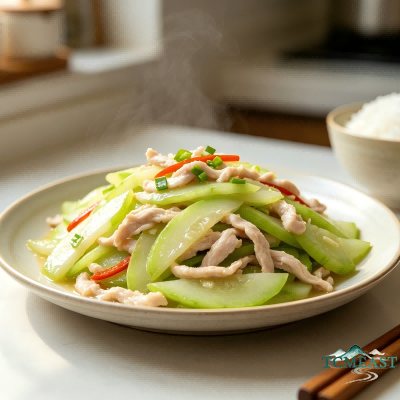
Main Ingredients
- Chicken breast 150g
- Chayote 250g
- Egg white 1 (approx. 6g)
- Cornstarch slurry (cornstarch + water) Approx. 5g cornstarch + water
- Approx. 5g cornstarch + water 1g (1 small section)
- Ginger juice (or ginger water) 20g (approx. 1 tbsp)
- Cooking wine 8g (approx. 1/2 tbsp)
- Light soy sauce 10g (approx. 2/3 tbsp)
- Salt Approx. 3g
- Peanut oil (or vegetable oil) Approx. 50g
Steps
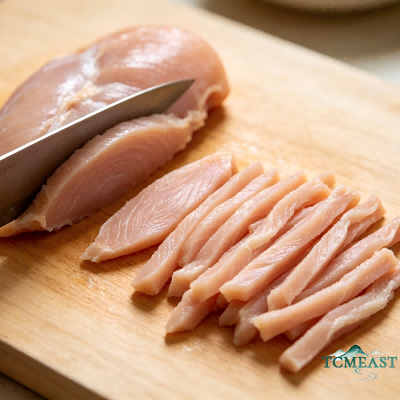
Remove the membrane from the chicken breast. Slice along the grain into large pieces, then cut into uniform strips 6 cm long and 0.3 cm wide. Slicing along the grain ensures the chicken strips hold together and stay tender during cooking.
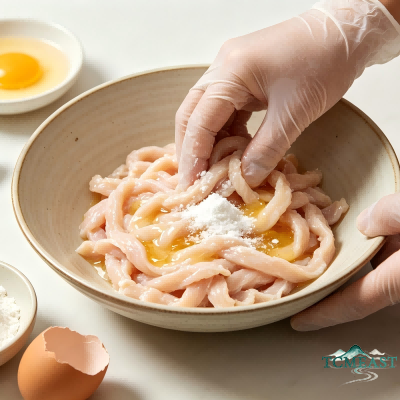
Place the shredded chicken in a bowl. Add a pinch of salt (approx. 1g), cornstarch slurry (5g cornstarch mixed with water), and egg white. Mix vigorously in one direction until the egg white and cornstarch evenly coat each strip. Marinate for 10-15 minutes.
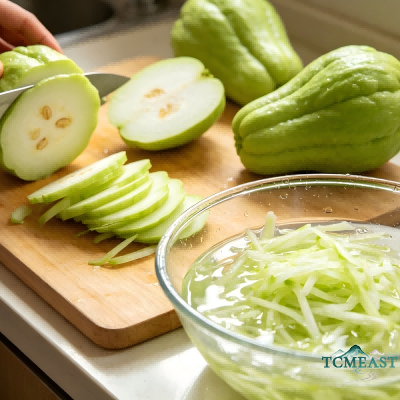
Rinse the chayote, peel off the skin, cut in half, and remove the central seed (young chayote seeds are small and can be ignored). Slice thinly, then cut into julienne strips. Rinse the strips with warm water to remove surface mucilage, drain thoroughly, and set aside.
v
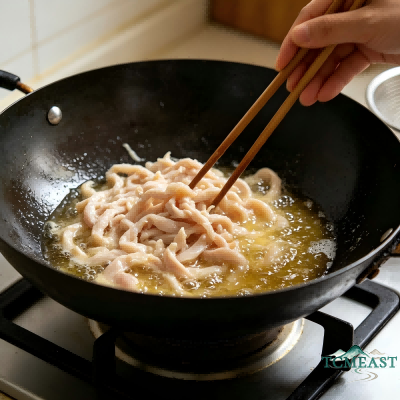
Quickly pass the chayote strips through the same oil for about 30 seconds, then remove and drain. This step locks in the chayote's moisture and vibrant green color; for home cooking, you can skip this and directly stir-fry in the next step.
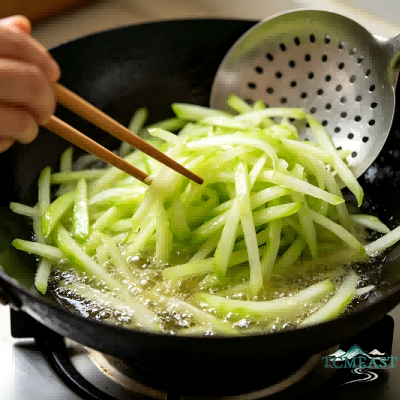
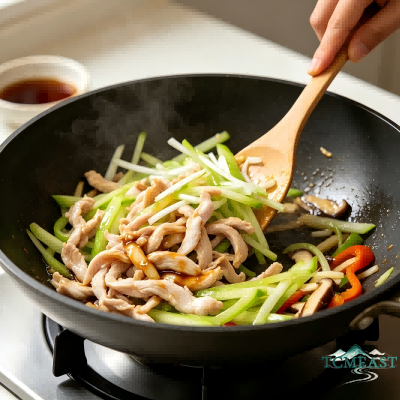
Leave a small amount of oil in the wok, heat it, and sauté the shredded scallion until fragrant. Add cooking wine and ginger juice (or ginger water). Return the chicken and chayote strips to the wok, add light soy sauce and the remaining salt (approx. 2g), and stir-fry quickly over high heat. If using shiitake mushrooms or bell peppers, add them at this stage.
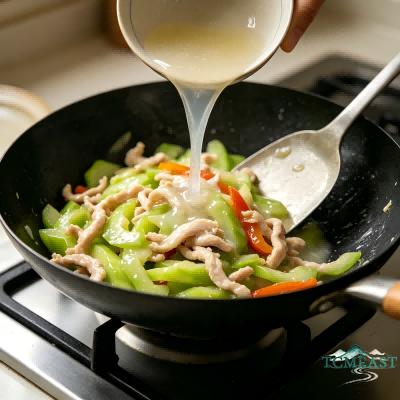
Use the remaining cornstarch slurry to create a light glaze, stir-fry evenly, and transfer to a serving plate.
TCM Notes
Traditional Chinese Medicine Perspective: Chayote: Sweet in taste, cool in nature (some sources say warm), channels to the Spleen, Stomach, Liver, and Lung meridians. Regulates qi, harmonizes the stomach, relieves nausea, and strengthens the spleen. Beneficial for消化不良 (indigestion), chest and rib distension, stomach fullness, and vomiting due to food stagnation. Chicken: Sweet in taste, slightly warm in nature. Warms the middle, strengthens the spleen, nourishes qi and blood, and tonifies the kidney. Has therapeutic benefits for malnutrition, cold intolerance, fatigue, anemia, and weakness. Modern Nutrition Research: Blood pressure support: Chayote's high-potassium, low-sodium profile promotes diuresis, sodium excretion, and vasodilation — ideal for hypertension patients. Cardiovascular health: Potassium, magnesium, and other minerals in chayote work synergistically to support heart health. Immune support: Chayote's high calcium, iron, and zinc content — essential for enzyme function — helps regulate immune function. Children's intellectual development: Chayote's zinc content supports cognitive development in children. High-protein, low-fat muscle building: Chicken breast provides premium protein, making it an ideal choice for fitness enthusiasts.
Suitable for:Those with hypertension and heart conditions (high potassium, low sodium — supports blood pressure and heart health) Those who are overweight or on a weight loss journey (extremely low calorie, high protein) Those with indigestion, stomach fullness, or nausea due to food stagnation Those with liver-stomach qi pain and chest tightness Those with bronchitis and excessive phlegm with cough Children (supplementing calcium, iron, zinc — promotes intellectual development) Those with low immunity or general weakness Those who need to limit sodium intake (low-sodium food) Generally suitable for most people as a daily home-style dish
Not suitable for:Those with spleen-stomach deficiency-cold: Chayote is cool in nature and may worsen cold symptoms, leading to diarrhea, abdominal pain, or indigestion. Adding ginger or white pepper during cooking can help neutralize its cooling properties. Those with yin deficiency and internal heat: Should consume sparingly Those with general weakness: Should consume sparingly Those with frequent urination: Chayote has diuretic effects; those with frequent urination should limit intake Those with hypotension: Chayote has blood-pressure-lowering effects; those with low blood pressure should limit intake Those with renal insufficiency: Chayote is rich in potassium, which may lead to hyperkalemia and加重肾脏负担 in those with impaired kidney function Those with allergies: Chayote contains components that may trigger allergic reactions; those with known allergies should exercise caution Those with severe diarrhea: Chayote's high dietary fiber content makes it unsuitable during active diarrhea Pregnant women: Chayote is cool in nature; caution is advised in the first trimester. In the second and third trimesters, moderate consumption under medical guidance may be acceptable
