
Desserts
Lotus Root and Rock Sugar Water
Lotus Root and Rock Sugar Water is a classic, simple Cantonese and Minnan home-style nourishing drink, made with fresh lotus root and rock sugar, slowly simmered to perfection. Lotus root is sweet in taste, cool in nature (warm when cooked), and channels to the Heart, Spleen, Stomach, Liver, and Lung meridians. It is known for clearing heat and cooling blood, strengthening the spleen and stimulating appetite, enriching blood and regenerating tissue, and stopping bleeding and dispersing stasis. It has been a treasured "medicinal and edible" ingredient since ancient times, with a folk saying that "a woman should not be without lotus root for three days." Rock sugar is neutral in nature and sweet in taste, channeling to the Lung and Spleen meridians. It tonifies the middle, supplements qi, moistens the lungs, stops coughs, nourishes yin, and promotes salivation. The combination yields a subtly fragrant lotus root aroma, a slightly reddish, translucent broth, and a sweet, refreshing aftertaste. This soup is especially good for clearing heat, moistening dryness, cooling blood, stopping bleeding, and strengthening the spleen. It is an ideal daily dietary therapy drink for autumn/winter dryness, sore throats, poor appetite, and mild nosebleeds.
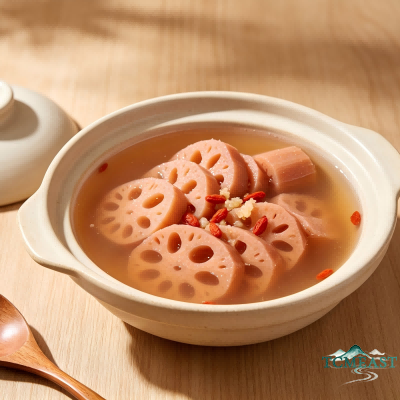
Main Ingredients
- Fresh lotus root (floury variety preferred) 400-500g
- Rock sugar (old yellow rock sugar preferred) 30-50g
- Red dates (pitted) 3-5 pieces
- Goji berries 5g
- Dried osmanthus flowers A pinch
- Water Approx. 1500-1800ml
Steps
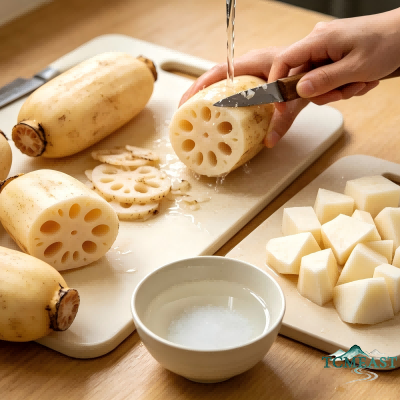
Rinse the fresh lotus root thoroughly, peel with a vegetable peeler. Cut off both ends and rinse the holes under running water to remove any mud/sand (ensure it's clean and grit-free). Cut the lotus root into thick chunks of about 1.5-2 cm or rolling-cut pieces. If not cooking immediately, soak in lightly salted water to prevent oxidation (browning).
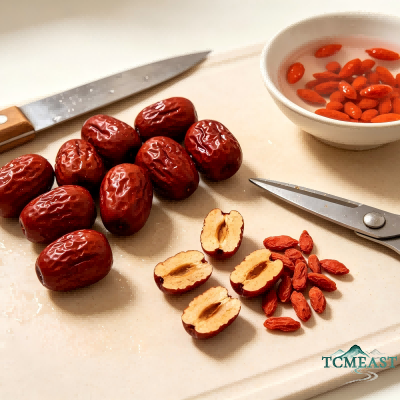
Rinse red dates, cut them open and remove the pits (the pits are warming; removal is recommended). Briefly soak goji berries in water and drain.
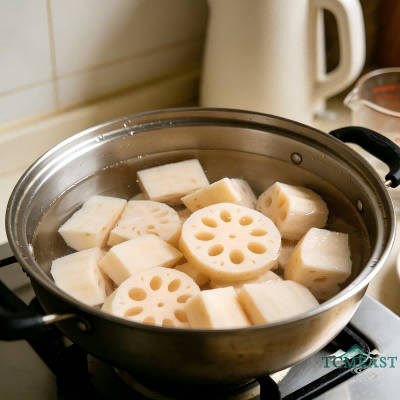
Place the cut lotus root chunks into a clay pot or stainless steel pot. Add enough cold water all at once (approx. 1500-1800ml). Lotus root must be added to cold water. Hot water will solidify surface proteins, preventing the root from becoming floury and tender.
Bring to a boil over high heat, then reduce to low heat and simmer for 1-1.5 hours (floury lotus root takes longer). Simmer until the lotus root turns a light reddish-purple or pinkish color, can be easily pierced with a chopstick, and the edges begin to powder and break down. If using crisp lotus root, reduce simmering time to 30-40 minutes, but the texture will remain crunchy.
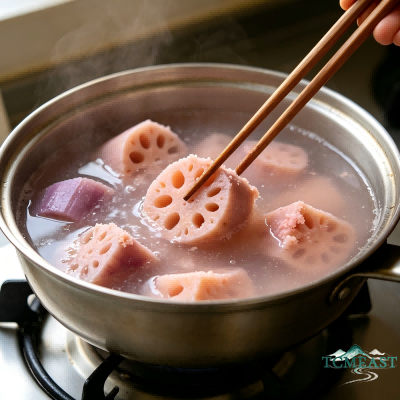
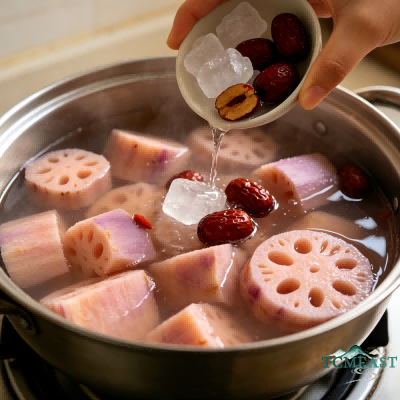
Once the lotus root is soft and floury, add the rock sugar and pitted red dates. Continue to simmer over low heat for 10-15 minutes until the rock sugar is completely dissolved and the date aroma infuses the soup.
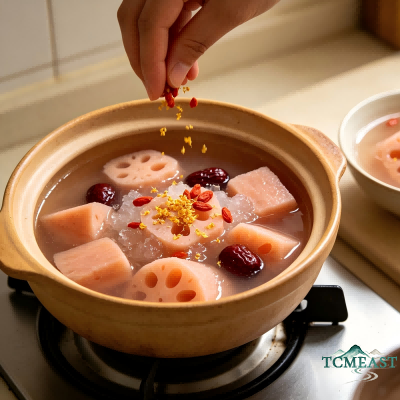
3-5 minutes before turning off the heat, add the goji berries and dried osmanthus flowers (if using). Turn off the heat, let it rest for 5 minutes to allow the residual heat to release the osmanthus fragrance, then ladle into bowls and serve.
TCM Notes
Tannic acid in lotus root constricts blood vessels and helps stop bleeding, providing adjunctive dietary therapy for nosebleeds, hemoptysis, and bloody stools. Its vitamin C content ranks among the highest in root vegetables. Traditional Chinese Medicine Perspective: Raw lotus root: Sweet, cool in nature. Clears heat, cools blood, disperses stasis, and quenches thirst. Cooked lotus root: Sweet, warm in nature (becomes warming after cooking). Strengthens the spleen, stimulates appetite, enriches blood, regenerates tissue, stops diarrhea, and consolidates essence. Rock sugar: Sweet, neutral in nature. Tonifies the middle, supplements qi, moistens the lungs, stops coughs, nourishes yin, and promotes salivation. Modern Nutrition Research: Clears heat, cools blood, stops bleeding: Lotus root is cooling in nature. Tannic acid has hemostatic effects. Cooked lotus root tonifies the spleen and nourishes blood, helping with heat-related nosebleeds and hemoptysis. Strengthens spleen and stimulates appetite: Lotus root has a unique fragrance and contains tannins, which strengthen the spleen, stop diarrhea, increase appetite, and promote digestion. Beauty and skincare: The synergistic effect of vitamin C and iron in lotus root provides antioxidant benefits, nourishes blood, and regenerates tissue, keeping the skin radiant. Moistens lungs and relieves coughs: Rock sugar, combined with the moisturizing texture of lotus root, alleviates dry coughs and itchy throats in autumn and winter. Mood regulation and sleep support: Lotus root is rich in B-complex vitamins, which help relieve stress and improve sleep quality.
Suitable for:Those with autumn/winter dryness, internal heat, and sore throat Those with mild nosebleeds, hemoptysis, or bloody stools (for adjunctive hemostatic support) Those with poor appetite, indigestion, and spleen-stomach weakness Those with dry mouth and insufficient body fluids Women seeking daily nourishment (blood-tonifying and beautifying) Middle-aged and older adults (strengthening the spleen, stimulating appetite, and softening blood vessels) Generally suitable for most people as a daily healthy beverage
Not suitable for:Diabetics: Lotus root has a relatively high starch content (GI ≈ 60-65), and rock sugar significantly increases the glycemic load. Strictly control portion size (no more than 200ml per serving), use no added sugar or use sugar substitutes, and reduce concurrent carbohydrate intake. Those with severe spleen-stomach deficiency-cold (cold abdominal pain, loose stools): Raw lotus root is cool, and cooked lotus root is warming but rich, which may worsen diarrhea if overconsumed. Add 3 slices of fresh ginger to neutralize the coldness. Those with cold-dampness or excessive phlegm-dampness (white greasy tongue coating, overweight with excess phlegm): Should not overconsume. Those with very weak digestion or severe bloating: Lotus root is rich in starch and dietary fiber, which may cause gas; consume sparingly. Women in the first trimester of pregnancy: Traditional Chinese medicine suggests that lotus root (especially raw) has blood-invigorating and stasis-dispersing effects. Avoid in the first trimester or consult a physician. In the second and third trimesters, moderate consumption (1-2 times per week, one small bowl) is acceptable. Those allergic to lotus root (rare)