
Soups
Lotus Seed and Pork Stomach Soup
Lotus Seed and Pork Stomach Soup is a classic Cantonese and Hakka traditional nourishing soup, made with pork stomach and lotus seeds as the main ingredients, slowly simmered to perfection. Pork stomach is slightly warm in nature and sweet in taste, channeling to the Spleen and Stomach meridians. It is known for tonifying deficiency and strengthening the spleen and stomach, following the TCM principle of "using organ to nourish organ." Lotus seeds are sweet and astringent, neutral in nature, and channel to the Spleen, Kidney, and Heart meridians. They are known for nourishing the heart and calming the spirit, benefiting the kidney and consolidating essence, and strengthening the spleen and stopping diarrhea. Together, pork stomach warms and tonifies the spleen and stomach, while lotus seeds nourish the heart and consolidate the kidneys — one tonifying and one astringing — achieving the combined effects of strengthening the spleen, nourishing the stomach, calming the heart, and tranquilizing the spirit. The soup has a milky white, rich broth, with smooth, chewy pork stomach and soft, fragrant lotus seeds. It is especially suitable for daily nourishment of those with spleen-stomach weakness, poor appetite, indigestion, restlessness, anxiety, and insomnia. It is also a classic nourishing soup for postpartum recovery.
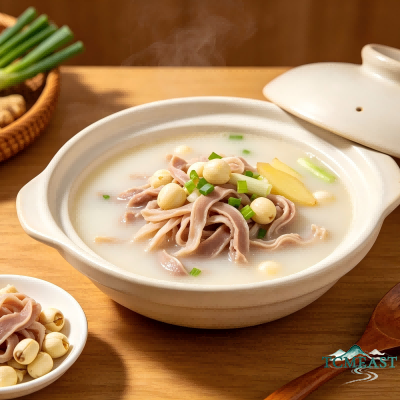
Main Ingredients
- Pork stomach 1 piece (approx. 400-500g)
- Dried lotus seeds (core-removed) 60g
- Fresh ginger 8 thick slices
- Red dates (pitted) 5 pieces
- Goji berries 8g
- Yellow wine (or cooking wine) To taste
- Salt To taste
- White pepper powder A pinch
- Water 2500ml
Steps
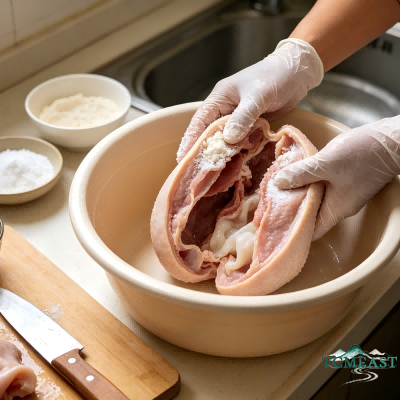
Cleaning fresh pork stomach is the key to the success of this soup. Recommended methods: Salt and vinegar method or Salt and starch method: Method 1 (Salt + Vinegar): Turn the stomach inside out and rub thoroughly with salt to remove mucus; then rub with white vinegar; rinse with clean water. Method 2 (Salt + Starch): Place the stomach in a bowl, add salt and starch (or flour), rub repeatedly with your hands, clean both sides, then rinse thoroughly. Advanced de-odoring: Rub once with salt, once with starch, then marinate in yellow wine for half an hour, and finally rinse clean. When cleaning, be sure to scrape off all the fat and white membrane from the inner wall of the stomach; otherwise, the soup will have an unpleasant odor.
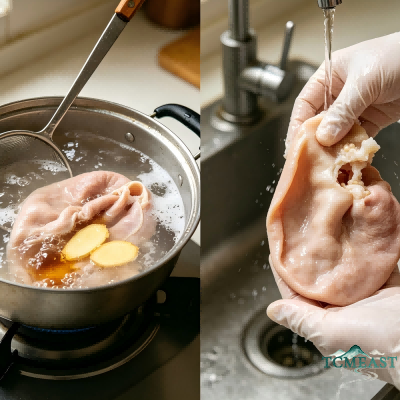
Add enough cold water to a pot, place the cleaned pork stomach in, and add 2-3 slices of ginger and a splash of yellow wine. Bring to a boil over high heat and continue boiling for 3-5 minutes, skimming off any foam that rises. Remove the stomach, rinse with warm water, peel off the white membrane near the navel while hot, and scrape off any remaining fat.
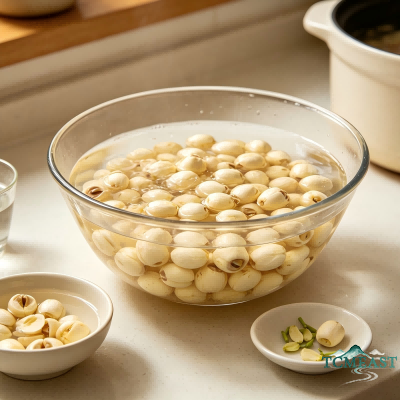
Rinse the dried lotus seeds and soak in cold water for 2-3 hours (or overnight in the refrigerator) until fully swollen with no hard core. If you haven't soaked them in advance, soak in warm water for 1-2 hours, or add them directly but extend the simmering time. After soaking, check for and remove any remaining green cores.
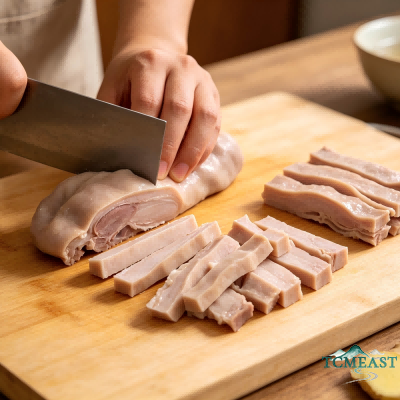
Cut the prepared pork stomach into strips about 1.5-2 cm wide. Do not cut too thin, as the stomach will shrink during long simmering; too thick and it won't absorb flavor well.
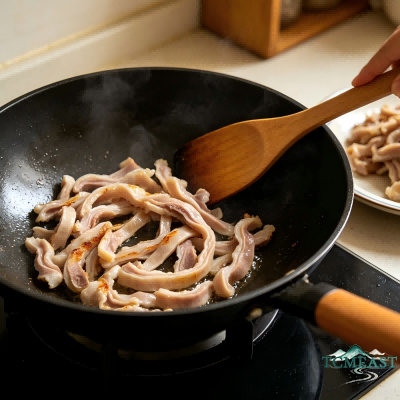
Heat a wok without oil, add the pork stomach strips, and stir-fry over low heat until the surface moisture evaporates, the strips turn slightly golden, and a rich aroma develops. This step further removes any remaining gamey odor and enhances the soup's flavor and color.
Bring sufficient water (approx. 2000-2500ml) to a boil in a clay pot. Once boiling, add the prepared pork stomach strips, soaked lotus seeds, and ginger slices. If using red dates or Chinese yam, add them at this time.
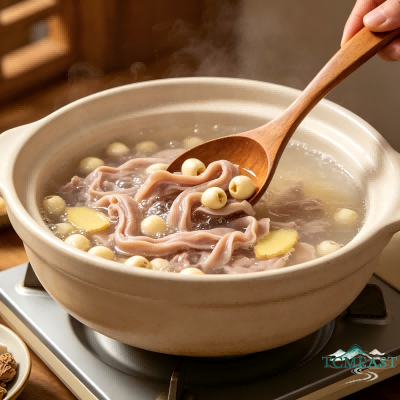
Bring to a boil over high heat, then reduce to low heat and simmer for 1.5-2 hours until the soup turns milky white, the lotus seeds are soft and floury, and the pork stomach is tender.
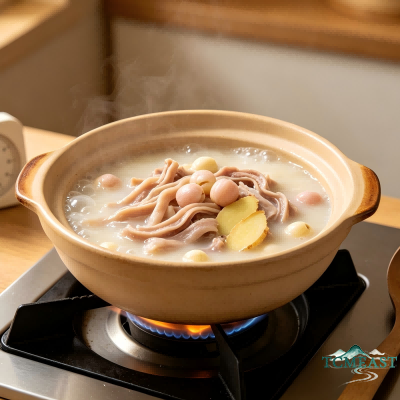
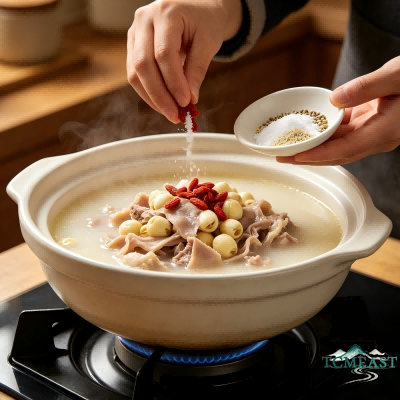
Add the goji berries (if using) 5-8 minutes before turning off the heat. Add salt to taste just before serving. Do not add salt too early, as it will cause the pork stomach to shrink and become tough. Sprinkle with a little white pepper if desired.
TCM Notes
Modern Nutrition Research: Spleen and stomach health: Pork stomach nourishes the stomach through the principle of "like nourishes like," providing easily absorbable protein that supports stomach cold and indigestion. Raffinose in lotus seeds has nourishing and tonifying effects. Heart-calming and sleep-supporting: Lotus seeds are rich in liensinine and glycosides, which have sedative and calming effects, improving palpitations, insomnia, and excessive dreaming. Kidney-tonifying and essence-consolidating: Lotus seeds channel to the Kidney meridian, effectively helping with nocturnal emissions, leukorrhea, and frequent nighttime urination caused by kidney deficiency. Qi and blood nourishment: Pork stomach combined with red dates tonifies qi and nourishes blood, suitable for those with general weakness and postpartum fatigue.
Suitable for:Those with spleen-stomach weakness, poor appetite, and indigestion Those with stomach cold, cold pain in the abdomen, and loose stools Those with restlessness, insomnia, excessive dreaming, and palpitations Those with kidney-deficiency nocturnal emissions, excessive leukorrhea, and frequent nighttime urination Postpartum women, those recovering from illness, and those with consumptive weakness Middle-aged and older adults (daily spleen-stomach nourishment and sleep support) Generally suitable for most people in moderation during autumn and winter
Not suitable for:Those with severe constipation or hard stools: Lotus seeds have astringent properties that may worsen constipation Those with bloating, abdominal fullness, or food stagnation: Both pork stomach and lotus seeds are rich and tonifying — avoid during acute food stagnation Those with colds, fever, or unresolved external pathogens: Not suitable for tonification Those with internal damp-heat (yellow greasy tongue coating, dry mouth, bitter taste): Lotus seeds are astringent and pork stomach is slightly warming, which may promote dampness and heat Those allergic to pork stomach or lotus seeds Diabetics: Lotus seeds are relatively high in carbohydrates — control portion size (one small bowl, no red dates)
