
Congees
Lockyang (Cynomorium) and Walnut Porridge
Lockyang (Cynomorium) and Walnut Porridge is a traditional Chinese medicinal congee that warms and tonifies kidney yang. Made with lockyang and walnut kernels as the core ingredients, cooked with japonica rice. Lockyang is sweet in taste, warm in nature, and channels to the Liver, Kidney, and Large Intestine meridians. It is known for tonifying kidney yang and moistening the intestines to relieve constipation. The Supplement to the Commentary on the Materia Medica states that it "greatly tonifies yin qi, benefits essence and blood, and promotes bowel movements". Walnut kernels are sweet in taste, warm in nature, and channel to the Kidney, Lung, and Large Intestine meridians. They are known for tonifying the kidney and consolidating essence, warming the lungs and relieving asthma, and moistening the intestines to relieve constipation. Together, lockyang tonifies kidney yang and walnuts supplement the essence, achieving the combined effects of warming and tonifying kidney yang, consolidating essence and nourishing blood, moistening the intestines to relieve constipation, and strengthening the spleen and stomach. The porridge is thick and smooth, with the crunchy texture of walnuts and the mild herbal aroma of lockyang. This porridge is especially suitable for daily nourishment of those with kidney yang deficiency, sore lower back and weak knees, fear of cold with cold limbs, constipation due to intestinal dryness, and middle-aged/elderly kidney deficiency.
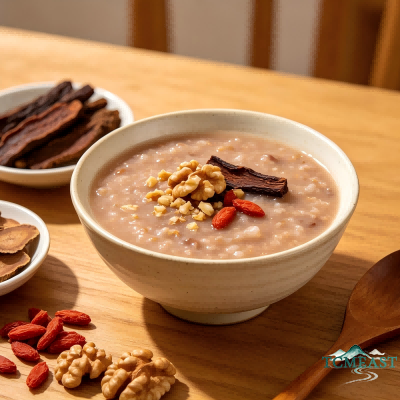
Main Ingredients
- Lockyang (Cynomorium) 15g
- Walnut kernels 40g
- Japonica rice (or regular rice) 150g
- Japonica rice (or regular rice) 10g
- Rock sugar or brown sugar To taste
- Water Approx. 1000ml
Steps
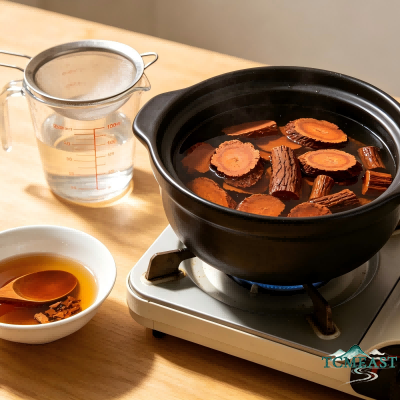
Rinse the lockyang, slice or cut into sections, and place in a clay pot with an appropriate amount of water (approx. 500ml). Bring to a boil over high heat, then reduce to low heat and simmer for 10-15 minutes. Strain out the decoction and discard the residue. Lockyang must be decocted first to fully release its active compounds.
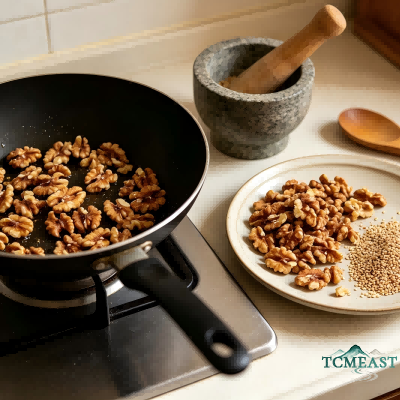
Method 1 (Roast and crush): Heat a wok, add the walnut kernels, and dry-roast over low heat until fragrant, then crush to the size of sesame seeds. Method 2 (Directly crush): Crush the walnut kernels directly into coarse pieces. Roasting the walnuts enhances their aroma and makes them easier to digest.
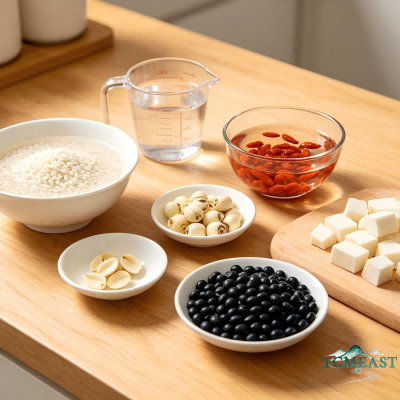
Japonica rice: Rinse and soak for 30 minutes in advance. Goji berries: Briefly soak in water and drain. Lotus seeds: Remove the green core; Black soybeans: soak until soft; Chinese yam: peel and cut into small pieces.
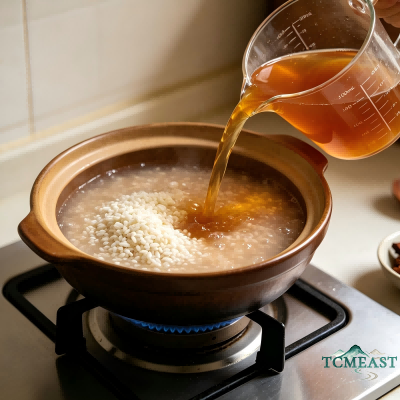
Place the japonica rice in a pot, add the lockyang decoction, and add enough water to reach approximately 1000ml total. Bring to a boil over high heat, then reduce to low heat and simmer slowly.
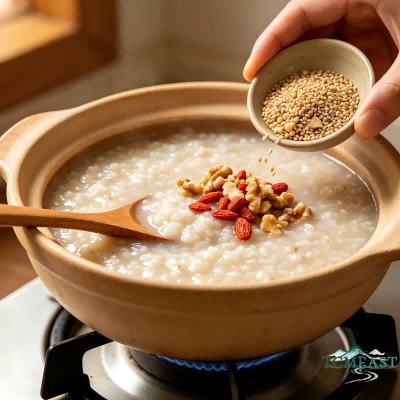
When the rice grains have bloomed and the porridge has thickened (about 30-40 minutes), add the crushed walnuts and goji berries (if using). Continue cooking for another 5-10 minutes.
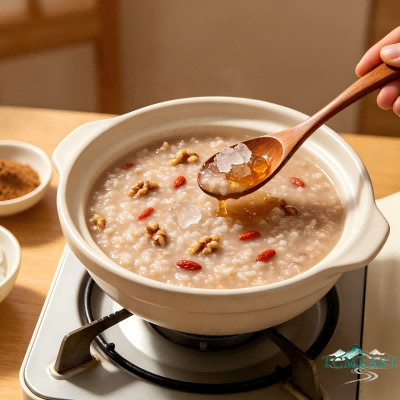
Add rock sugar or brown sugar to taste before turning off the heat, stirring until dissolved. Serve warm.
TCM Notes
Modern Pharmacological Research: Warming and tonifying kidney yang: Lockyang is rich in flavonoids, terpenoids, and alcohols, with antioxidant, anti-fatigue, blood pressure-lowering, and sexual maturation-promoting effects. It effectively improves kidney yang deficiency symptoms such as sore lower back, cold limbs, impotence, and infertility. Laxative effect: Lockyang increases intestinal motility, and walnuts are rich in oils that lubricate the intestines. Together, they relieve constipation due to blood deficiency and fluid depletion. Brain health: Walnuts are rich in phospholipids and alpha-linolenic acid, essential nutrients for brain development and function. Spleen-stomach health: Combined with rice and Chinese yam, this porridge strengthens the spleen and improves digestion and absorption. Bone health: Lockyang polysaccharides help increase osteocalcin levels, providing adjunctive support for osteoporosis due to spleen-kidney yang deficiency.
Suitable for:Those with kidney yang deficiency (sore lower back, cold limbs, frequent nighttime urination) Those with kidney deficiency impotence and essence-blood deficiency Those with constipation due to intestinal dryness Middle-aged and elderly with kidney deficiency and declining cognition Those with spleen-kidney yang deficiency (sallow complexion, cold hands and feet, poor digestion) Those with cold constitution and sensitivity to cold Generally suitable for most people in moderation during winter
Not suitable for:Those with yin deficiency and fire excess (palms and soles hot, night sweats, dry mouth and throat, flushed cheeks) — lockyang is warm and may worsen symptoms Those with internal damp-heat or damp-heat constitution — contraindicated Those with excess-heat constipation — lockyang is warm in nature; not suitable for excess-heat type constipation Those with spleen deficiency diarrhea or loose stools — the laxative effect of lockyang may worsen diarrhea Those with easy erection but insecure seminal emission — contraindicated Those with colds, fever, or external heat conditions — not suitable for tonification Pregnant and breastfeeding women — should consume only under medical supervision Those allergic to any of the above ingredients
