
Stews
Lily Bulb and White Radish Soup
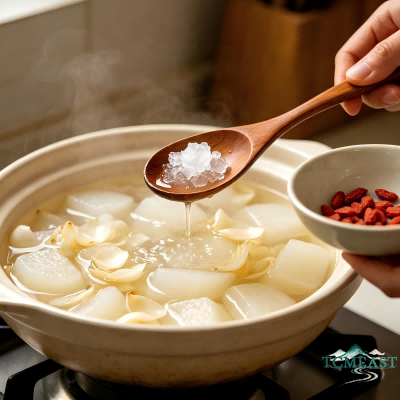
Lily Bulb and White Radish Soup is a classic nourishing and moistening soup, made with white radish and lily bulbs as the main ingredients, slowly simmered to perfection. White radish is cool in nature, sweet and pungent in taste, and channels to the Lung and Stomach meridians. It is known for clearing heat, promoting salivation, cooling blood, stopping bleeding, and aiding digestion. Lily bulbs are slightly cold in nature, sweet in taste, and channel to the Heart and Lung meridians. They are known for nourishing yin, moistening the lungs, clearing the heart, and calming the spirit. Together, white radish resolves phlegm and aids digestion, while lily bulbs moisten the lungs and calm the spirit, achieving the combined effects of clearing heat and moistening the lungs, relieving coughs and resolving phlegm, strengthening the spleen and aiding digestion, and calming the heart and spirit. The soup is clear and bright, with sweet, soft radish and tender, smooth lily bulbs. It is especially suitable for daily nourishment of those with lung-heat cough, sore throat, poor digestion, and insomnia.
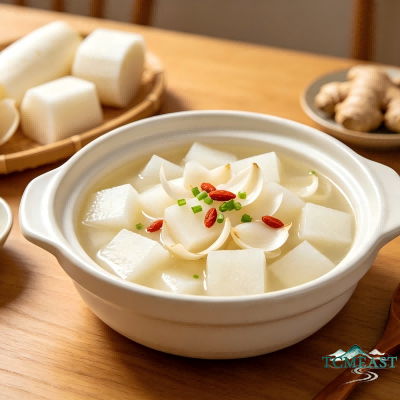
Main Ingredients
- White radish 200g
- Lily bulbs (fresh or dried) Fresh 30g / Dried 15g
- Rock sugar 25g
- Water 1000ml
Steps
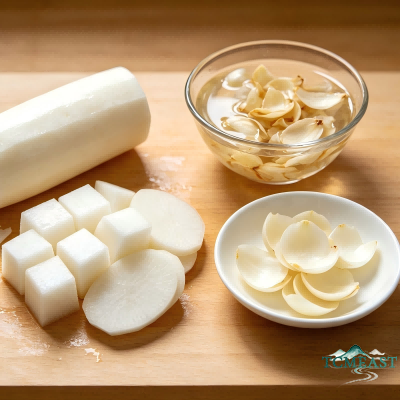
White radish: Rinse, peel, and cut into small chunks or slices. Peeling reduces the pungent taste, making the soup sweeter. Lily bulbs: For dried ones, soak in warm water for 30 minutes until soft; for fresh ones, simply rinse and separate the petals
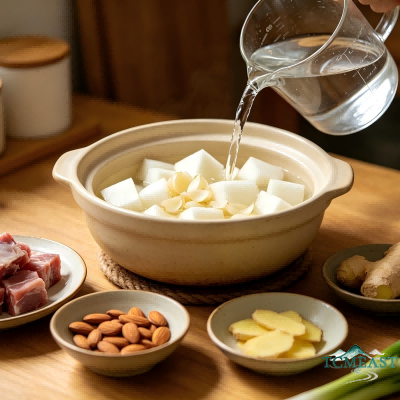
Place the prepared radish and lily bulbs into a pot, and add enough water (approx. 800-1000ml). If using pork ribs, apricot kernels, or other additions, add them at this stage.
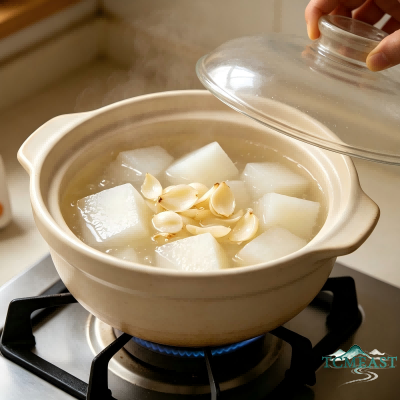
Bring to a boil over high heat, then reduce to low heat and simmer for 20-30 minutes, until the radish becomes translucent and soft, and the lily bulbs are tender. Try to keep the lid on during simmering to preserve the volatile active compounds of the radish.
Add rock sugar and stir until fully dissolved. If using goji berries, add them 3-5 minutes before turning off the heat. Best served warm.
TCM Notes
Modern Nutrition Research: Lung-clearing, cough relief, and phlegm resolution: Colchicine and other compounds in lily bulbs alleviate lung-heat dry cough and sore throat; mustard oil and dietary fiber in white radish promote digestion and resolve phlegm. Together, they enhance the lung-moistening effect. Digestive health: White radish is rich in dietary fiber and mustard oil, which promote intestinal motility, stimulate appetite, and relieve food stagnation and bloating. Calming the spirit: Lily bulbs channel to the Heart meridian, clearing the heart and calming the spirit, improving restlessness, palpitations, and insomnia. Immunity enhancement: Both lily bulbs and white radish are rich in vitamins and minerals. Together, they effectively enhance the body's immune function.
Suitable for:Those with lung-heat cough and sore throat Those with poor digestion, loss of appetite, and abdominal bloating Those with insomnia, excessive dreaming, and restlessness Those with dry mouth, thirst, and insufficient body fluids Generally suitable for most people during autumn dryness
Not suitable for:Those with wind-cold cough (thin white phlegm, chills, no sweating) — both lily bulbs and radish are cooling in nature and may worsen cold-type coughs Those with spleen-stomach deficiency-cold or cold-type loose stools (cold abdominal pain, loose stools) — the cooling nature may worsen symptoms Those allergic to lily bulbs or white radish Do not overconsume — excessive intake may加重 gastrointestinal burden, causing bloating and abdominal pain
