
Congees
Sea cucumber porridge
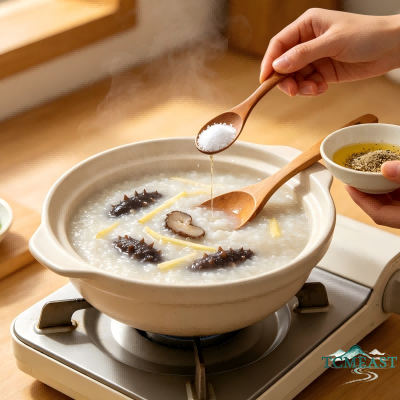
Sea Cucumber Congee is a classic Chinese nourishing medicinal porridge, made with sea cucumber and japonica rice (or millet) as the main ingredients, slowly simmered to perfection. Sea cucumber is warm in nature, sweet and salty in taste, and channels to the Heart and Kidney meridians. It is known for tonifying the kidney and benefiting essence, nourishing blood and moistening dryness. Often referred to as the "ginseng of the sea," it is a premium nourishing food rich in high-quality protein, low in fat and cholesterol. When cooked with rice porridge, the umami of sea cucumber blends perfectly with the fragrance of rice, creating a thick, smooth, and warm dish. This porridge is especially suitable for daily nourishment of those with kidney deficiency and essence depletion, qi-blood deficiency, post-illness weakness, and middle-aged/elderly individuals.
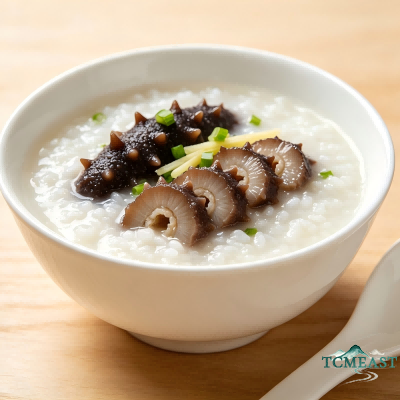
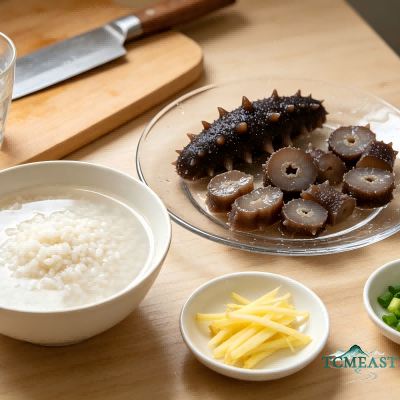
Main Ingredients
- Hydrated sea cucumber 2 pieces
- Japonica rice (or millet) 100g
- Fresh ginger(julienned) 3 slices
- Scallion(chopped) 1 stalk
- Salt To taste
- White pepper A pinch
- Sesame oil A few drops
- Water 1000ml
Steps
Sea cucumber: Rinse the hydrated sea cucumber and slice into 0.5-1 cm pieces. Do not cut too finely to maintain texture. Rice: Rinse and soak in cold water for 30 minutes for a creamier porridge. Ginger and scallion: Peel and julienne the ginger; chop the scallion.
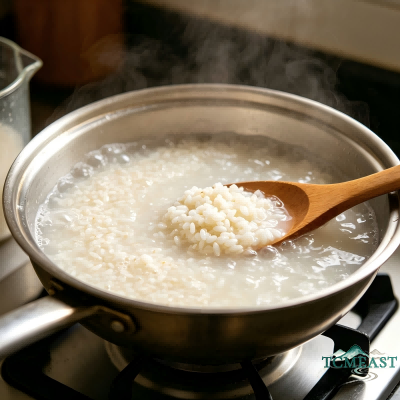
Add water (approx. 800-1000ml) to a pot and bring to a boil. Add the soaked rice, return to a boil, then reduce to low heat and simmer for 30-40 minutes until the rice grains bloom and the porridge thickens.
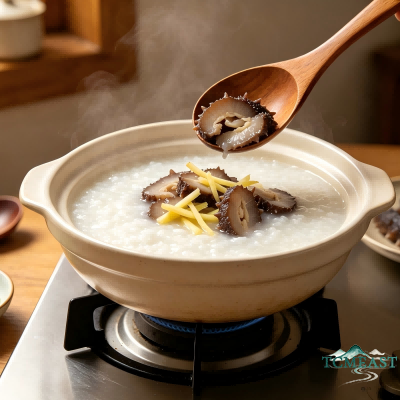
Add the sliced sea cucumber and ginger to the porridge and continue simmering over low heat for 10-15 minutes until the sea cucumber is cooked through and its flavor is infused. Do not overcook, as sea cucumber may become tough.
Add salt to taste before turning off the heat. Sprinkle with chopped scallion and a pinch of white pepper (if using), add a few drops of sesame oil, stir well, and serve.
TCM Notes
Modern Nutrition Research: Kidney and essence tonification: Sea cucumber is rich in arginine, a key component of male sperm cells, helping to improve kidney deficiency symptoms such as sore lower back, weak knees, impotence, and nocturnal emissions. Blood nourishment and dryness relief: Mucopolysaccharides and trace elements in sea cucumber support hematopoiesis, helping with blood deficiency symptoms such as sallow complexion and dry skin. Immunity enhancement: Sea cucumber saponins have immunomodulatory effects that boost the body's resistance. Anti-aging: Rich in collagen and antioxidants, sea cucumber helps delay aging and maintain skin elasticity. Easy to digest: Sea cucumber protein is high-quality and easily digestible, especially when cooked in porridge — ideal for those with weak constitutions.
Suitable for:Those with kidney deficiency and essence depletion (sore lower back, weak knees, dizziness, tinnitus, impotence, nocturnal emissions) Those with qi-blood deficiency (pale complexion, fatigue, postpartum weakness) Those recovering from illness or post-surgery Middle-aged and older adults (anti-aging, constitution strengthening) Those with low immunity and prone to colds Generally suitable for most people in moderation
Not suitable for:Those with acute enteritis or bacillary dysentery Those with colds, fever, or unresolved external infections — not suitable for tonification Those with spleen-stomach deficiency-cold or loose stools/diarrhea — sea cucumber is warm and rich, which may worsen symptoms Those with excessive phlegm or thick greasy tongue coating — not suitable for those with dampness Those allergic to seafood — sea cucumber is a marine product; those with allergies should use with caution Those with renal insufficiency — high protein content may increase kidney burden Those in acute gout flare-ups — sea cucumber contains moderate purines; avoid during acute attacks Infants under 1 year old — digestive system not fully developed — not recommended
