
Soups
Pseudostellaria Root and Old Duck Soup
Pseudostellaria Root and Old Duck Soup is a classic Chinese medicinal tonic soup, made with Pseudostellaria root (Taizishen) and old duck as the main ingredients, slowly simmered to perfection. Pseudostellaria root is sweet and slightly bitter in taste, neutral in nature, and channels to the Spleen and Lung meridians. It is known for benefiting qi, strengthening the spleen, promoting salivation, and moistening the lungs. Its mild nature makes it especially suitable for those who "cannot tolerate strong tonics." Old duck is cool in nature, sweet and salty in taste, and channels to the Spleen, Stomach, Lung, and Kidney meridians. It is known for nourishing yin and the stomach, promoting diuresis and reducing edema, and nourishing blood and promoting fluid circulation. Together, Pseudostellaria root benefits qi and promotes salivation without generating heat, while old duck nourishes yin and blood without causing stagnation, achieving the combined effects of benefiting qi and nourishing yin, strengthening the spleen and moistening the lungs, and clearing heat and draining dampness. The soup has a clear broth with tender, fall-off-the-bone duck meat and a savory, slightly sweet flavor. This soup is especially suitable for daily nourishment of those with qi-yin deficiency, summer heat with fluid depletion, spleen-stomach weakness, and loss of appetite.
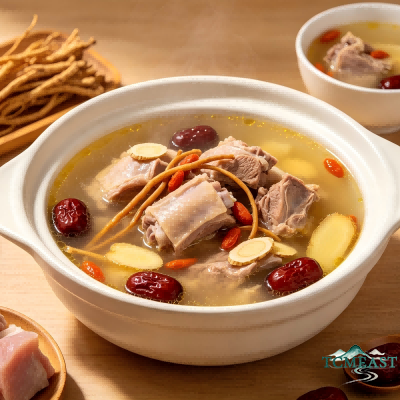
Main Ingredients
- Old duck (water duck or sheldrake preferred) Half (approx. 500-600g)
- Pseudostellaria root (Taizishen) 30g
- Fresh ginger 5 thick slices
- Red dates (pitted) 5 pieces
- Goji berries 8g
- Salt To taste
- Yellow wine (or cooking wine) 2 tbsp
- Water 2000ml
Steps
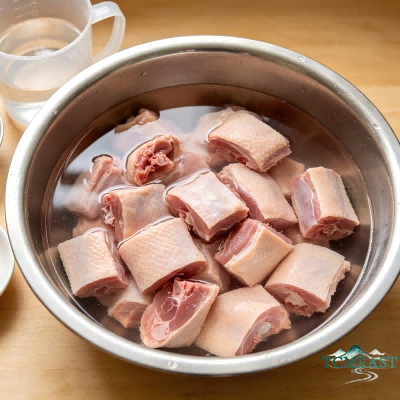
After slaughtering the duck, remove the internal organs, tail, and excess fat. Cut into large chunks of about 4-5 cm. Place the duck pieces in a bowl, cover with plenty of cold water, and soak for 30-60 minutes, changing the water 1-2 times to draw out blood and reduce gamey odor. Removing excess fat ensures a clear, non-greasy soup.
Place the soaked duck pieces in a pot with enough cold water to cover, and add 2-3 slices of ginger and a splash of yellow wine. Bring to a boil over high heat and continue boiling for 3-5 minutes, skimming off any foam that rises. Remove the duck, rinse thoroughly with warm water to remove all impurities, and drain. Always blanch starting in cold water to fully draw out blood and impurities.
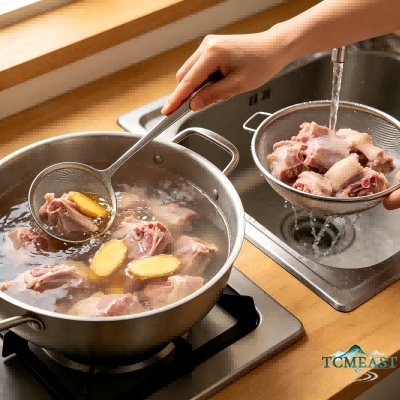
Place the soaked duck pieces in a pot with enough cold water to cover, and add 2-3 slices of ginger and a splash of yellow wine. Bring to a boil over high heat and continue boiling for 3-5 minutes, skimming off any foam that rises. Remove the duck, rinse thoroughly with warm water to remove all impurities, and drain. Always blanch starting in cold water to fully draw out blood and impurities.
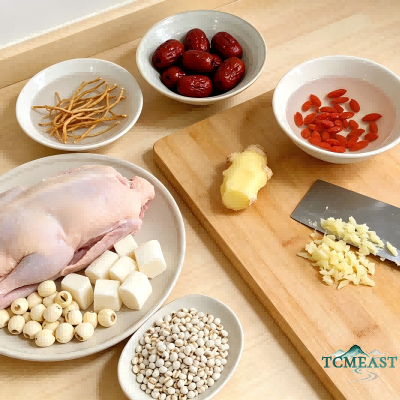
Bring sufficient water (approx. 1500-2000ml) to a boil in a clay pot. Once boiling, add the blanched duck pieces, Pseudostellaria root, ginger slices, red dates (if using), and other optional ingredients. Add enough boiling water all at once — do not add water midway through cooking.
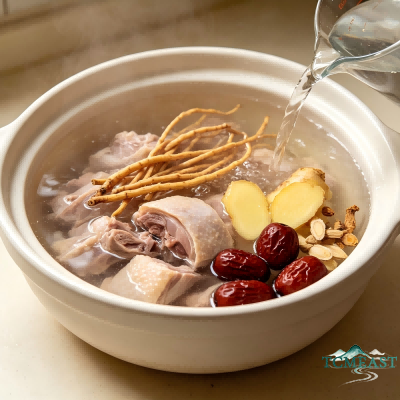
Bring to a boil over high heat, then reduce to low heat and simmer for 1.5-2 hours until the duck meat is tender and falls off the bone, and the broth is clear and rich.
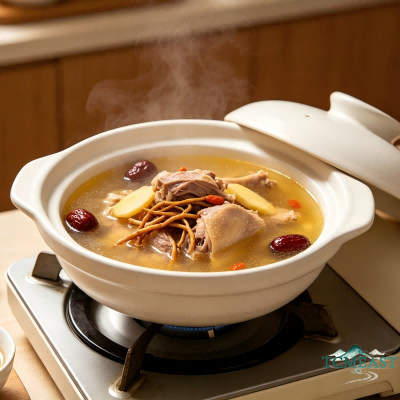
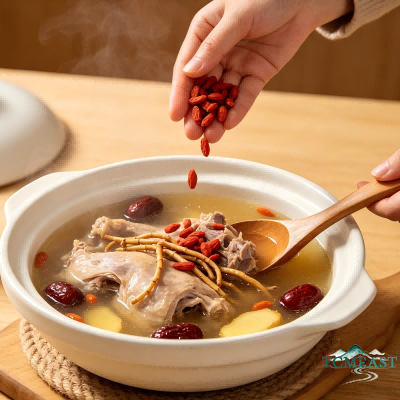
Add the goji berries (if using) 5-8 minutes before turning off the heat. Add salt to taste just before serving. Do not add salt too early, as it will make the meat tough.
TCM Notes
Modern Nutrition Research: Qi and yin nourishment: Pseudostellaria root has a milder qi-tonifying effect than ginseng, but is gentle and non-drying — suitable for long-term qi-yin deficiency调理. Old duck nourishes yin and blood, together improving fatigue, shortness of breath, and dry mouth. Spleen and stomach health: Pseudostellaria root tonifies spleen qi, while old duck nourishes stomach yin, effectively improving poor appetite and indigestion caused by spleen-stomach weakness. Clearing heat and draining dampness: Old duck is cool in nature and clears deficiency heat; Pseudostellaria root benefits qi and promotes salivation. Together, they provide a gentle tonic effect, especially suitable for summer heat with fluid depletion and internal damp-heat. Immunity enhancement: Pseudostellaria root polysaccharides enhance immune function; old duck is rich in high-quality protein and trace elements, collectively boosting the body's resistance. Moistening and nourishing: Old duck has strong yin-nourishing effects; combined with the salivation-promoting action of Pseudostellaria root, it helps relieve dry throat, dry mouth, and dry skin caused by yin deficiency.
Suitable for:Those with qi-yin deficiency (fatigue, shortness of breath, dry mouth and throat, spontaneous sweating, night sweats) Those with summer heat and fluid depletion, and loss of appetite Those with spleen-stomach weakness and poor digestion Those with yin deficiency constitution and deficiency fire (palms and soles hot, tidal fever, night sweats) Those recovering from illness or post-surgery Middle-aged and older adults (daily gentle tonic) Those with chronic late nights and depleted body fluids Generally suitable for most people in summer as a gentle tonic
Not suitable for:Those with wind-cold colds or unresolved external infections — old duck is cool and may trap pathogens inside — not suitable for tonification Those with severe spleen-stomach deficiency-cold (cold abdominal pain, loose stools) — old duck is cool and may worsen symptoms. Add extra ginger to neutralize the coldness Those with internal cold-dampness (white greasy tongue coating, overweight with excess phlegm) — not recommended Those in acute gout flare-ups — old duck contains moderate purines; avoid during acute attacks Those allergic to duck or Pseudostellaria root Those with renal insufficiency — high protein content may increase kidney burden; control intake Infants under 1 year old — digestive system not fully developed — not recommended
