
Congees
Oat and Millet Porridge
Oat and Millet Porridge is a classic wellness congee made with oats (rolled oats or oat groats) and millet, known as the "golden combination." Millet is sweet and slightly salty in taste, slightly cool in nature, and channels to the Spleen, Stomach, and Kidney meridians. It is known for strengthening the spleen, harmonizing the stomach, nourishing yin and blood, and calming the spirit. Oats are sweet in taste, neutral in nature, and channel to the Liver, Spleen, and Stomach meridians. They are known for benefiting the liver, harmonizing the stomach, moistening the intestines, relieving constipation, lowering blood lipids, and regulating blood sugar. Rich in dietary fiber and β-glucan, oats are a heart-healthy grain. Together, millet nourishes the stomach and calms the mind, while oats lower lipids and promote bowel movements, achieving the combined effects of strengthening the spleen, nourishing the stomach, relieving constipation, regulating blood lipids, and calming the spirit. The porridge is thick, soft, and aromatic, with a smooth, slightly sweet taste. This porridge is especially suitable for daily consumption by those with weak digestion, high cholesterol, constipation, insomnia, and those managing their weight.
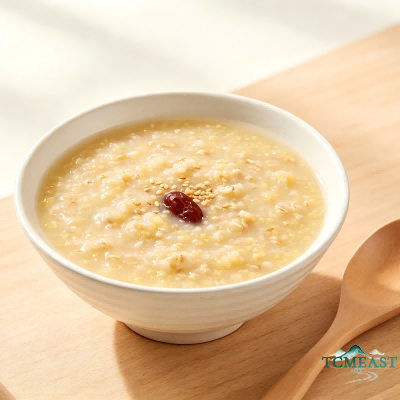
Main Ingredients
- Millet 100g
- Rolled oats (or oat groats) 50g
- Goji berries 5g
- Red dates (pitted) 5 pieces
- Rock sugar (or salt) To taste
- Water 1500ml
Steps
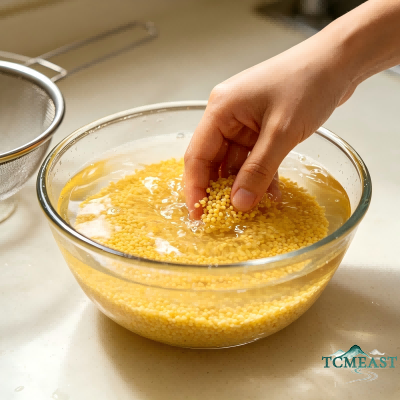
Place millet in a bowl with water. Gently swirl to rinse 1-2 times. Do not rub vigorously or wash repeatedly, as this removes water-soluble B vitamins and prevents the formation of "rice oil." Drain and set aside.
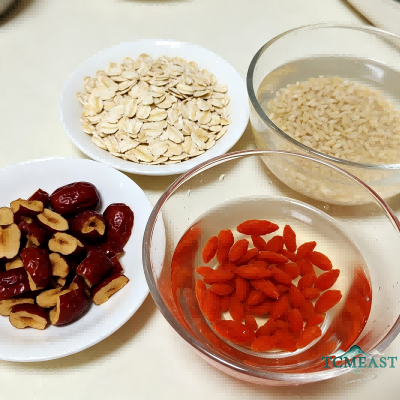
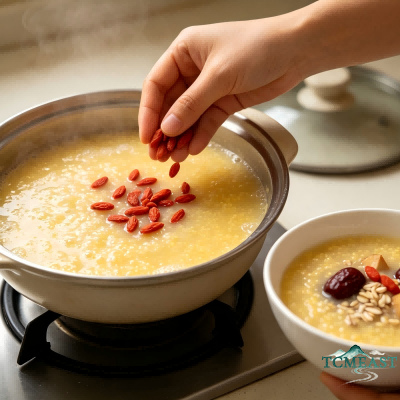
Oats: If using rolled oats (quick or old-fashioned), no soaking is needed. If using oat groats, soak in cold water for 2-4 hours in advance. Red dates (if using): Rinse, remove pits, and chop into small pieces. Goji berries (if using): Briefly soak and drain.
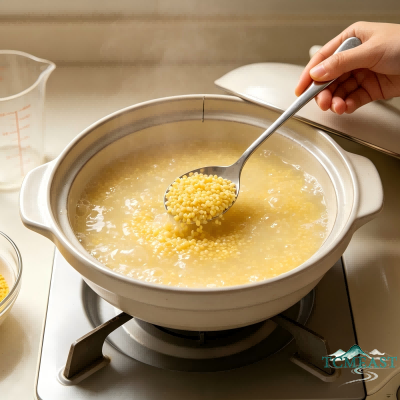
Add sufficient water (approx. 1200-1500ml) to a pot and bring to a full rolling boil. Once boiling, add the drained millet and stir quickly to prevent sticking. Boil over medium-high heat for 5-8 minutes (this helps the grains bloom and release oil), then reduce to low heat, cover with a slight gap, and simmer for 20-25 minutes.
Rolled oats: When the millet porridge thickens (about 25 minutes after adding millet), sprinkle in the oats and continue cooking for 5-8 minutes until softened and fully incorporated. Oat groats: Add together with the millet at the beginning, and extend the total cooking time to 40-50 minutes.
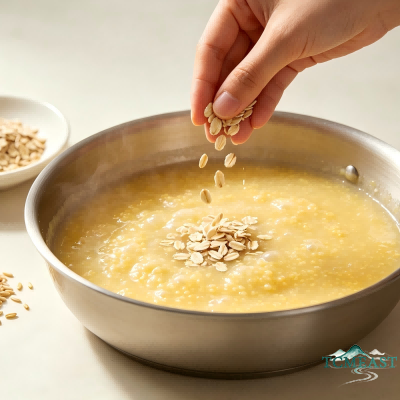
If adding red dates, add them when the porridge is about 70-80% done (about 20 minutes after adding the millet). If using rock sugar, add it before turning off the heat and stir until dissolved.
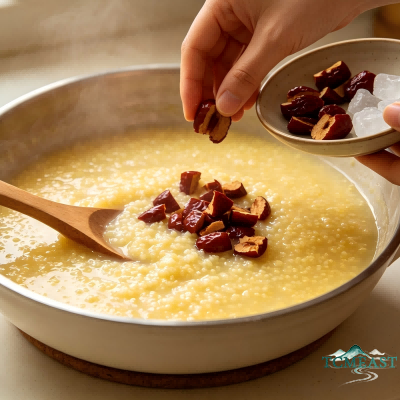
If adding red dates, add them when the porridge is about 70-80% done (about 20 minutes after adding the millet). If using rock sugar, add it before turning off the heat and stir until dissolved.
TCM Notes
Modern Nutrition Research: Digestive health: The "rice oil" of millet forms a protective film over the gastric mucosa, reducing acid irritation. β-glucan in oats forms a gel-like substance that protects the gastrointestinal tract. Together, they effectively improve weak digestion and indigestion. Lipid and blood sugar regulation: β-glucan in oats significantly lowers cholesterol and delays post-meal blood sugar spikes. Millet's complex carbs have a lower glycemic response than polished rice. This porridge is an ideal staple choice for those with hyperlipidemia and diabetes. Laxative effect: Oats are rich in dietary fiber (especially soluble fiber) that softens stools and promotes intestinal motility. B vitamins in millet support nervous and digestive system health. Sleep support: Millet has the highest tryptophan content among grains. Tryptophan converts to serotonin, providing calming and sleep-improving effects. Sustained energy: Provides long-lasting complex carbohydrates and is rich in B vitamins, iron, magnesium, and zinc.
Suitable for:Those with weak digestion, poor appetite, and indigestion Those with high cholesterol, hyperlipidemia, and cardiovascular risk Those with constipation Those with insomnia, neurasthenia, and restlessness Those managing weight (high satiety, low glycemic load) Diabetics (β-glucan slows sugar absorption, but portion control is still needed) Middle-aged and older adults (daily digestive support and lipid regulation) Infants over 6 months old (millet "rice oil" is an ideal first food) Generally suitable for most people as a daily healthy breakfast
Not suitable for:Those with severe gluten allergy (Celiac Disease): Pure oats are gluten-free but are often cross-contaminated with wheat. Choose certified gluten-free oats; otherwise, consume with caution Those with very weak digestion (severe gastric ulcers, acute GERD): The coarse fiber in oats may irritate lesions — consume in small amounts and cook until very soft Those with severely low gastric acid secretion: Oats contain phytic acid, which may affect mineral absorption if overconsumed Those allergic to millet or oats Infants under 6 months old: Digestive system not fully developed — not recommended