
Herbal Teas
Astragalus, Hyacinth Bean & Tangerine Peel Tea
Astragalus, Hyacinth Bean & Tangerine Peel Tea is a classic "food-as-medicine" wellness herbal drink, combining qi-tonifying astragalus, spleen-strengthening and dampness-draining hyacinth beans, and qi-regulating tangerine peel. The tea has a clear light-yellow color, with a distinctive aroma blending the earthy, beany scent of astragalus, the crisp citrus fragrance of tangerine peel, and the mild grain note of hyacinth beans – slightly sweet with a lingering finish. This balanced, non-greasy decoction is ideal for office workers and individuals with spleen deficiency, dampness excess, and chronic fatigue as a daily wellness beverage. Total brewing time is about 40-50 minutes – simple, batch-brewable, and drinkable over multiple servings.
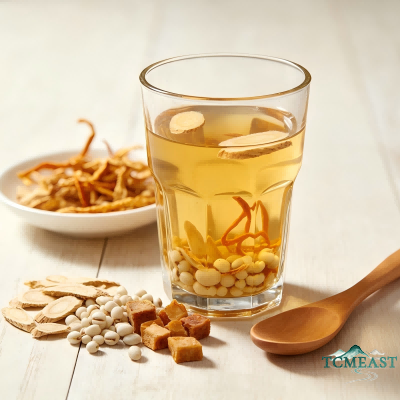
Main Ingredients
- Astragalus root (Huangqi) 15 g
- White hyacinth beans (dried) 30 g
- Dried tangerine peel (Chenpi) 5 g
- Water 1200ml
- Rock sugar 15 g
- Liquorice root (Gancao) 3 g
Steps
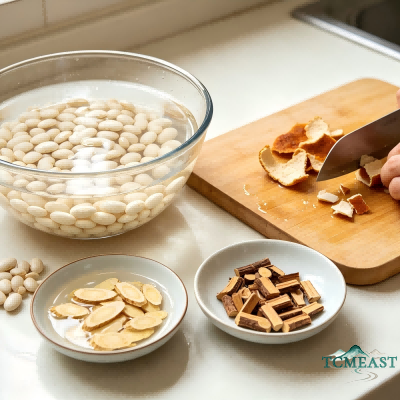
White hyacinth beans: Pick out any debris and rinse twice. Soak in plenty of water for 6-8 hours (or refrigerated overnight) until beans swell to about twice their size and have no hard core when pinched. This step is essential – thorough soaking not only shortens cooking time but also ensures complete cooking (raw hyacinth beans contain lectins that are toxic unless fully cooked). Astragalus: Rinse quickly under running water to remove dust (do not soak for long to prevent loss of active compounds). Tangerine peel: Soak briefly in warm water for 3-5 minutes until soft, scrape off the white pith from the inside (reduces bitterness), and tear into fingernail-sized pieces. Liquorice (if using) : Rinse and slice or break into small pieces.
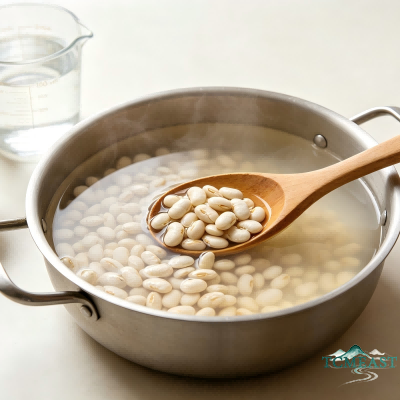
Drain the soaked beans and place them in a clay pot or stainless steel pot (avoid iron pots, which may darken the tea color). Add approximately 1000ml of water. Bring to a boil over high heat, then reduce to medium-low and simmer for about 25-30 minutes, until the bean skins slightly wrinkle, the flesh softens, and some beans begin to split open.
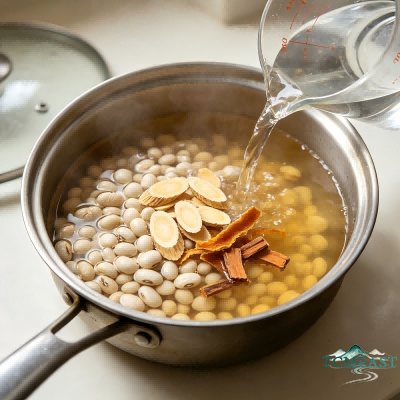
Add the astragalus slices, tangerine peel (and liquorice, if using) into the pot. Ensure the water still covers all ingredients – if too much has evaporated, top up with hot water to a total of about 1000-1200ml (add all at once). Continue simmering over medium-low heat for 15-20 minutes to fully extract the active components. Cover the pot; stirring is not frequently required.
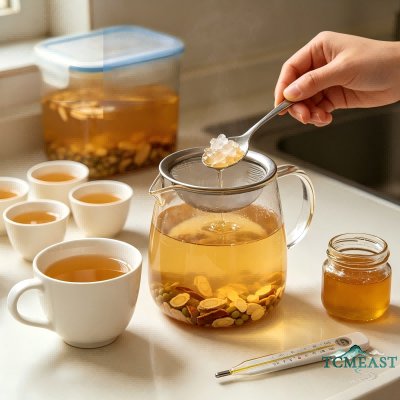
When the tea turns a light yellowish-brown and the herbal aroma is rich, turn off the heat. Strain through a fine mesh sieve or cheesecloth into a thermos or glass container. Discard the bean and herb solids – the fiber is coarse, and the active components have already been fully extracted. Let it rest briefly; skim off any light foam from the surface with a spoon.
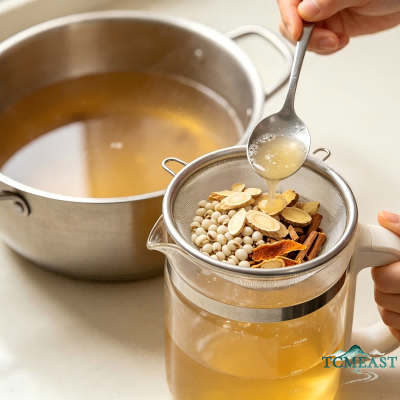
When the tea turns a light yellowish-brown and the herbal aroma is rich, turn off the heat. Strain through a fine mesh sieve or cheesecloth into a thermos or glass container. Discard the bean and herb solids – the fiber is coarse, and the active components have already been fully extracted. Let it rest briefly; skim off any light foam from the surface with a spoon.
TCM Notes
Astragalus root (Huangqi) : Sweet in taste and slightly warm in nature, acts on the Spleen and Lung meridians. Rich in astragalus polysaccharides, astragalosides, flavonoids, and amino acids. Polysaccharides significantly modulate immune function by enhancing macrophage activity; saponins help dilate blood vessels, improve microcirculation, and lower blood pressure. Revered in TCM as the "supreme qi tonic," it strengthens the exterior, promotes diuresis, reduces edema, and promotes tissue regeneration. White hyacinth bean (Baibiandou) : Sweet in taste and slightly warm, acts on the Spleen and Stomach meridians. Rich in high-quality plant protein (approx. 20g/100g), dietary fiber, calcium, phosphorus, iron, and B vitamins. Contains lectins (phytohemagglutinins) which are rendered inactive through thorough cooking. It strengthens the spleen, transforms dampness, harmonizes the stomach, and relieves summer-heat – particularly effective for poor appetite, loose stools, leukorrhea, and summer dampness-related vomiting/diarrhea caused by spleen deficiency with dampness. Tangerine peel (Chenpi) : Bitter, pungent, and warm in nature, acts on the Spleen and Lung meridians. Rich in volatile oils (limonene, etc.), hesperidin, vitamin C, and pectin. Volatile oils gently stimulate the digestive tract, promote gastric juice secretion, and relieve bloating; hesperidin has antioxidant, anti-inflammatory, and lipid-lowering properties. It regulates qi, strengthens the spleen, dries dampness, and transforms phlegm – crucially, it counteracts the stagnating effect of astragalus's tonifying action, ensuring "tonification without blockage." Together, they achieve the synergistic effects of supplementing qi, elevating yang, strengthening the spleen, draining dampness, regulating qi, and harmonizing the stomach. One cup (approx. 300ml) contains only about 15-25 kcal (near-zero without sweeteners), with no fat or cholesterol – ideal for long-term daily use.
Suitable for:Those with spleen qi deficiency – chronic fatigue, weakness, shortness of breath, and spontaneous sweating Individuals with excessive dampness – greasy white tongue coating, abdominal distension, loose or sticky stools Sedentary office workers with slow metabolism and low physical activity Those prone to seasonal colds, low immunity, or recurrent respiratory infections (astragalus strengthens the exterior) People with poor digestion, post-meal bloating, or frequent belching Middle-aged and elderly individuals seeking general wellness, fatigue relief, and cold prevention
Not suitable for:Pregnant women (especially first and third trimesters) : Astragalus may stimulate uterine smooth muscle contraction – traditionally believed to carry miscarriage and premature labor risks. Tangerine peel's qi-descending property may also affect fetal stability – strictly avoid Those with Excess-Heat conditions: High fever, red face, dry throat, dark urine, constipation, red tongue with yellow coating – consuming warm astragalus would aggravate the heat Those with Yin-deficiency with Fire-Excess: Night sweats, hot palms/feet, dry mouth, insomnia, red tongue with little coating – astragalus's warm nature may further deplete body fluids Those with wind-heat colds or active fever: Prioritize clearing heat and dispersing pathogens; don't use tonic herbs during acute infections Those with internal Damp-Heat, jaundice, or yellow-greasy tongue coating: Astragalus tonifies and Chenpi warms – both may exacerbate damp-heat Those allergic to astragalus, hyacinth beans, or tangerine peel Hypoglycemic patients (caution on empty stomach) : Astragalus has a mild blood-sugar-lowering effect – consuming large amounts on an empty stomach may trigger hypoglycemia Patients with severe renal insufficiency: Hyacinth beans contain moderate potassium and plant proteins – intake must be medically supervised
