
Soups
Astragalus and Pig Tripe Soup
Astragalus and Pig Tripe Soup is a classic Chinese medicinal tonic renowned for strengthening the spleen and stomach. It features astragalus – known as the "supreme qi tonic" – and pig tripe – praised as the "essential ingredient for tonifying the spleen". After long, slow simmering, the tripe becomes tender and melt-in-the-mouth soft without any gamey odor. The earthy aroma of astragalus blends perfectly with the citrusy fragrance of tangerine peel, creating a savory, warm, and subtly sweet broth. This soup is celebrated for supplementing middle qi, strengthening the spleen and stomach, regulating qi flow, and relieving pain. It is particularly effective as a dietary therapy for gastroptosis, loss of appetite, abdominal distension, and loose stools caused by spleen-stomach deficiency. Total cooking time is about 2 hours – an ideal choice for nourishing and warming the stomach in autumn and winter.
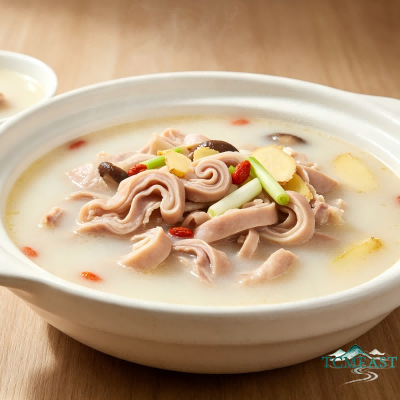
Main Ingredients
- Fresh pork stomach (pig tripe) 1 piece
- Astragalus root (Huangqi) 30 g
- Dried tangerine peel (Chenpi) 20 g
- Amomum villosum (Sharen) 10 g
- Fresh ginger 20 g
- Spring onion (cut into sections) 1 whole
- Cooking wine 15-20ml
- Salt to taste
- Ground white pepper a pinch a pinch
- Cornstarch (or flour) to taste
- White vinegar to taste
Steps
Rinse the fresh tripe under running water to remove surface mucus and excess fat. Turn the tripe inside out and scrape off the white fat membrane on the inner side. Add cornstarch (or flour), salt, and white vinegar. Vigorously rub and knead the tripe for about 5 minutes, then rinse thoroughly with water. Repeat the rubbing and rinsing process 2-3 times until the tripe is odorless and feels clean and non-slippery. Blanch the cleaned tripe in boiling water (fatty side facing inward). When the water returns to a boil, turn the tripe over. Remove once the tripe becomes firm and holds its shape. Transfer to a sink, scrape off any remaining white film with a knife, and rinse clean again.
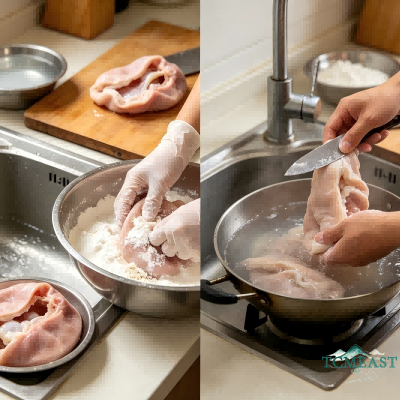
Rinse the fresh tripe under running water to remove surface mucus and excess fat. Turn the tripe inside out and scrape off the white fat membrane on the inner side. Add cornstarch (or flour), salt, and white vinegar. Vigorously rub and knead the tripe for about 5 minutes, then rinse thoroughly with water. Repeat the rubbing and rinsing process 2-3 times until the tripe is odorless and feels clean and non-slippery. Blanch the cleaned tripe in boiling water (fatty side facing inward). When the water returns to a boil, turn the tripe over. Remove once the tripe becomes firm and holds its shape. Transfer to a sink, scrape off any remaining white film with a knife, and rinse clean again.
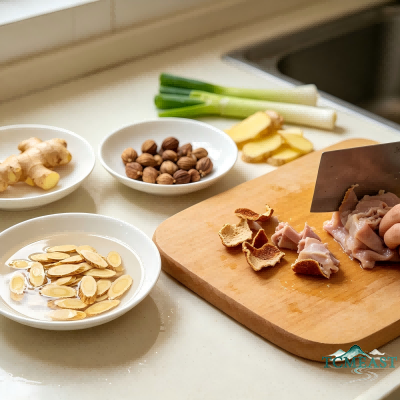
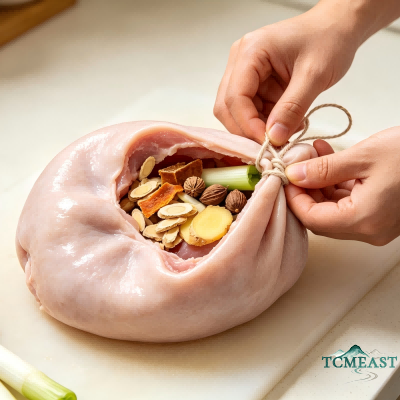
Stuff the prepared astragalus, tangerine peel, amomum, ginger slices, and spring onion sections into the tripe cavity. Securely tie the opening of the tripe with clean kitchen twine or cotton thread.
Place the tied tripe into a clay pot or sand pot (avoid iron pots). Add enough water to fully submerge the tripe (about 2000-2500ml). Bring to a boil over high heat, skim off any foam, then reduce to low heat (gentle simmer) and cook for approximately 1.5 hours. For a more traditional approach, simmer until the tripe is completely tender.
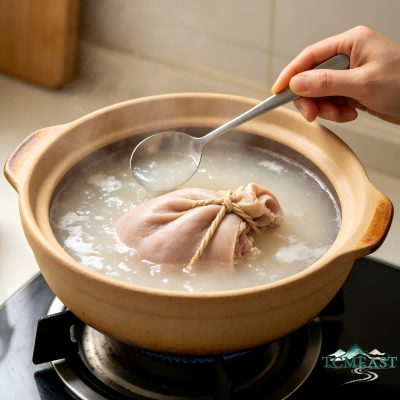
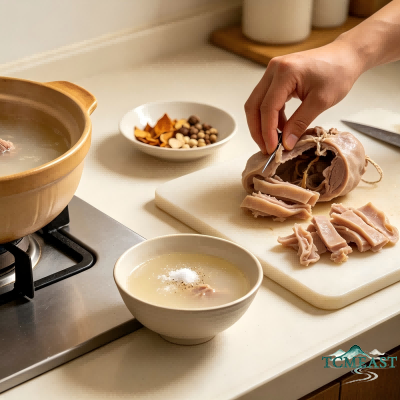
After simmering, turn off the heat. Remove the tripe and let it cool slightly, then cut open the twine. Discard the astragalus, tangerine peel, amomum, and other herbal solids from inside the tripe (their active components have been fully extracted; they are not edible). Slice or shred the tripe into pieces. Return the sliced tripe to the broth, season with salt and a pinch of ground white pepper to taste. Serve hot, consuming both the tripe and the broth. Can be divided into 4 portions and consumed over 2 days.
TCM Notes
Pig tripe (pork stomach) : Warm in nature and sweet in taste, acts on the Spleen and Stomach meridians. Rich in high-quality protein, collagen, vitamin A, vitamin E, and minerals including potassium, sodium, and magnesium. Collagen and pepsin in tripe help repair gastric mucosa and improve digestion. As recorded in the Bencao Shujing: "Pig tripe is the essential ingredient for tonifying the spleen. When the spleen and stomach are tonified, middle qi is strengthened". Note that it is relatively high in cholesterol and fat, so consumption should be moderate. Astragalus root (Huangqi) : Sweet in taste and slightly warm in nature, acts on the Spleen and Lung meridians. Rich in astragalus polysaccharides, astragalosides, flavonoids, and amino acids. Polysaccharides significantly modulate immune function by enhancing macrophage activity; saponins help dilate coronary arteries and improve myocardial blood supply. In TCM, it is known to supplement qi and elevate yang, strengthen the exterior, promote diuresis, generate fluids and nourish blood, and promote tissue regeneration. It provides excellent tonic effects for those with chronic fatigue, weakness, and qi deficiency. Modern research also suggests astragalus may slow cellular aging. Tangerine peel (Chenpi) : Bitter, pungent, and warm in nature, acts on the Spleen and Lung meridians. Rich in volatile oils (limonene, etc.), hesperidin, and pectin. Volatile oils gently stimulate the digestive tract, promote gastric juice secretion, and relieve bloating; hesperidin offers antioxidant, anti-inflammatory, and lipid-lowering benefits. It is known for regulating qi, strengthening the spleen, drying dampness, and transforming phlegm – crucially, it counteracts the stagnating effect of astragalus's tonifying action, ensuring "tonification without blockage." Amomum villosum (Sharen) : Warm in nature and pungent in taste, it harmonizes the stomach, warms the spleen, and dispels cold, effectively treating poor appetite, food stagnation, and abdominal pain with distension. Combined with astragalus and tripe, it enhances qi-flowing, digestion-promoting, and pain-relieving effects. Together, these four ingredients achieve synergistic effects of supplementing middle qi, strengthening the spleen and stomach, regulating qi to relieve pain, and harmonizing the middle to eliminate stagnation. One serving (approx. 300ml broth with tripe) provides about 200-280 kcal, rich in high-quality protein and collagen.
Suitable for:Those with middle qi deficiency and spleen-stomach weakness: Symptoms include poor appetite, post-meal bloating, chronic fatigue, and shortness of breath Patients with gastroptosis or visceral ptosis: Caused by qi deficiency and sinking – this soup offers effective adjunct dietary therapy Those with chronic gastritis or stomach cold with pain: Cold pain in the stomach that improves with warmth Individuals recovering from illness, chronic weakness, or post-surgery Those prone to frequent colds, with low immunity, or qi-deficient constitution Individuals with cold-sensitive stomach and cold hands/feet during autumn/winter Women with qi and blood deficiency or light menstruation (provided heat patterns are excluded)
Not suitable for:Those with exterior excess patterns (colds with fever, chills without sweat, headache, body aches) : Should focus on dispersing pathogens, not tonifying qi, to avoid trapping pathogens inside Those with excess heat patterns or yin deficiency with yang hyperactivity: Symptoms include high fever, red face, dry throat, hot palms/feet, night sweats, red tongue with little coating – astragalus may aggravate heat, and chenpi is pungent and drying Those with internal damp-heat: Yellow-greasy tongue coating, abdominal distension, sticky stools – this warming tonic may worsen damp-heat Those with stomach heat constitution: Dry mouth, bad breath, burning sensation in stomach – consumption may worsen symptoms Acute gastritis flare-up, acute gastroenteritis, or diarrhea: Avoid greasy soups that may burden the digestive system Patients with hyperlipidemia, high cholesterol, or severe obesity: Tripe is relatively high in cholesterol and fat – strictly control portion size Hypertensive patients: Must strictly control salt addition Patients with hyperuricemia or acute gout flare-ups: Tripe is a moderate-purine food; purines dissolve into the broth during cooking – limit soup consumption Those allergic to tripe, astragalus, tangerine peel, or amomum Pregnant women (especially first trimester) : Although amomum is traditionally used for calming the fetus, astragalus may potentially stimulate uterine contractions – consult a physician before consumption; self-administration is not recommended Post-surgery patients: Consult a doctor before consuming Those with red tongue and little saliva, or internal excess heat: Chenpi's pungent and drying nature may further deplete body fluids
