
Soups
Bupleurum and Cabbage Soup
Bupleurum and Cabbage Soup is an exceptionally simple home-style medicinal soup. It combines the traditional Chinese herb Bupleurum with common cabbage, embodying the wisdom of "food as medicine" in daily diet. Bupleurum, slightly cold in nature, is a classic herb for soothing the liver and relieving depression. Cabbage, neutral in nature, benefits the stomach, promotes fluid production, and clears heat to relieve restlessness. The soup is light and refreshing, with soft cabbage and a faint herbal aroma. It is renowned for reconciling the exterior and interior, soothing the liver and regulating qi, and clearing the liver and gallbladder. It is especially suitable for consumption during spring when liver qi is dominant, or when experiencing emotional distress and chest/distension pain.
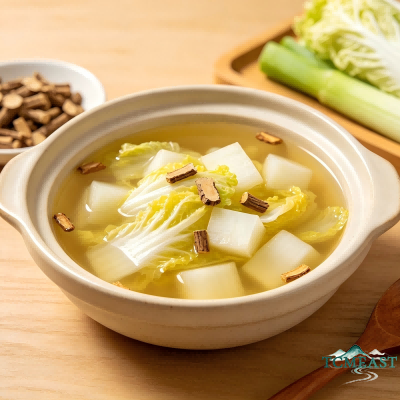
Main Ingredients
- Bupleurum root (Chaihu) 15g
- Chinese cabbage 200g
- Salt 3g
- Sesame oil 2ml
- MSG a pinch
Steps
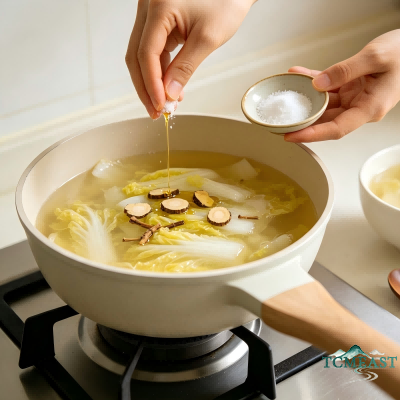
Break apart the cabbage leaves and wash them thoroughly. Rinse the bupleurum root and set aside.
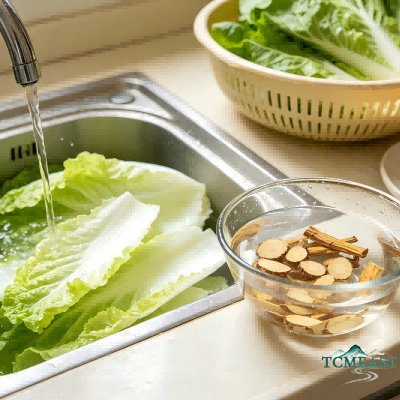
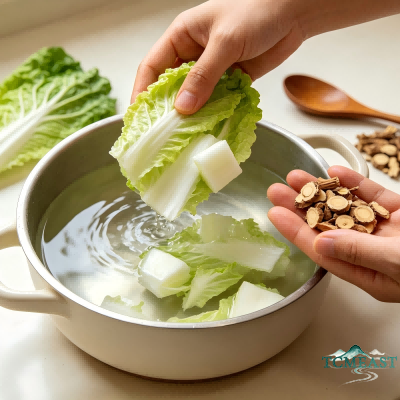
Add an appropriate amount of water to a pot, then add the washed cabbage and bupleurum.
Cook over low heat for 10 minutes.
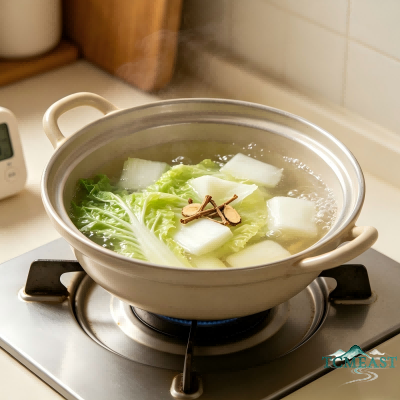
Before removing from heat, season with salt and a pinch of MSG (optional). Drizzle with sesame oil and serve.
TCM Notes
Bupleurum root (Chaihu) : Slightly cold in nature, with a bitter and pungent taste, it acts on the Liver and Gallbladder meridians. Its main active component, saikosaponin, helps soothe the liver, relieve depression, and lift yang qi. It is a representative herb in TCM for "reconciling the exterior and interior" and regulating qi movement. Chinese cabbage: Neutral in nature and sweet in taste, it acts on the Stomach and Large Intestine meridians. Rich in calcium, iron, potassium, and dietary fiber, it benefits the stomach, promotes fluid production, and clears heat to relieve restlessness. Together, they achieve the effects of reconciling the exterior and interior, soothing the liver and regulating qi, and clearing the liver and gallbladder. This soup can辅助调理 emotional discomfort caused by liver qi stagnation and serves as an adjunct dietary therapy for conditions like fatty liver and hyperlipidemia. Its low-fat content also makes it a healthy daily option.
Suitable for:Those with liver qi stagnation: Symptoms include depression, irritability, and chest/distension pain. Those with alternating chills and fever, and fullness in the chest and hypochondrium. Those with a bitter taste in the mouth, dry throat, or dizziness. Patients with fatty liver or hyperlipidemia: As a daily conditioning soup. Those seeking spring wellness: When liver qi is vigorous, moderate consumption helps its smooth flow. Those feeling irritable in summer: The soup helps clear heat and relieve restlessness.
Not suitable for:Those with true yin deficiency and liver yang hyperactivity: Symptoms include soreness and weakness in the lower back and knees, dizziness, tinnitus, and irritability – consume with caution. Those with yin deficiency and fire excess: Symptoms include dry mouth and throat, hot palms and soles, and night sweats – not suitable for excessive consumption. Those with qi deficiency and sinking: Symptoms include shortness of breath, fatigue, and organ prolapse – not suitable for excessive consumption. Pregnant and breastfeeding women: Consult a doctor before consumption. Those allergic to bupleurum or cabbage.
