
Congees
Coix Seed and Apricot Kernel Porridge
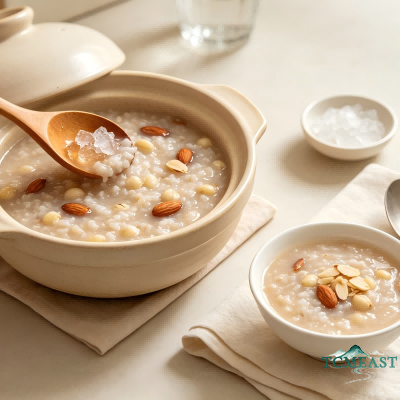
Coix Seed and Apricot Kernel Porridge is a classic medicinal porridge for strengthening the spleen. It combines the dampness-expelling properties of coix seed with the lung-moistening effects of sweet apricot kernel, simmered with rice until thick and creamy. The porridge has a smooth, lightly sweet taste with a distinctive apricot aroma. It is known for its effects of strengthening the spleen, supplementing qi, draining dampness, and moistening the lungs to relieve coughs. It is especially suitable for consumption during humid seasons or for those suffering from dampness-phlegm accumulation.
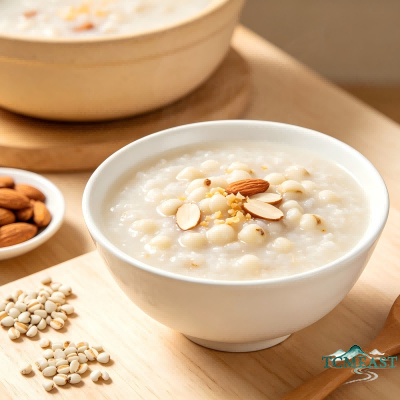
Main Ingredients
- Coix seed 30g
- Sweet apricot kernel (South apricot kernel) 10g
- Japonica rice (or plain rice) 100g
- Rock sugar to taste
- Water 1000ml
Steps
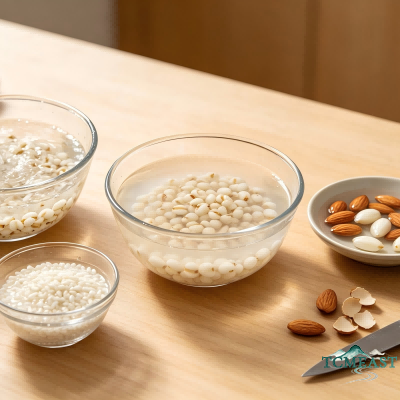
Coix seed and rice: Rinse the coix seed and japonica rice separately. Soak the coix seed in water for 30 minutes to 1 hour to help it cook more thoroughly. Sweet apricot kernel: Rinse the apricot kernels, soak briefly in warm water, then remove the skin and the pointed tip (the tip contains trace toxins; removing it is safer).
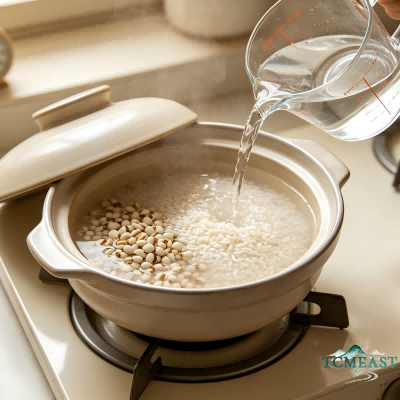
Place the soaked coix seed and japonica rice into a pot. Add approximately 800-1000ml of water. Bring to a boil over high heat, then reduce to low heat and simmer.
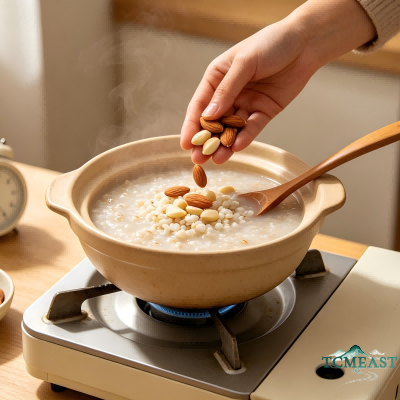
When the porridge is half-cooked and the rice grains begin to bloom (about 20-30 minutes), add the prepared sweet apricot kernels. Continue to simmer over low heat for about 15-20 minutes until the rice is fully cooked and the porridge thickens.
Once the porridge is done, add rock sugar to taste and stir until fully dissolved. Serve warm. Can be consumed 1-2 times daily, as breakfast or dinner.
TCM Notes
Coix seed (Job's tears) : Slightly cold in nature, sweet and bland in taste. It is known to promote diuresis, drain dampness, strengthen the spleen, stop diarrhea, expel pus, and detoxify. Rich in protein, B vitamins, and minerals, it helps boost metabolism and reduce gastrointestinal burden, making it an ideal tonic for those recovering from illness. Sweet apricot kernel: Neutral in nature and sweet in taste. It is known to direct qi downward, relieve cough, calm wheezing, and moisten the intestines to relieve constipation. It contains unsaturated fatty acids and vitamin E, which are beneficial for the skin and brain. Japonica rice: Serves as the porridge base, tonifying the middle and strengthening the spleen and stomach, making the overall formula more balanced. Together, they work to strengthen the spleen, drain dampness, and moisturize the lungs – a gentle tonic that addresses both symptoms and root causes.
Suitable for:Those with dampness-phlegm accumulation: Symptoms include a feeling of heaviness, obesity, dizziness, fatigue, poor appetite, chest fullness, excessive phlegm, and a greasy white tongue coating. Those with spleen deficiency and dampness excess: Such as chronic enteritis, indigestion, and loose stools. Those in recovery from illness: Individuals with qi deficiency after illness or surgery who need gentle nourishment. Those with poor skin conditions: Such as facial edema, acne, eczema, rough skin, or pigmentation. General population: Especially suitable as a daily wellness porridge during humid summer months.
Not suitable for:Those with excessive internal heat: Symptoms include flushed face, red eyes, dry mouth, scanty dark urine, and constipation – avoid consumption. Pregnant women (especially in the first trimester) : Coix seed may stimulate uterine contractions, and apricot kernel should also be used with caution – strictly avoid during pregnancy. Those with yin-deficiency cough and loose stools: Symptoms include dry cough, scanty phlegm, dry mouth, or chronic diarrhea – avoid consumption. Those with constipation or excessive urination: Not recommended.
