
Stews
Steamed Hairtail
Steamed Hairtail is a classic Chinese homestyle dish featuring hairtail as the main ingredient, prepared by steaming. Hairtail, along with large yellow croaker, small yellow croaker, and cuttlefish, is known as one of China's four major seafoods. Steaming is a cooking method that best preserves the original flavor and nutritional value of hairtail. The finished dish features tender,鲜美的 fish meat with a fresh and savory taste. It is low in salt, oil, and sugar, making it a healthy recipe. In the coastal areas of the Jiangsu-Zhejiang-Shanghai region, steaming is the classic way to prepare fresh hairtail.
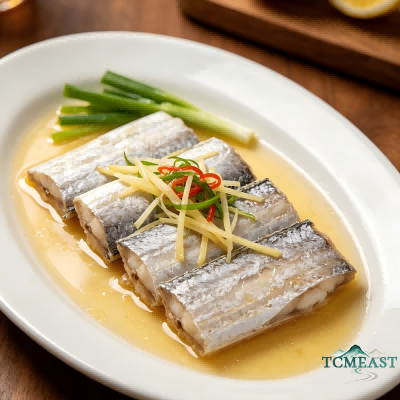
Main Ingredients
- Fresh hairtail (ribbonfish) 500g
- Fresh ginger 1 piece
- Spring onions 2-3 stalks
- Cooking wine 15ml
- Salt a pinch
- Steamed fish soy sauce 20ml
- Cooking oil 20ml
- Red bell pepper a small piece
- Ground white pepper a pinch
Steps
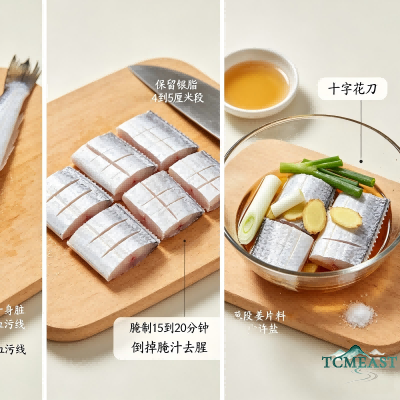
Remove the head, tail, fins, and internal organs, and rinse thoroughly. Thorough cleaning is key to removing fishiness: Remove the internal organs, the black membrane on the surface, and the blood line under the internal organs. Cut the cleaned hairtail into sections about 4-5cm long. Score a crosshatch pattern on both sides of each section to help the flavors penetrate. When preparing hairtail, retain the silvery-white film (silver fat) on the surface to preserve nutrients and help reduce fishiness. Place the hairtail sections in a bowl. Add spring onion sections, ginger slices, cooking wine, and a pinch of salt (optional). Marinate for 15-20 minutes. After marinating, pour off the liquid released to better remove the fishy smell.
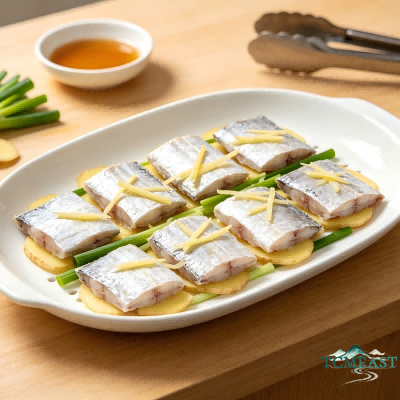
Place ginger slices and spring onion sections on the bottom of a steaming plate. Arrange the marinated hairtail sections neatly on the plate. Place ginger strips between the fish sections to enhance aroma and allow steam to circulate. Scatter ginger strips over the top of the fish.
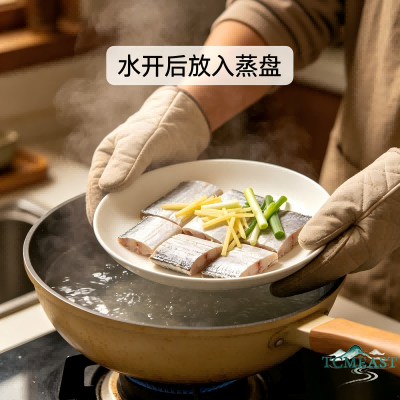
Bring water to a boil in a steamer. Place the plate in the steamer once the water is boiling. Steam over high heat: Depending on the size of the fish and the heat of your stove, steam for 8-10 minutes. For home cooking, 10-15 minutes is typically sufficient. Overcooking will make the fish tough. After steaming, turn off the heat and let it rest for 2-3 minutes with the lid on.
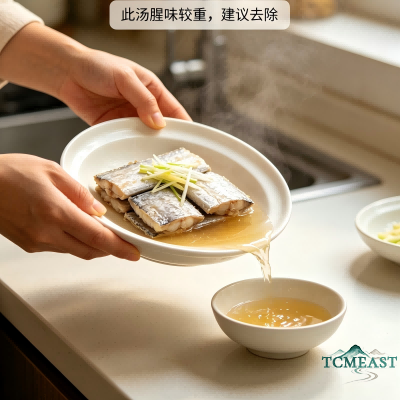
Remove the steamed fish from the steamer. Pour off the liquid that has accumulated on the plate (this liquid is quite fishy). Remove the used ginger and spring onion, and replace with fresh spring onion strips and red pepper strips.
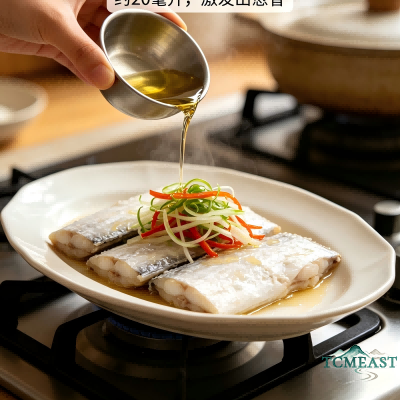
Drizzle steamed fish soy sauce (about 1.5 tbsp) along the edge of the plate. In a small pan, heat the cooking oil until it just begins to smoke (about 20ml). Pour the hot oil immediately over the spring onion strips to release their fragrance. Sprinkle with a pinch of ground white pepper for extra aroma, if desired.
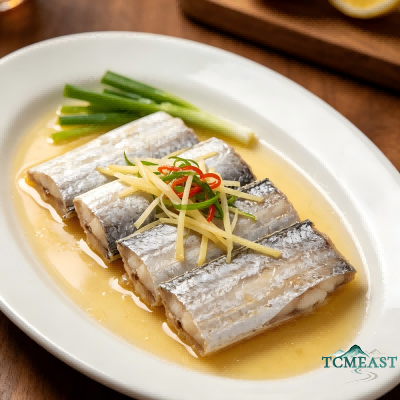
Serve hot. The fish will be tender and flavorful, with a pure, original taste.
TCM Notes
Hairtail is sweet in taste and warm (or neutral) in nature, acting on the Liver, Spleen, and Stomach meridians. Strengthens the Spleen and Supplements Qi: Hairtail enhances spleen and stomach function and improves poor appetite. It is beneficial for those recovering from illness, with blood deficiency, dizziness, shortness of breath, fatigue, poor appetite, emaciation, and malnutrition. Nourishes the Liver and Moisturizes the Skin: Hairtail is rich in unsaturated fatty acids that nourish the skin. It is suitable for those with dry skin. Protects Cardiovascular Health: Hairtail is rich in DHA and EPA, which help reduce blood viscosity and the risk of atherosclerosis. It is also rich in magnesium, which protects the cardiovascular system and helps prevent hypertension and myocardial infarction. Supports Brain Health: Hairtail is rich in DHA, which benefits brain health and is suitable for the elderly and mental workers. Nutritional Value: Per 100g of fresh hairtail, protein content is as high as 17.6g, while fat content is only 4.2g. Calcium content reaches 431mg per 100g, more than 4 times that of the same weight of milk. Advantages of Steaming: Steaming or boiling is the healthiest way to consume hairtail, as it best preserves nutrients while effectively reducing purine content.
Suitable for:Those recovering from chronic illness, with blood deficiency and dizziness, shortness of breath, fatigue, poor appetite, emaciation, or malnutrition Those with dry skin Those with liver disease, to help improve symptoms Those needing nutritional supplementation or with dry, brittle hair The elderly and mental workers (DHA supports brain health) Pregnant women, children, post-surgery recovery patients, and those with anemia Those with cold constitution (hairtail is warm in nature and helps warm the stomach and tonify deficiency)
Not suitable for:Hairtail is considered a "wind-moving" food: Those with skin diseases such as scabies, eczema, or skin allergies should avoid it Cancer patients and those with lupus erythematosus should avoid it Those with boils, lymphatic tuberculosis, or bronchial asthma should also avoid it Those with gout or hyperuricemia should avoid it (hairtail has a high purine content) Those with hypertension should consume in moderation and reduce or eliminate salt during cooking Those allergic to hairtail Should not be fried with beef tallow or mutton fat, and should not be consumed with licorice or platycodon Hairtail should not be consumed with foods rich in tannins or oxalates, such as hawthorn or spinach
