
Herbal Teas
Danshen and Hawthorn Decoction
Danshen and Hawthorn Decoction is a classic medicinal tea featuring salvia miltiorrhiza and hawthorn as its core ingredients. Salvia miltiorrhiza is a key herb in TCM for “activating blood and removing stasis,” with a reputation that “one herb equals the efficacy of the Four Substances Decoction”. Hawthorn is a medicinal and edible herb known for promoting digestion, resolving food stagnation, and activating blood circulation. Together, they achieve the effects of activating blood circulation, removing stasis, promoting digestion, lowering lipids, relieving pain, and clearing the heart and calming the mind. This decoction is simple to prepare and is especially suitable as an adjunct dietary tea for patients with cardiovascular and cerebrovascular diseases and hyperlipidemia.
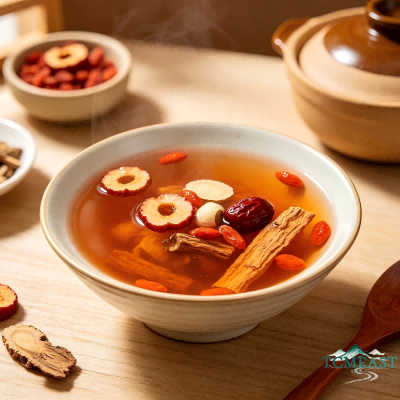
Main Ingredients
- Salvia miltiorrhiza (Danshen) 10g
- Dried hawthorn (Shanzha) 15g
- Rock sugar to taste
- Water 800ml
Steps
Wash the hawthorn and remove the pits (hawthorn pits contain trace toxic components and are best removed). If using sliced hawthorn, it can be used directly. Wash the Danshen and cut into thin slices. Danshen can be soaked in water for 2-4 hours in advance to better release its active compounds.

Place the prepared Danshen and hawthorn into a clay pot or stainless steel pot (avoid iron pots). Add approximately 500-800ml of water. Bring to a boil over high heat, then reduce to low heat and simmer for 15-20 minutes.
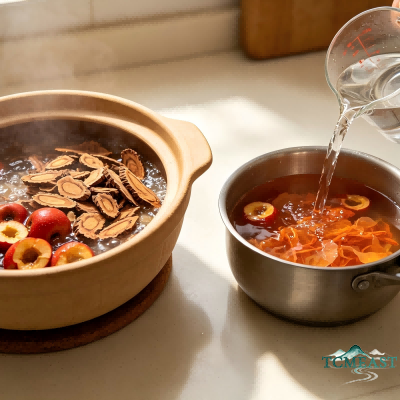
Turn off the heat, strain out the solids, and reserve the liquid. Add rock sugar to taste if desired (can be omitted for diabetics).
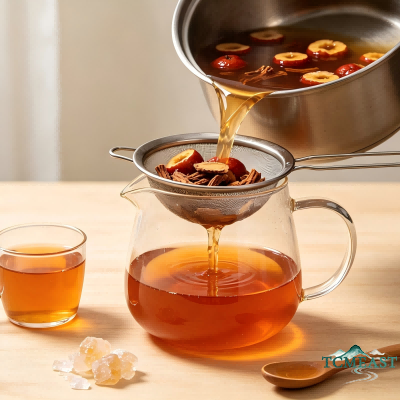
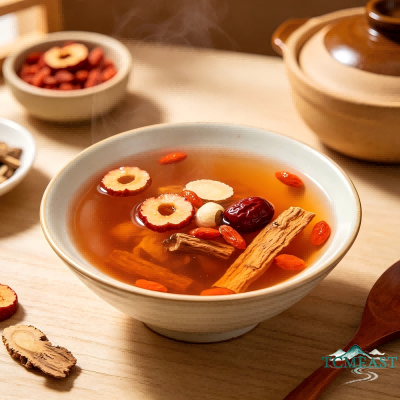
1 dose daily, divided into 2-3 servings. Best consumed warm after meals to avoid stomach irritation on an empty stomach.
TCM Notes
Salvia miltiorrhiza (Danshen) : Slightly cold in nature, bitter in taste, acts on the Heart and Liver meridians. Known to activate blood, remove stasis, unblock meridians, relieve pain, clear the heart, and cool blood to eliminate abscesses. Modern research shows that Danshen improves cardiac function, dilates blood vessels, enhances myocardial contractility, increases coronary blood flow, and helps prevent arteriosclerosis. It may also help improve memory and sleep quality. Hawthorn (Shanzha) : Sour and sweet in taste, slightly warm in nature, acts on the Spleen, Stomach, and Liver meridians. Known to promote digestion, resolve food stagnation, move qi, disperse stasis, and transform turbidity to lower lipids. Hawthorn is rich in vitamin C, vitamin B₂, carotene, and various organic acids. It promotes digestive enzyme secretion, has a sustained blood pressure-lowering effect, strengthens the heart, relieves angina, increases coronary flow, and reduces myocardial oxygen consumption. Synergistic effect: Danshen activates blood without damaging healthy qi, while hawthorn promotes digestion and lowers lipids while also activating blood. Together, they enhance each other's blood-activating and stasis-removing effects while also benefiting digestion, making this decoction particularly suitable for blood-stasis type coronary heart disease and hyperlipidemia.
Suitable for:Those with cardiovascular and cerebrovascular diseases: Such as coronary heart disease, angina, myocardial ischemia, and cerebral insufficiency Those with hyperlipidemia and hypertension Those with poor appetite and indigestion Those with qi stagnation, blood stasis, or menstrual irregularities Those with restlessness, insomnia, or difficulty falling asleep General population as a daily health tea
Not suitable for:Pregnant and breastfeeding women: Both Danshen and hawthorn have blood-activating effects; consumption may increase the risk of miscarriage Menstruating women (with heavy flow) : May cause increased menstrual bleeding Those with Spleen-Stomach deficiency cold: Danshen is slightly cold in nature; excessive consumption may cause stomach discomfort Those with hyperacidity or gastric ulcers: Hawthorn is highly acidic and may irritate the gastric mucosa Those with low blood pressure: Danshen has a blood pressure-lowering effect and may worsen symptoms Those taking anticoagulant medications: Possible drug interactions Those with bleeding tendencies or coagulation disorders Those allergic to Danshen or hawthorn Infants and young children: Gastrointestinal function is weak; not recommended
