
Congees
Celery Porridge
Celery Porridge is a classic medicinal porridge with a history of hundreds of years, recorded in the Compendium of Materia Medica by the Ming Dynasty physician Li Shizhen. Celery is cool in nature with a sweet and bitter taste, acting on the Liver and Stomach meridians, known for clearing heat and calming the liver. Japonica rice tonifies the middle and strengthens qi, making the medicinal effects mild and sustained. The porridge is aromatic and refreshing, renowned for clearing latent heat, promoting bowel and bladder function, calming the liver, and lowering blood pressure and lipids. It is especially suitable for hypertension due to liver-yang hyperactivity, wind-heat headaches, thirst, and difficult urination, making it an ideal wellness porridge for spring liver care and summer heat relief.
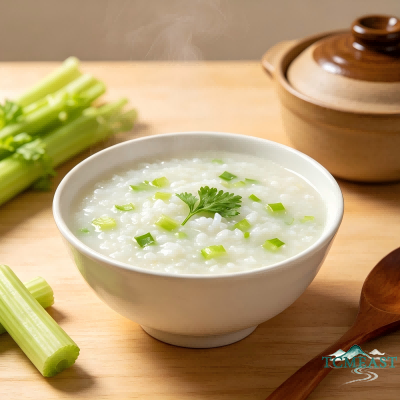
Main Ingredients
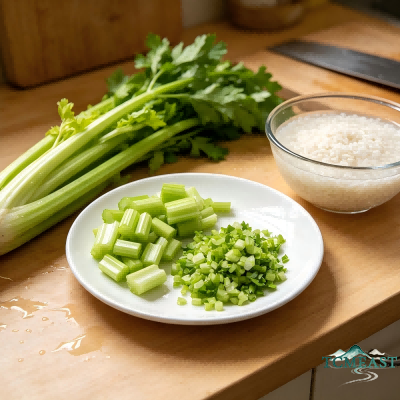
- Fresh celery (with roots) 120g
- Japonica rice (or plain rice) 250g
- Salt to taste
- Peanut oil a little
- Scallion white a little
Steps
Wash the fresh celery with roots intact, and cut into small sections or mince. Rinse the japonica rice.
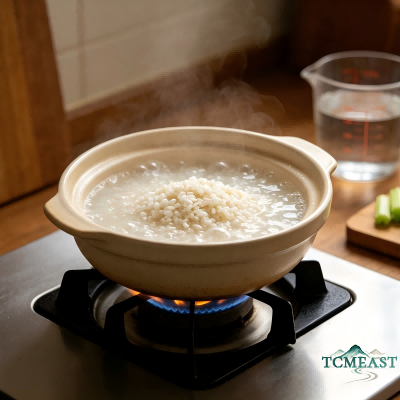
Place the rice in a clay pot with sufficient water (about 800-1000ml). Bring to a boil over high heat, then reduce to low heat and simmer.
When the porridge is nearly cooked and the rice grains have bloomed, add the chopped celery (with roots).
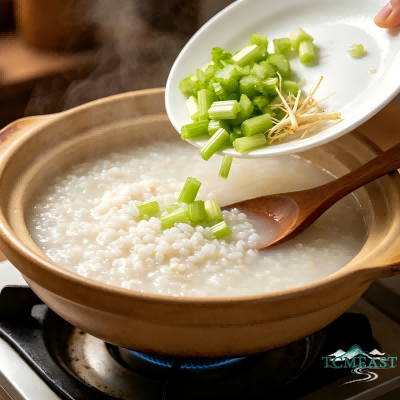
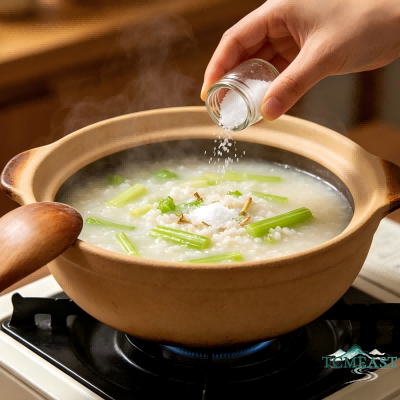
Continue cooking for 5-10 minutes until the celery softens and releases its aroma. Season with salt to taste.
TCM Notes
Celery: Sweet and bitter in taste, cool in nature, acts on the Liver, Stomach, and Lung meridians. Rich in protein, carbohydrates, carotene, B vitamins, calcium, phosphorus, iron, and other minerals. The celery oil in celery has a unique aroma that stimulates appetite; its rich dietary fiber promotes gastrointestinal motility and bowel function. Celery is known to calm the liver, clear heat, dispel wind, promote diuresis, and moisten the lungs to relieve coughs, with active components that have blood pressure-lowering, sedative, and cholesterol-lowering effects. Japonica rice: Tonifies the middle, strengthens the spleen and stomach, providing carbohydrates and energy, making the heat-clearing effects mild and sustained. Together, they achieve the synergistic effects of calming the liver, clearing heat, lowering blood pressure and lipids, promoting bowel and bladder function, and quenching thirst.
Suitable for:Those with hypertension due to liver-yang hyperactivity Those with wind-heat headaches, fever, and thirst Those with dry mouth, difficult urination, or constipation Those with fever after alcohol consumption or pediatric febrile illnesses Those with liver-stomach heat, dizziness, or lung-heat cough Those prone to irritability, vivid dreaming, or thirst in spring General population for spring liver care and summer cooling
Not suitable for:Those with Spleen-Stomach deficiency cold: Those with cold sensitivity, poor appetite, bloating, loose stools, or frequent diarrhea – should avoid Those with low blood pressure: Celery has blood pressure-lowering effects; those with low blood pressure should not overconsume Those with spleen-kidney deficiency – should avoid Those with cirrhosis, dysentery, gastric/duodenal ulcers, or pediatric diarrhea – consume with caution
