
Congees
Red Adzuki Bean and Lotus Root Porridge
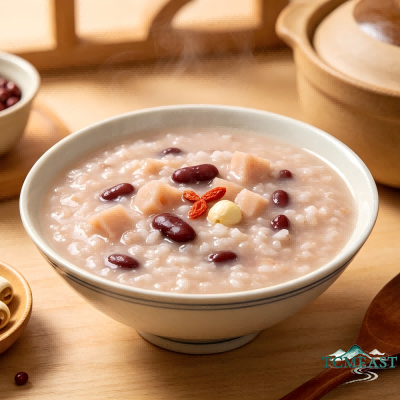
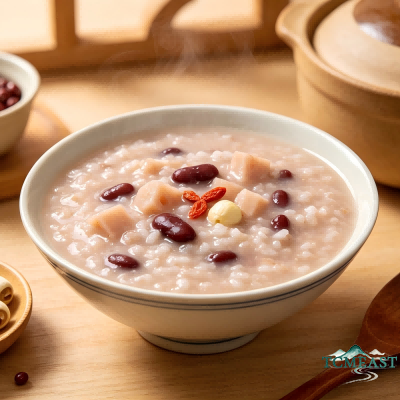
Red Adzuki Bean and Lotus Root Porridge is a traditional wellness porridge featuring red adzuki beans and lotus root as its core ingredients. As the folk saying goes, “The lotus plant is a treasure from head to root, and autumn lotus root is the most nourishing”. Red adzuki beans nourish blood, calm the heart, and strengthen the spleen to remove dampness; lotus root clears heat, moistens dryness, and nourishes yin; lotus seeds calm the mind, nourish the heart, and strengthen the spleen; glutinous rice warms the middle and strengthens the spleen and stomach. Simmered together, this porridge is creamy, smooth, and pleasantly sweet. It is renowned for strengthening the spleen and harmonizing the stomach, calming the mind, clearing heat, and promoting diuresis. Total cooking time is about 2-2.5 hours (including soaking time), making it especially suitable as a daily wellness porridge during the dry autumn season.
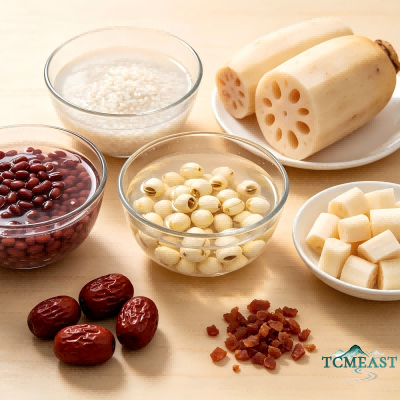
Main Ingredients
- Red adzuki beans (small red beans) 40g
- Lotus root 80g
- Glutinous rice 50g
- Lotus seeds 20g
- Rock sugar 15g
- Water 1500ml
- Red dates 2-3 pieces
- Goji berries 5g
Steps
Red adzuki beans: Rinse and soak in cold water for 2-3 hours (or overnight) until fully swollen. Glutinous rice: Rinse and soak in cold water for 2-3 hours, then drain. Lotus seeds: Rinse and soak in cold water until soft (about 1-2 hours). Lotus root: Wash, peel, and slice into thin pieces about 0.5cm thick or small dices. (Choose lotus root with short nodes and thick body; the second section from the tip is best.) Red dates (if using): Wash, remove pits, and chop.
Add approximately 1500ml of cold water to a pot and bring to a boil. Add the soaked red adzuki beans, glutinous rice, and lotus seeds to the pot in sequence. After it returns to a boil, reduce to low heat and simmer for about 2 hours until the beans are soft, the rice grains have bloomed, and the porridge thickens. When the porridge is nearly done (about the last 20 minutes), add the lotus root slices (or dices) and chopped red dates (if using), and continue cooking until the lotus root is soft.
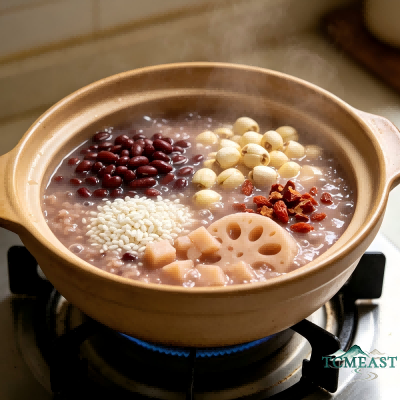
When the porridge is thick, add rock sugar and stir until fully dissolved. If using goji berries, add them 5 minutes before turning off the heat – do not cook for too long to prevent nutrient loss. Turn off the heat and let it rest, covered, for 5 minutes to thicken further.
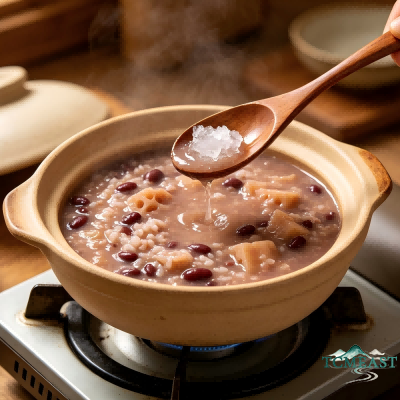
Ladle into bowls and serve warm for the best flavor. One bowl per day is sufficient; avoid overconsumption.
TCM Notes
Red adzuki beans: Rich in saponins, which have good diuretic effects and are beneficial for heart disease, kidney disease, and edema; high in dietary fiber, helping to moisten the intestines, relieve constipation, lower blood pressure and blood lipids, and regulate blood sugar; rich in folic acid, making it beneficial for lactation in postpartum women. Lotus root: Raw lotus root is cold in nature, with effects of clearing stasis, clearing heat, relieving thirst, and stopping bleeding; cooked lotus root becomes warm in nature, strengthening the spleen, nourishing yin, clearing heat, and moistening dryness. Rich in iron, it helps improve iron-deficiency anemia. Lotus seeds: Rich in protein, carbohydrates, niacin, potassium, calcium, and magnesium, with effects of calming the mind, nourishing the heart, strengthening the spleen, and tonifying deficiency. Glutinous rice: Warms the middle, tonifies deficiency, strengthens the spleen and stomach, and makes the porridge creamy and smooth. Together, they achieve the synergistic effects of strengthening the spleen, harmonizing the stomach, calming the mind, clearing heat, promoting diuresis, and nourishing blood and beauty.
Suitable for:Those seeking autumn wellness: Autumn weather is dry – lotus root nourishes yin, clears heat, moistens dryness, and calms the mind Those with spleen deficiency, dampness, and poor appetite (for strengthening the spleen and stimulating appetite) Those with edema or difficult urination (red adzuki beans promote diuresis) Those with restlessness, insomnia, and heart palpitations (lotus seeds calm the mind) Those with anemia or qi-blood deficiency (lotus root and red beans nourish blood) Postpartum women with insufficient lactation (red adzuki beans promote lactation) General population as a daily autumn wellness porridge
Not suitable for:Healthy individuals should not consume long-term or in large amounts: Red adzuki beans have strong diuretic effects; excessive consumption may deplete body fluids Those with frequent urination or nocturia: The diuretic effect may worsen symptoms Those with Spleen-Stomach deficiency cold or diarrhea: Red adzuki beans are cool in nature and may worsen gastrointestinal discomfort Those with constipation: Lotus seeds have astringent properties and may worsen constipation Diabetic patients: Glutinous rice and rock sugar are high in sugar – strictly control portion size Pregnant women: Red adzuki beans have strong diuretic effects – consume with caution Those allergic to any of the ingredients