
Soups
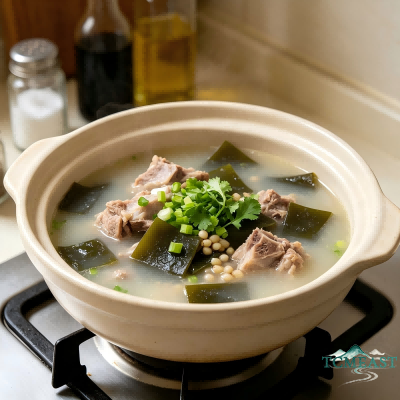
Kelp and Spare Ribs Soup
Kelp and Spare Ribs Soup is a classic traditional soup from Zhejiang cuisine, originating in Zhejiang province as a homestyle dish. In areas like Dongtou, Zhejiang, kelp was historically known as "immortal herb". The soup features tender spare ribs and thick kelp root, seasoned with yellow wine, spring onion, and ginger, slowly simmered in stages. The finished soup is clear and savory, with tender, fall-off-the-bone ribs and soft, smooth kelp. This soup is renowned for supplementing nutrition, providing calcium, lowering blood pressure, nourishing yin, moistening dryness, and boosting immunity. Preparation takes about 1.5-2 hours (excluding kelp soaking time) – a classic nourishing soup for autumn and winter.
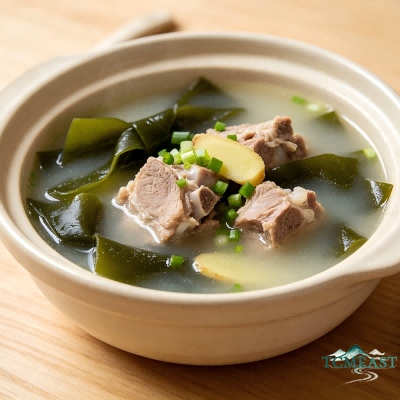
Main Ingredients
- Pork spare ribs 300-500g
- Dried kelp (seaweed) 40-50g
- Fresh ginger 3-5 slices
- Spring onion 1 section
- Yellow wine (or cooking wine) 15ml
- Chopped spring onion to taste
- Coriander (cilantro) to taste
- Job's tears (coix seed) 50g
- Salt to taste
- Sesame oil a few drops
- Ground white pepper a pinch
- Rice vinegar a few drops
Steps
Kelp: Soak dried kelp in water for at least 6 hours (or overnight) until fully rehydrated. Advanced tip: Steam the kelp for about 30 minutes, then soak in water for another 4 hours for a softer texture. After soaking, wash and cut into pieces or tie into knots. If using pre-tied kelp knots, rinse directly. Pork ribs: Cut ribs into approximately 4cm sections. Place in a pot with cold water, add ginger slices and cooking wine, bring to a boil, and blanch for 2-3 minutes, skimming off the foam. Remove and rinse with warm water, then drain. Aromatics: Slice the ginger; cut the spring onion into segments. If using Job's tears, soak in water for at least 2 hours in advance.
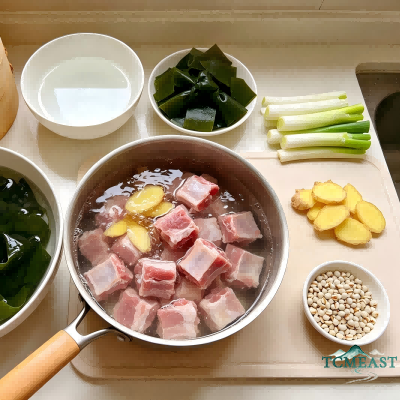
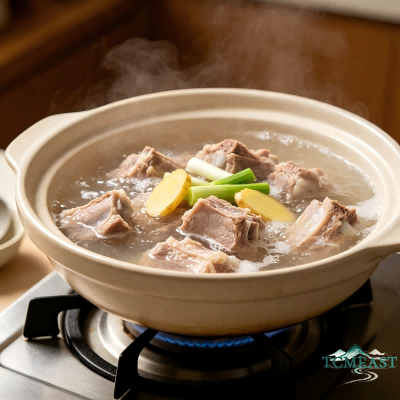
Place the blanched ribs in a clay pot with ginger slices, spring onion sections, and enough water (about 2000ml). Bring to a boil over high heat, skim off any foam, then reduce to low heat and simmer for about 30-40 minutes.
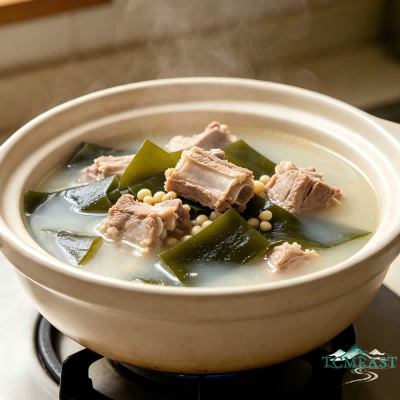
Add the prepared kelp (and Job's tears, if using) to the pot. Continue simmering over low heat for another 30-40 minutes until the ribs are tender and the kelp is soft.
Add salt to taste. Add a few drops of rice vinegar before serving to help release calcium. Drizzle with sesame oil, and garnish with ground white pepper, chopped spring onion, and coriander before serving.
TCM Notes
Kelp: Rich in iodine, calcium, iron, dietary fiber, mannitol, and various vitamins. Iodine is essential for thyroid hormone synthesis; mannitol has diuretic and anti-edema effects; dietary fiber promotes bowel health. In TCM, kelp is known for softening hardness, clearing heat, promoting diuresis, lowering lipids, and reducing blood pressure. Pork spare ribs: Rich in high-quality protein, fat, calcium phosphate, collagen, and bone mucin. The abundant calcium supports bone health and prevents osteoporosis. Together, they achieve the synergistic effects of strengthening bones, nourishing yin, moistening dryness, lowering lipids and blood pressure, promoting diuresis, and boosting immunity. Per 100g, this soup contains approximately 68 kcal, 3.81g protein, and 5.3g fat.
Suitable for:Those with hyperthyroidism (overactive thyroid) : Kelp is high in iodine and may stimulate thyroid hormone synthesis, worsening symptoms Those with hyperuricemia or gout: Purines in kelp and fat in ribs may increase uric acid production Those with hyperlipidemia: Ribs are high in fat; avoid excessive or long-term consumption Those with damp-heat and phlegm stagnation Those with acute gastroenteritis or diarrhea: The soup is difficult to digest and may burden the gastrointestinal system Those with Spleen-Stomach deficiency cold: Kelp is cold in nature; excessive consumption may worsen gastrointestinal discomfort Those allergic to kelp or pork Those with thyroid cancer: Should avoid
Not suitable for:Those with hyperthyroidism (overactive thyroid) : Kelp is high in iodine and may stimulate thyroid hormone synthesis, worsening symptoms Those with hyperuricemia or gout: Purines in kelp and fat in ribs may increase uric acid production Those with hyperlipidemia: Ribs are high in fat; avoid excessive or long-term consumption Those with damp-heat and phlegm stagnation Those with acute gastroenteritis or diarrhea: The soup is difficult to digest and may burden the gastrointestinal system Those with Spleen-Stomach deficiency cold: Kelp is cold in nature; excessive consumption may worsen gastrointestinal discomfort Those allergic to kelp or pork Those with thyroid cancer: Should avoid
