
Congees
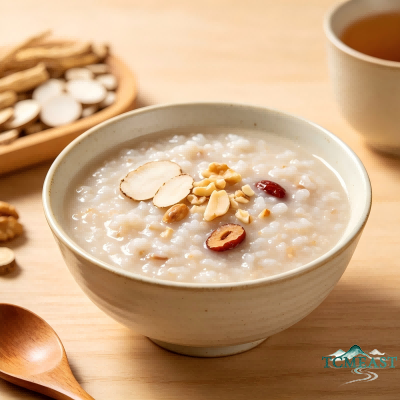
White Peony and Peach Kernel Porridge
White Peony and Peach Kernel Porridge is a traditional Chinese medicinal porridge documented in texts such as Treatise on the Treatment of Arthralgia. White peony, with a bitter and sour taste and slightly cold nature, acts on the Liver and Spleen meridians – it nourishes blood, soothes the liver, and relieves pain. Peach kernel, with a bitter and sweet taste and neutral nature, acts on the Heart, Liver, and Large Intestine meridians – it invigorates blood, removes stasis, and moistens the intestines. When cooked with japonica rice, the porridge is smooth and aromatic, with mild medicinal properties. It is renowned for nourishing blood, removing stasis, unblocking meridians, and relieving pain. It is especially suitable for those with late-stage frozen shoulder with blood stasis obstructing the meridians, those with late-stage cervical spondylosis with blood stasis obstructing the meridians, and those with qi-stagnation and blood-stasis type cervical spondylosis. Preparation takes about 40-50 minutes – an ideal medicinal porridge for daily regulation of blood stasis constitution.
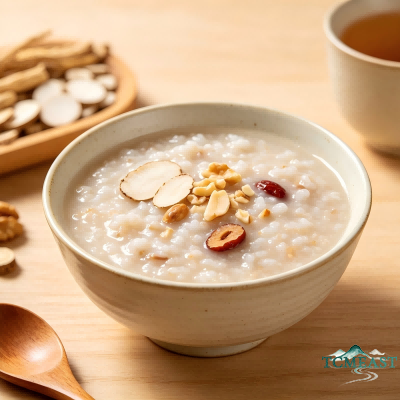
Main Ingredients
- White peony root (Hangzhou white peony / Baishao) 20g
- Peach kernel (Taoren) 15g
- Japonica rice 60g
- Water 700ml
Steps
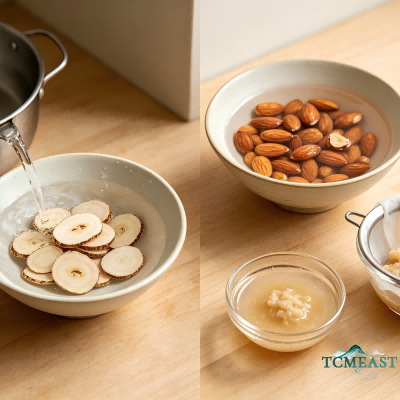
White peony: Rinse the white peony briefly under running water to remove dust (do not soak for long). Place in a clay pot or stainless steel pot (avoid iron pots). Peach kernel (critical) : Soak the peach kernels in warm water briefly, then remove the outer skin and the tip. Crush the peeled and tipped kernels into a paste, add a small amount of water to grind into a liquid, and strain through a fine mesh sieve or cheesecloth to remove the residue, reserving the peach kernel liquid. Safety Note: Peach kernels contain amygdalin and must be heat-treated before consumption – do not eat raw or in excessive amounts.
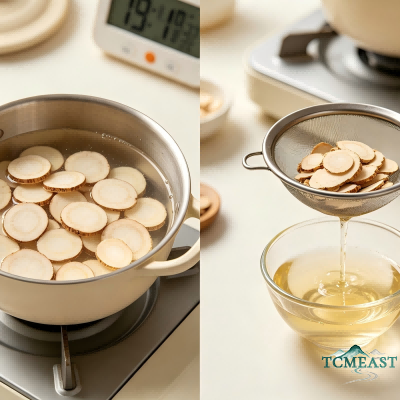
Place the rinsed white peony in a pot with approximately 500ml of water. Bring to a boil over high heat, then reduce to low heat and simmer for about 15-20 minutes. Turn off the heat and strain through a fine mesh sieve to remove the solids, reserving approximately 500ml of clear liquid.
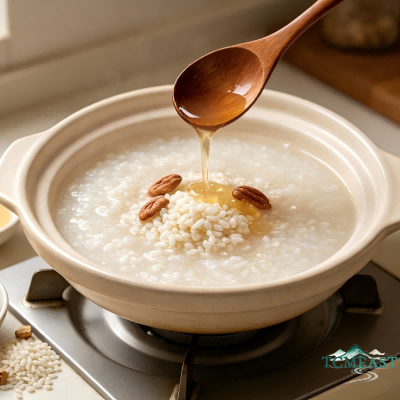
Pour the white peony liquid and peach kernel liquid together into a clay pot. Add 60g of rinsed japonica rice. Bring to a boil over high heat, then reduce to low heat and simmer for about 15-20 minutes until the rice is soft and the porridge thickens.
Let it cool slightly and serve warm. Once daily, preferably in the morning on an empty stomach. Recommended 1-2 times per week.
TCM Notes
White peony root (Baishao) : Bitter and sour in taste, slightly cold in nature, acts on the Liver and Spleen meridians. Known to nourish blood, regulate menstruation, soothe the liver, relieve pain, and stop sweating. White peony nourishes and invigorates blood, alleviating pain caused by blood stasis. It is commonly used for blood deficiency with sallow complexion, menstrual irregularities, spontaneous sweating, night sweats, hypochondriac pain, and abdominal pain. Modern research shows it has analgesic, anti-inflammatory, and liver-protective effects. Peach kernel (Taoren) : Bitter and sweet in taste, neutral in nature, acts on the Heart, Liver, and Large Intestine meridians. Known to invigorate blood, remove stasis, moisten the intestines, and relieve cough and wheezing. Peach kernel excels at breaking stasis and unblocking blood vessels, effectively improving pain caused by blood stasis obstruction. Note: Peach kernels contain amygdalin and must not be eaten raw – they must be heat-treated before consumption. Japonica rice: Tonifies the middle, strengthens the spleen and stomach, providing carbohydrates and energy, making the medicinal effects mild and sustained. Together, they achieve the synergistic effects of nourishing blood, removing stasis, unblocking meridians, and relieving pain. White peony nourishes and invigorates blood to tonify deficiency; peach kernel breaks stasis and unblocks meridians to attack excess; rice nourishes the stomach and harmonizes the middle to protect healthy qi – attacking and tonifying in combination, invigorating blood without damaging it.
Suitable for:Those with late-stage frozen shoulder with blood stasis obstructing the meridians Those with late-stage cervical spondylosis with blood stasis obstructing the meridians Those with qi-stagnation and blood-stasis type cervical spondylosis Those with blood deficiency and blood stasis syndrome Those with lower back pain and stiffness with fixed tender points (qi-stagnation and blood-stasis type) Those with sallow complexion, dizziness, palpitations, and menstrual irregularities Those with blood deficiency constitution accompanied by blood stasis manifestations
Not suitable for:Those with diarrhea – use with caution Pregnant women – peach kernel invigorates blood and may disturb the fetus – contraindicated Those with heavy menstrual bleeding – peach kernel invigorates blood and may worsen bleeding Those with loose stools or chronic diarrhea – peach kernel moistens the intestines and may worsen diarrhea Those with bleeding disorders (e.g., gastric bleeding, thrombocytopenia) – peach kernel invigorates blood and may increase bleeding tendency Those prone to internal heat or wind-heat colds – not suitable Those allergic to white peony or peach kernel Children and those with weak constitution – consume under medical guidance