
Congees
Chuanwu Porridge
Chuanwu Porridge is a classic medicinal porridge from the Song Dynasty text Puji Benshi Fang by Xu Shuwei. It features Chuanwu (Aconite) as the primary ingredient, known for dispelling wind-cold, eliminating cold-dampness, and relieving pain, combined with japonica rice, ginger juice, and honey. Chuanwu is acrid, sweet, and greatly hot in nature, and is a common treatment for wind-cold-dampness arthralgia. Japonica rice tonifies the middle and guides the herbs to the Spleen meridian. Ginger warms the stomach and counteracts the toxicity of Chuanwu, while honey tonifies the middle and harmonizes the flavor. The formula is ingeniously配伍 to reduce toxicity while enhancing the therapeutic effects.
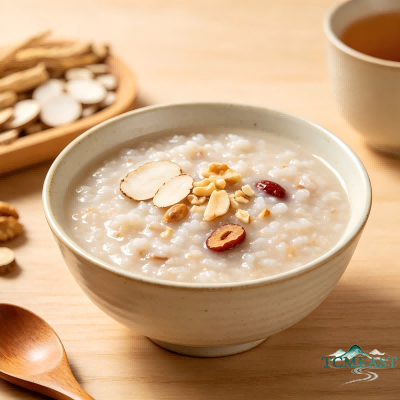
Main Ingredients
- Processed Radix Aconiti (Chuanwu) 5g
- Japonica rice 50g
- Ginger juice 5ml
- Honey to taste
- Water 500ml
Steps
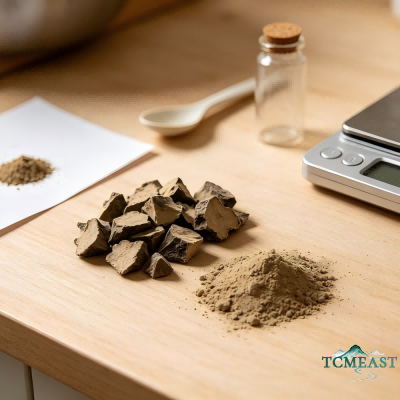
Crush the processed Chuanwu and grind into a very fine powder. Strictly control the dosage to 3-5g, do not exceed. Chuanwu vs. Caowu: Before the Ming Dynasty, both were generally called "Wutou". Li Shizhen's Compendium of Materia Medica clearly distinguished them: "Those produced in Zhangming are the mother of Fuzi (Aconite root), now called Chuanwu; those produced in Jiangzuo and Shannan are the Wutou listed in the Shennong Bencao Jing, now called Caowu."Chuanwu should be used for this porridge.
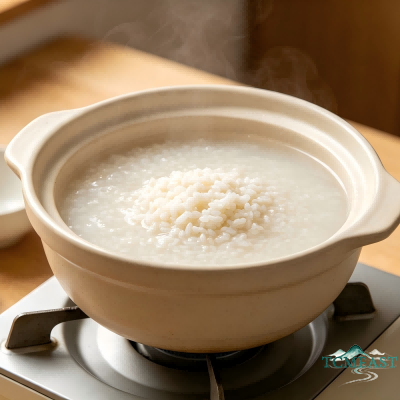
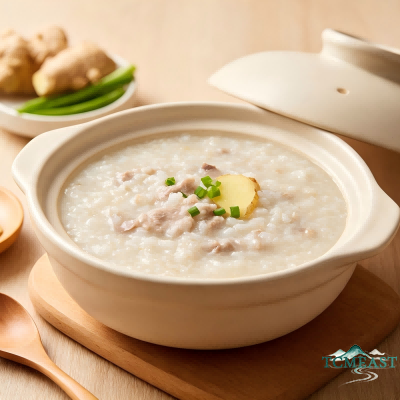
Rinse the japonica rice and place it in a clay pot. Add approximately 500ml of water. Simmer over low heat until the rice is cooked.
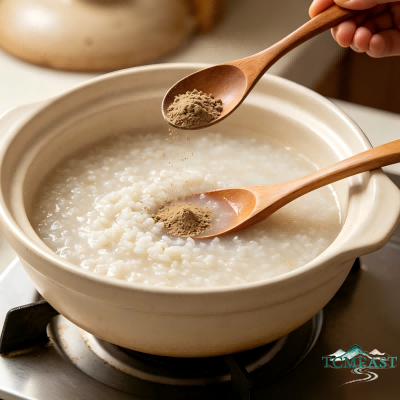
After the porridge comes to a boil, add the ground Chuanwu powder. Reduce to low heat and continue simmering until the porridge is fully cooked. The porridge should be thin, not thick.
After the porridge is cooked, add approximately 10 drops of ginger juice and honey to taste (about 3 spoons). Stir well and bring to a brief boil for 1-2 moments.
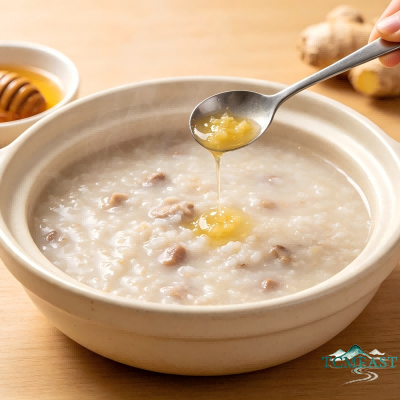
Take on an empty stomach, warm. 1-2 times daily. A course of 5-7 days is recommended.
TCM Notes
Chuanwu (Radix Aconiti) : Acrid, sweet, greatly hot, toxic, and acts on all twelve meridians. Known for dispelling wind-cold, eliminating cold-dampness, unblocking joints, and warming the meridians to relieve pain. Modern research confirms that while the aconitine in Chuanwu is toxic, its toxicity is greatly reduced through boiling without compromising efficacy. Japonica rice: Tonifies the middle and supplements qi, guiding the medicinal effects to the Spleen meridian. As Xu Shuwei stated: "The essence of grains guides the wind-dampness medicine to the Spleen meridian, thus calming the limbs". Ginger: Warms the stomach and stops vomiting, while also counteracting the toxicity of Chuanwu. Honey: Tonifies the middle and moistens dryness, harmonizing the flavor and also counteracting the toxicity of Chuanwu. This formula is ingeniously simple yet effective, achieving the effects of drying dampness, dispelling cold, unblocking joints, and warming the meridians to relieve pain.
Suitable for:Suitable for wind-cold-dampness arthralgia (Bi syndrome) with the following symptoms: Wandering joint pain (migratory arthralgia) Pain in the limbs, lower back, and knees Weakness or inability to raise the limbs with severe pain Rheumatoid arthritis Lumbar disc herniation with cold-dampness obstruction Frozen shoulder (periarthritis of the shoulder) Numbness
Not suitable for:Those with heat-pattern pain – contraindicated Those with fever – contraindicated Pregnant women – contraindicated Those with Yin deficiency or Yang excess – contraindicated Those with heat-type arthralgia (red, swollen, hot joints) – contraindicated Eighteen Incompatibilities: Chuanwu must not be used with Banxia (Pinellia), Gualou (Trichosanthes), Beimu (Fritillaria), Baiji (Bletilla), or Bailian (Ampelopsis)
