
Congees
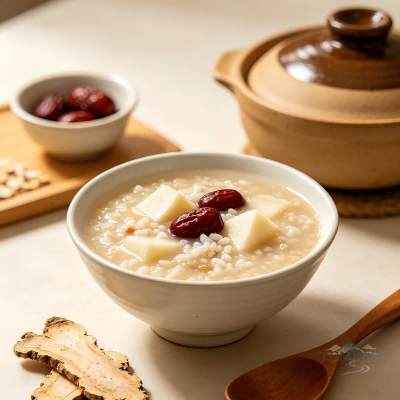
Atractylodes & Chinese Yam Congee (Baizhu Shanyao Zhou)
Atractylodes & Chinese Yam Congee is a classic spleen-strengthening medicinal porridge rooted in Traditional Chinese Medicine. Atractylodes, warm in nature and bitter-sweet in taste, enters the Spleen and Stomach meridians, with effects of strengthening the spleen, tonifying qi, drying dampness, promoting diuresis, stopping sweating, and calming the fetus. Chinese yam, neutral in nature and sweet in taste, enters the Lung, Spleen, and Kidney meridians, with effects of strengthening the spleen and stomach, nourishing the kidneys and essence, and tonifying qi and yin. Combined with japonica rice to tonify the middle and boost qi, this congee achieves the effects of strengthening the spleen, tonifying qi, drying dampness, stopping diarrhea, and nourishing the stomach. The congee is smooth and creamy, with soft, sweet yam and a subtle herbal aroma from atractylodes. Ideal for those with spleen-stomach deficiency, poor appetite, abdominal bloating, and loose stools – especially suitable for spring dampness relief.
Main Ingredients
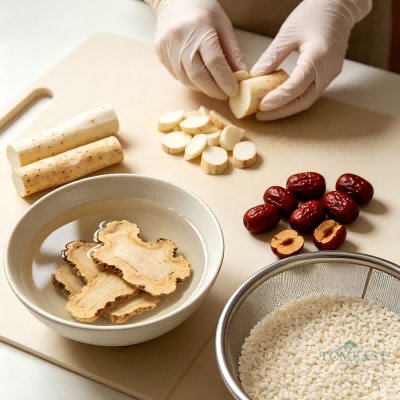
- Atractylodes (Baizhu) 30g
- resh Chinese yam 200g
- Japonica rice 100g
- Red jujube (Chinese dates) 5-8 pieces
- White sugar to taste
Steps
Soak atractylodes: Rinse 30g of atractylodes, place in a bowl with about 300ml of water, and soak for 30 minutes. Prep yam: Peel 200g of fresh Chinese yam (wear gloves to avoid skin irritation), and slice thinly. If using dried yam slices (30g), soak for 2 hours in advance. Prep jujubes: Rinse 5-8 red jujubes, remove pits, and break open (optional). Rinse rice: Rinse 100g of japonica rice and drain.
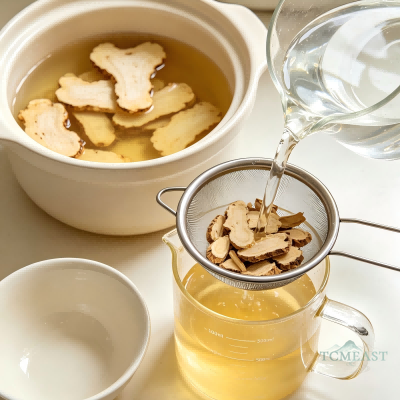
Transfer the soaked atractylodes (with soaking water) to a clay pot or small pot, adding water to reach about 500ml. Bring to a boil over high heat, then reduce to low heat and simmer for 30 minutes. Strain through a fine sieve to obtain a clear decoction. Discard the atractylodes solids (they are not meant to be eaten).
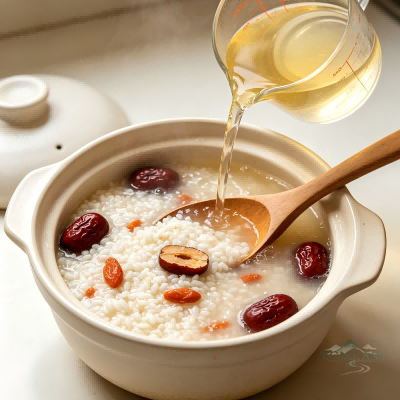
Pour the decoction into a pot and add water to reach about 800-1000ml total. Add the rinsed rice and pitted jujubes. Bring to a boil over high heat, then reduce to the lowest heat, maintaining a gentle simmer. Do not cover the pot to prevent overflow.
When the rice is about 60% cooked and the grains have bloomed (about 20-25 minutes), add the sliced yam. Continue simmering over low heat for 20-30 minutes until the rice is fully softened, the congee is thick, and the yam is tender. Stir occasionally to prevent sticking.
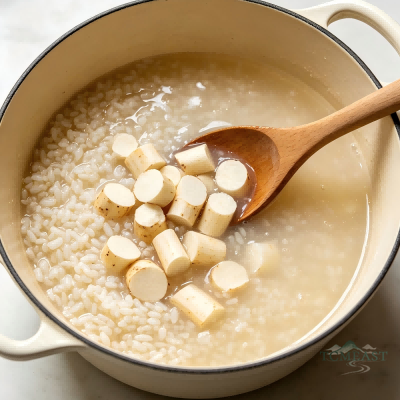
Add a small amount of white sugar (or rock sugar) before turning off the heat, stirring until fully dissolved (diabetes patients may omit sugar). Consume on an empty stomach, 1-2 times daily.
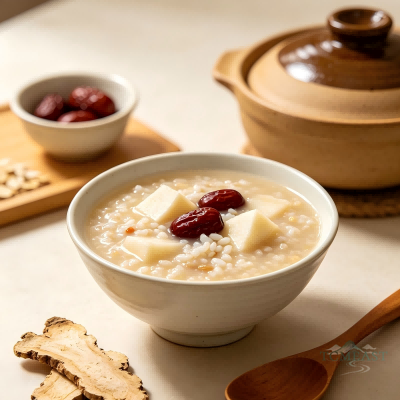
TCM Notes
Atractylodes (Baizhu) : Sweet, bitter, and warm in nature; enters the Spleen and Stomach meridians. Known for strengthening the spleen, tonifying qi, drying dampness, promoting diuresis, stopping sweating, and calming the fetus. Modern pharmacology shows it contains volatile oils and atractylenolides that promote gastrointestinal motility and improve spleen-deficiency related bloating and diarrhea. Its polysaccharide components enhance immune function. Chinese Yam: Neutral in nature, sweet in taste; enters the Lung, Spleen, and Kidney meridians. Known for strengthening the spleen and stomach, nourishing the kidneys and essence, and tonifying qi and yin. Rich in amylase, mucilage protein, amino acids, and trace elements. Mucilage protein protects the gastric lining, while amylase aids starch digestion. Japonica Rice: Tonifies the middle, boosts qi, and strengthens the spleen and stomach, enhancing the tonic effects of atractylodes and yam. Red Jujube (optional) : Tonifies the middle, boosts qi, and nourishes blood, synergizing with atractylodes and yam for enhanced spleen-strengthening effects. Synergistic Effect: Atractylodes dries dampness and strengthens the spleen; yam strengthens the spleen and nourishes the stomach; rice warms the middle and boosts qi. Total approx. 300-400 kcal, 8-12g protein – a low-fat warming medicinal porridge.
Suitable for:Those with spleen-stomach deficiency, poor appetite, and loss of appetite Those with abdominal bloating, loose stools, and poor digestion Those with limb weakness, body heaviness, and easy fatigue Elderly with edema and reduced urination Women with leukorrhea due to spleen deficiency with dampness Those with qi deficiency, fatigue, and spontaneous sweating Those recovering from major illness needing spleen-stomach nourishment
Not suitable for:Those with yin deficiency with internal heat – symptoms include hot palms/soles, dry mouth, night sweats, and insomnia; avoid Those with excess internal heat or damp-heat accumulation – symptoms include dry stools, red tongue with yellow coating, and bitter mouth Those with wind-cold, colds, or fever – consuming tonics during acute illness may trap pathogens inside Those with acute diarrhea or acute gastroenteritis – pause consumption Pregnant women – although atractylodes is traditionally used for calming the fetus, individual responses vary; consult a doctor before consuming Those allergic to atractylodes, yam, or any ingredient Diabetes patients – omit sugar or use sugar substitutes, and monitor blood glucose
