
Herbal Teas
Cassia Seed Green Tea (Juemingzi Lücha)
Cassia Seed Green Tea is a classic health beverage rooted in Traditional Chinese Medicine, made by blending roasted cassia seeds with green tea in a specific ratio. Cassia seeds are sweet, bitter, and salty in taste, slightly cold in nature, entering the Liver and Large Intestine meridians, known for clearing the Liver, improving vision, and moistening the intestines. Green tea is sweet in taste and cold in nature, known for clearing heat, detoxifying, relieving summer heat, and promoting diuresis. The two have no conflicting medicinal properties and work synergistically. The tea is amber-colored, fragrant, and slightly bitter with a sweet aftertaste. It is especially suitable for those with hypertension, hyperlipidemia, and long-term eye strain, but is not suitable for pregnant women or those with Spleen-Stomach Cold Deficiency due to its slightly cold nature.
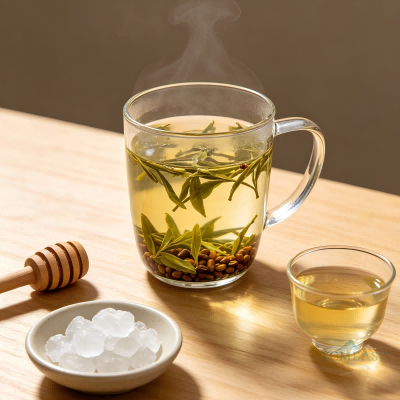
Main Ingredients
- Cassia seeds (roasted) 5g
- Green tea 5g
- Boiling water as needed
- Rock sugar or honey to taste
Steps
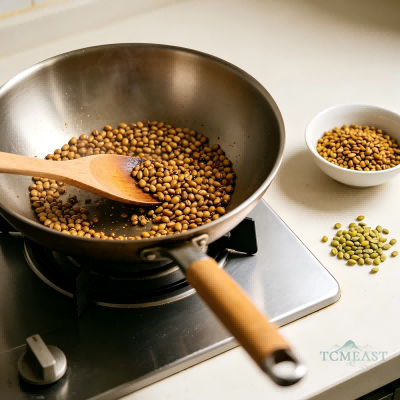
Place cassia seeds in a clean dry pan and stir-fry over low heat until fragrant (about 3-5 minutes). Note: If using pre-roasted cassia seeds (yellow-brown exterior), use directly. If using raw cassia seeds (greenish-yellow exterior), stir-fry over low heat until fragrant and the exterior turns yellow-brown. Do not burn them – burning destroys active compounds and creates a bitter taste. Remove the roasted cassia seeds and let them cool naturally.
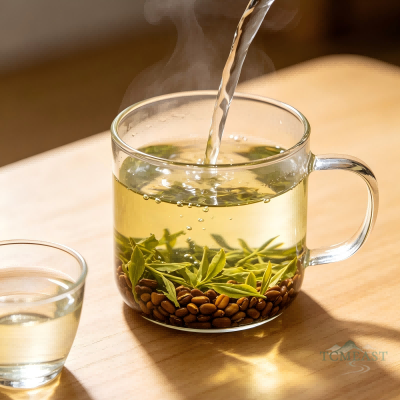
Put 5g of roasted cassia seeds and 5g of green tea into a teacup. Pour 90-100°C boiling water (about 300-500ml) over the ingredients. Steep for 3-5 minutes before drinking. Continue adding water as you drink until the flavor fades.
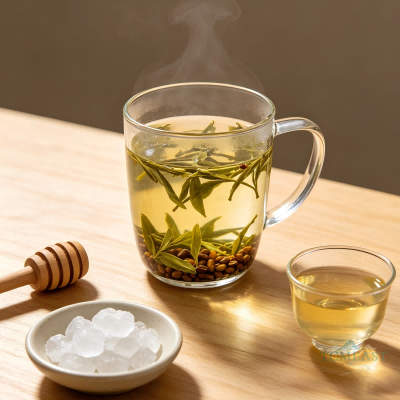
Add rock sugar or honey to taste if desired. Consume 1 dose daily, drinking frequently as tea. Can be re-brewed 2-3 times until the flavor fades.
TCM Notes
Cassia Seeds (Juemingzi) : Sweet, bitter, and salty in taste, slightly cold in nature; enter the Liver and Large Intestine meridians. Known for clearing the Liver, improving vision, and moistening the intestines to relieve constipation. Modern pharmacological research shows it has blood pressure-lowering, antibacterial, and cholesterol-lowering effects. Contains anthraquinones (chrysophanol, physcion, obtusin, etc.), fatty acids, and volatile oils. Cassia seeds promote gastrointestinal motility and have a laxative effect. Green Tea: Sweet in taste, cold in nature; known for clearing heat, detoxifying, relieving summer heat, and promoting diuresis. Rich in tea polyphenols, catechins, caffeine, and amino acids, with antioxidant, blood sugar-lowering, lipid-lowering, cardiovascular and liver-protective, and antibacterial effects. Synergistic Effect: Cassia seeds clear the Liver, improve vision, and moisten the intestines; green tea clears heat, detoxifies, and relieves summer heat. Together, they enhance the effects of clearing heat, calming the Liver, improving vision, promoting bowel movements, lowering blood pressure, lowering lipids, providing antioxidants, promoting diuresis, and supporting weight management. This tea is very low in calories – a purging-type medicinal tea.
Suitable for:Those with hypertension, especially with dizziness and vertigo Those with hyperlipidemia (adjunctive support) Those with visual fatigue from long-term electronic device use Those with constipation and obesity Those seeking cooling, throat-soothing, and liver-clearing effects General population for summer heat relief and daily wellness
Not suitable for:Those with Spleen-Stomach Cold Deficiency – cassia seeds are slightly cold in nature; those with spleen-stomach cold deficiency, loose stools, or diarrhea should not consume long-term. Long-term use may damage Spleen yang and affect spleen-stomach function Pregnant women – not suitable due to the slightly cold nature Those with hypotension – cassia seeds have blood pressure-lowering effects Women during menstruation – cold-natured herbs may cause qi and blood stagnation Breastfeeding women – consult a doctor before consuming Those with qi deficiency and loose stools – cassia seeds are slightly cold and may worsen discomfort Those allergic to cassia seeds or green tea General population – not suitable for long-term excessive consumption; dosage should not be too large, and continuous consumption should not be too long, to prevent damage to Spleen yang and abdominal pain or diarrhea
