
Herbal Teas
Hawthorn, Cassia Seed & Green Tea
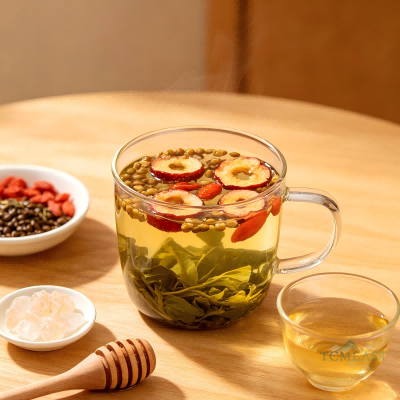
Hawthorn, Cassia Seed & Green Tea is a classic health tea known for promoting digestion, lowering lipids, clearing the Liver, and improving vision. Hawthorn is sour and sweet in taste, slightly warm in nature, entering the Spleen, Stomach, and Liver meridians, known for promoting digestion, resolving food stagnation, regulating qi, and dispelling blood stasis. Cassia seeds are sweet, bitter, and salty in taste, slightly cold in nature, entering the Liver and Large Intestine meridians, known for clearing the Liver, improving vision, and moistening the intestines. Green tea is sweet in taste and cold in nature, known for clearing heat, detoxifying, relieving summer heat, and promoting diuresis. Together, hawthorn promotes digestion and lowers lipids, cassia seeds moisten the intestines and lower cholesterol, and green tea provides heat-clearing and antioxidant effects. This tea clears the Liver without overly harming the stomach and is suitable for those who consume greasy foods, have elevated blood lipids, or experience eye strain. The tea is amber-colored, with the tangy taste of hawthorn, the freshness of green tea, and a sweet aftertaste from cassia seeds.
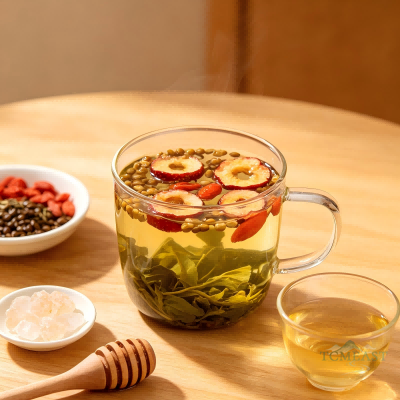
Main Ingredients
- Dried hawthorn slices 10-15g
- Cassia seeds (roasted) 10-15g
- Green tea 3-5g
- Goji berries 5-10g
- Rock sugar or honey to taste
- Water 800-1000ml
Steps
Rinse 10-15g of roasted cassia seeds quickly. Lightly crush them with the back of a knife or a rolling pin to release active compounds. Rinse 10-15g of dried hawthorn slices and 3-5g of green tea quickly. If using 5-10g of goji berries, rinse and set aside.
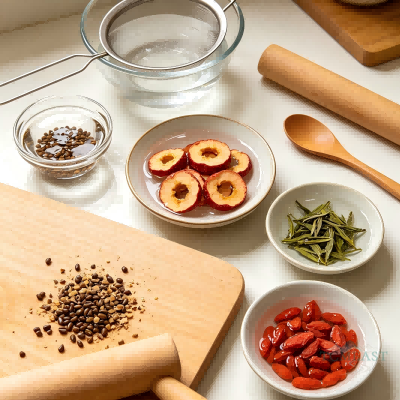
Put the crushed cassia seeds, hawthorn slices, and green tea (and goji berries, if using) into a teacup or thermos. Pour freshly boiled water (about 300-500ml) over the ingredients. Cover and steep for 15-20 minutes. Hawthorn is firm, so a slightly longer steeping time helps extract its active compounds.

Add rock sugar or honey to taste if desired. Consume 1 dose daily, drinking frequently as tea. Can be re-brewed 2-3 times until the flavor fades.
TCM Notes
Hawthorn (Shanzha): Sour and sweet in taste, slightly warm in nature; enters the Spleen, Stomach, and Liver meridians. Known for promoting digestion, resolving food stagnation, regulating qi, and dispelling blood stasis. Contains flavonoids, organic acids, and triterpenes that help promote digestion, improve blood circulation, and support lipid management. Hawthorn is especially effective for digesting greasy meat and food stagnation. Cassia Seeds (Juemingzi): Sweet, bitter, and salty in taste, slightly cold in nature; enter the Liver and Large Intestine meridians. Known for clearing the Liver, improving vision, and moistening the intestines to relieve constipation. Contains anthraquinones (chrysophanol, physcion, obtusin, etc.) that help lower cholesterol and promote gastrointestinal motility. Modern research suggests auxiliary blood pressure-lowering and lipid-lowering effects. Green Tea: Sweet in taste, cold in nature. Known for clearing heat, detoxifying, relieving summer heat, and promoting diuresis. Rich in tea polyphenols, catechins, caffeine, and theanine, with antioxidant, lipid-lowering, cardiovascular and liver-protective, and antibacterial effects. Synergistic Effect: Hawthorn promotes digestion and lowers lipids; cassia seeds clear the Liver and moisten the intestines; green tea clears heat and provides antioxidants. Together, they promote digestion without harming the body’s integrity, and clear the Liver and lower lipids gently. This tea is very low in calories – a purging and digestant-type medicinal tea.
Suitable for:Those with hyperlipidemia or fatty liver (adjunctive support) Those with food stagnation, abdominal distension, and indigestion after greasy meals Those with hypertension (adjunctive support) Those with constipation and difficult bowel movements Those with eye strain and dry tired eyes Those who are overweight or managing weight General population after greasy meals or for summer heat relief
Not suitable for:Those with Spleen-Stomach Cold Deficiency – cassia seeds and green tea are cooling in nature; may worsen abdominal pain and diarrhea Those with hyperacidity or gastric ulcers – hawthorn promotes gastric acid secretion and may worsen acid reflux and stomach pain Pregnant women – hawthorn has blood-activating effects, and cassia seeds are slightly cold; avoid Those with hypotension – cassia seeds have auxiliary blood pressure-lowering effects; avoid long-term use Women during menstruation – cold-natured herbs may cause qi and blood stagnation Breastfeeding women – consult a doctor before consuming Those with abdominal pain, diarrhea, or loose stools – cassia seeds moisten the intestines and may worsen symptoms Those with insomnia or neurasthenia – green tea contains caffeine and may affect sleep Those with iron-deficiency anemia – tannins in green tea may affect iron absorption; drink after meals and separate from iron supplements Those allergic to hawthorn, cassia seeds, or green tea Avoid consuming with crab – tannic acid in hawthorn may form indigestible precipitates with crab General population – not suitable for long-term excessive consumption; cassia seeds and green tea are cold in nature and may damage Spleen yang