
Herbal Teas
Hawthorn, Tangerine Peel & Cassia Seed Tea (Shan Zha Chen Pi Jue Ming Zi Cha)
Hawthorn, Tangerine Peel & Cassia Seed Tea is a classic health tea for promoting digestion, regulating qi, lowering lipids, clearing the Liver, improving vision, and promoting bowel movements. Hawthorn is sour and sweet in taste, slightly warm in nature, entering the Spleen, Stomach, and Liver meridians, known for promoting digestion, resolving food stagnation, regulating qi, and dispelling blood stasis—especially effective for greasy meat and food stagnation. Tangerine peel is pungent and bitter in taste, warm in nature, entering the Spleen and Lung meridians, known for regulating qi, strengthening the spleen, and drying dampness to resolve phlegm. Cassia seeds are sweet, bitter, and salty in taste, slightly cold in nature, entering the Liver and Large Intestine meridians, known for clearing the Liver, improving vision, and moistening the intestines to relieve constipation. Together, hawthorn promotes digestion and lowers lipids, tangerine peel regulates qi and resolves phlegm, and cassia seeds clear the Liver and moisten the intestines. The warmth of tangerine peel balances the slight coldness of cassia seeds, making the formula gentle yet effective. The tea is amber-colored, with the tangy taste of hawthorn, the aroma of tangerine peel, and a sweet aftertaste from cassia seeds. It is especially suitable for those who consume greasy foods, experience food stagnation and abdominal distension, have elevated blood lipids, are prone to phlegm-dampness, or suffer from eye strain.
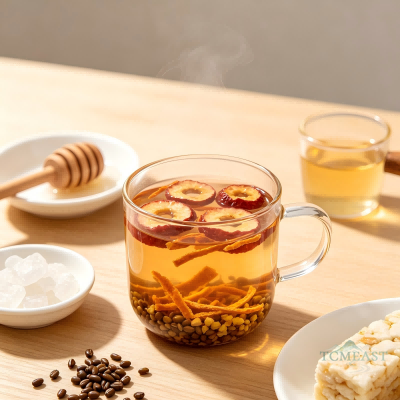
Main Ingredients
- Dried hawthorn slices 10-15g
- Dried tangerine peel (Chenpi) 3-5g
- Cassia seeds (roasted) 10-15g
- Rock sugar or honey to taste
- Water 800-1000ml
Steps
Rinse 10-15g of roasted cassia seeds quickly. Lightly crush them with the back of a knife or a rolling pin to release active compounds. Soak 3-5g of dried tangerine peel in warm water for 10-15 minutes until soft. Scrape off the inner white pith and cut into thin strips or small pieces to reduce bitterness. Rinse 10-15g of dried hawthorn slices quickly.
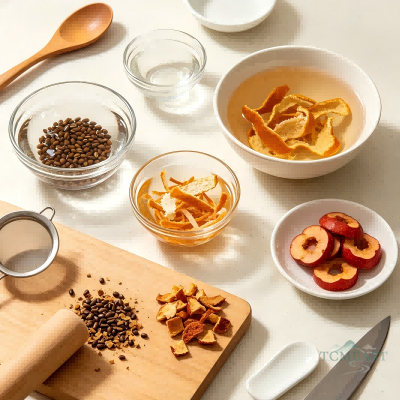
Put the crushed cassia seeds, tangerine peel strips, and hawthorn slices into a teacup or thermos. Pour freshly boiled water (about 300-500ml) over the ingredients. Cover and steep for 15-20 minutes. Hawthorn is firm, so a slightly longer steeping time helps extract its active compounds.
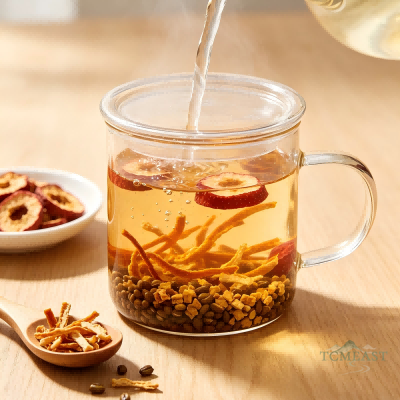
Add rock sugar or honey to taste if desired. Consume 1 dose daily, drinking frequently as tea. Can be re-brewed 2-3 times until the flavor fades. Best consumed after meals.
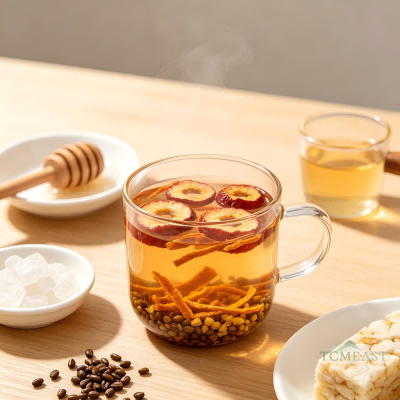
TCM Notes
Hawthorn (Shanzha): Sour and sweet in taste, slightly warm in nature; enters the Spleen, Stomach, and Liver meridians. Known for promoting digestion, resolving food stagnation, regulating qi, and dispelling blood stasis. Contains flavonoids, organic acids, and triterpenes that help promote digestion, improve blood circulation, and support lipid management. Hawthorn is especially effective for digesting greasy meat and food stagnation. Tangerine Peel (Chenpi): Pungent and bitter in taste, warm in nature; enters the Spleen and Lung meridians. Known for regulating qi, strengthening the spleen, and drying dampness to resolve phlegm. Contains volatile oils (limonene, etc.), hesperidin, and flavonoids that help regulate qi, relieve bloating, promote digestive juice secretion, and resolve phlegm. Cassia Seeds (Juemingzi): Sweet, bitter, and salty in taste, slightly cold in nature; enter the Liver and Large Intestine meridians. Known for clearing the Liver, improving vision, and moistening the intestines to relieve constipation. Contains anthraquinones (chrysophanol, physcion, obtusin, etc.) that help lower cholesterol and promote gastrointestinal motility. Modern research suggests auxiliary blood pressure-lowering and lipid-lowering effects. Synergistic Effect: Hawthorn promotes digestion and lowers lipids; tangerine peel regulates qi and resolves phlegm; cassia seeds clear the Liver and moisten the intestines. Together, they promote digestion without harming the body’s integrity, clear the Liver and lower lipids gently, and regulate qi and resolve phlegm without being too drying. This tea is very low in calories—a purging, digestant, and qi-regulating medicinal tea.
Suitable for:Those with food stagnation, abdominal distension, and indigestion after greasy meals Those with hyperlipidemia or fatty liver (adjunctive support) Those with phlegm-dampness constitution, body heaviness, and thick greasy tongue coating Those with constipation and difficult bowel movements Those with hypertension (adjunctive support) Those with eye strain and dry tired eyes Those who are overweight or managing weight General population after greasy meals or for daily wellness
Not suitable for:Those with Spleen-Stomach Cold Deficiency – cassia seeds are slightly cold in nature; may worsen abdominal pain and diarrhea. Tangerine peel is warm but not enough to fully counteract the laxative effect of cassia seeds. Those with hyperacidity or gastric ulcers – hawthorn promotes gastric acid secretion and may worsen acid reflux and stomach pain. Pregnant women – hawthorn has blood-activating effects, and cassia seeds stimulate uterine smooth muscle; avoid to prevent miscarriage or premature labor. Those with hypotension – cassia seeds have auxiliary blood pressure-lowering effects; avoid long-term use. Women during menstruation – cassia seeds are slightly cold and may cause menstrual discomfort. Breastfeeding women – consult a doctor before consuming. Those with abdominal pain, diarrhea, or loose stools – cassia seeds moisten the intestines and may worsen symptoms. Those with qi deficiency and loose stools – cassia seeds are slightly cold and may worsen discomfort. Those allergic to hawthorn, tangerine peel, or cassia seeds. Avoid consuming with crab – tannic acid in hawthorn may form indigestible precipitates with crab. General population – not suitable for long-term excessive consumption; cassia seeds are slightly cold and long-term excessive use may damage Spleen yang, affecting spleen and stomach function and potentially causing poor appetite, indigestion, or diarrhea.
