
Congees
Seaweed & Winter Melon Congee (Haidai Donggua Zhou)
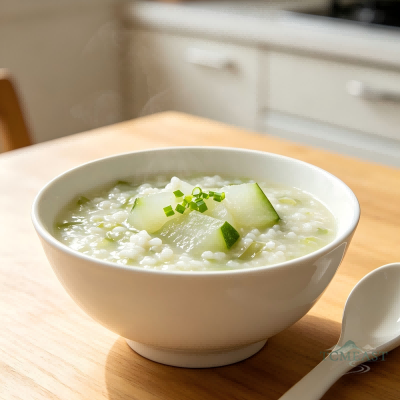
Seaweed & Winter Melon Congee is a classic heat-clearing and diuretic congee rooted in traditional Chinese dietary therapy. Kelp is salty in taste and cold in nature, entering the Liver, Kidney, and Stomach meridians, known for softening hardness, resolving phlegm, clearing heat, and promoting diuresis. Winter melon is sweet and bland in taste, slightly cold in nature, clearing summer heat, promoting diuresis, and reducing swelling. Rice (japonica rice) tonifies the middle, boosts qi, and strengthens the spleen and stomach. Together, kelp softens hardness and resolves phlegm, winter melon clears heat and promotes diuresis, and rice tonifies the middle and protects the stomach. The congee achieves the effects of clearing heat, promoting diuresis, resolving phlegm, softening hardness, reducing swelling, lowering blood pressure, and strengthening the spleen. The texture is thick and smooth, with the savory saltiness of kelp and the mild sweetness of winter melon. It is especially suitable for those with phlegm-dampness constitution, edema-type obesity, and those needing heat-clearing and diuretic support.
Main Ingredients
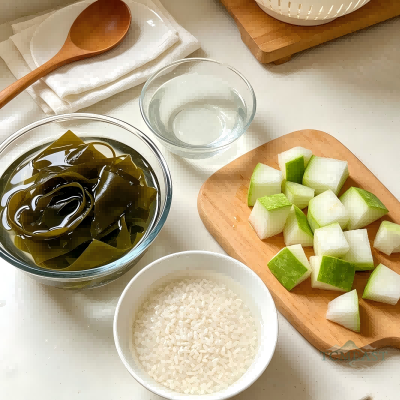
- Dried kelp (seaweed) 50g
- Winter melon 200-300g
- Rice (japonica rice) 100g
- Fresh ginger 2-3 slices
- Chopped green onion to taste
- Salt to taste
- White pepper powder a pinch
Steps
Soak 50g of dried kelp in water for 2-4 hours (or overnight), changing water 1-2 times to remove sand and excess salt. Rinse and cut into thin strips or small pieces. Note: Fresh kelp needs thorough soaking to remove arsenic residue. Rinse 100g of rice. Soak for 30 minutes for a creamier texture. Wash 200-300g of winter melon, keep the skin on (for enhanced diuretic effect), remove the seeds, and cut into small chunks. Peel if you prefer a smoother texture.
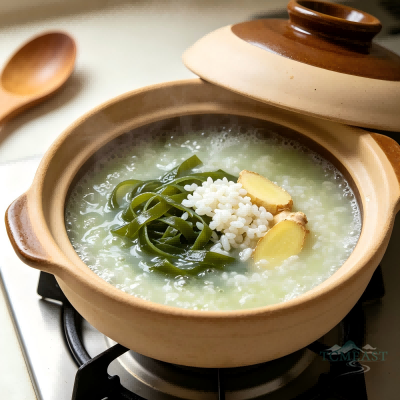
Place the soaked kelp strips and rinsed rice in a clay pot or regular pot with about 1000-1200ml of water. Add 2-3 slices of ginger. Bring to a boil over high heat, then reduce to low heat, cover with a small gap, and simmer for 30-40 minutes until the rice has bloomed and the kelp is tender.
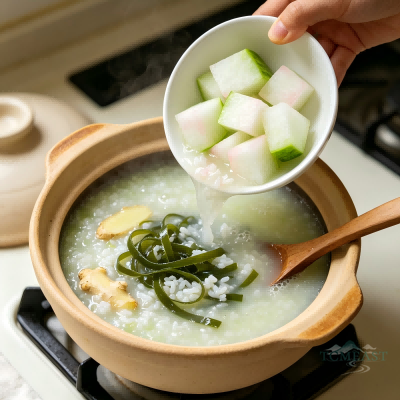
Add the winter melon chunks and continue simmering over low heat for 15-20 minutes until the winter melon is soft and translucent and the congee is thick.
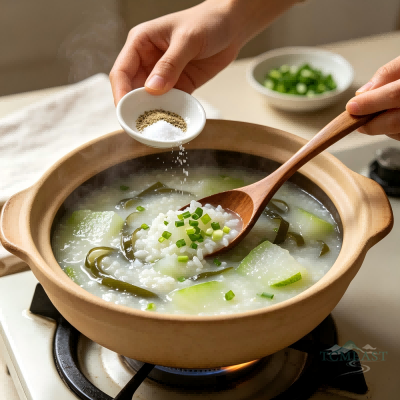
Add salt to taste, sprinkle with white pepper (optional) and chopped green onion. Stir well and serve. Once daily, about 1 bowl (250-300ml) per serving. Healthy individuals should consume 2-3 times per week.
TCM Notes
Kelp (Seaweed): Contains approximately 24,000mcg iodine, 348mg calcium, 761mg potassium, and 9.8g dietary fiber per 100g of dried kelp. Rich in sodium alginate, mannitol, alginic acid, and trace elements including iodine and selenium. Known for softening hardness, resolving phlegm, clearing heat, promoting diuresis, lowering lipids, reducing blood pressure, and dispersing nodules. The sodium alginate in kelp absorbs intestinal water and works synergistically with winter melon to enhance diuretic effects. Kelp is rich in calcium and potassium, supporting blood pressure and lipid management and regulating gastrointestinal function. Winter Melon: Contains only about 11-12 kcal per 100g, with over 96% water content. Rich in potassium (approx. 78-165mg/100g), vitamin C (approx. 16-18mg/100g), and dietary fiber. Contains propanol diacid, which inhibits carbohydrate-to-fat conversion, aiding weight management. Both the skin and seeds of winter melon are traditional Chinese medicines for clearing heat and promoting diuresis—using the skin enhances the diuretic effect. Rice (Japonica Rice): Sweet in taste, neutral in nature; enters the Spleen, Stomach, and Lung meridians. Known for tonifying the middle, boosting qi, and strengthening the spleen and stomach, enhancing the therapeutic effects of kelp and winter melon while ensuring the clearing and draining actions do not harm the body's integrity. Synergistic Effect: Kelp softens hardness, resolves phlegm, and promotes diuresis; winter melon clears heat, promotes diuresis, and reduces swelling; rice tonifies the middle and protects the stomach. One drains, one clears, one tonifies—draining without harming the body, clearing without harming the stomach. Total approx. 250-350 kcal, primarily carbohydrates—a low-fat, high-fiber, low-calorie congee for clearing heat and promoting diuresis.
Suitable for:Those with phlegm-dampness constitution (body heaviness, thick greasy tongue coating, sticky stools, easy fatigue) Those with edema-type obesity or managing weight Those with edema, difficult urination, and morning eyelid puffiness Those with hypertension and hyperlipidemia (adjunctive support) Those with summer heat, thirst, and dry mouth General population for summer heat-clearing, diuretic, and daily wellness support
Not suitable for:Pregnant women – avoid or use with caution. Kelp has labor-inducing properties; excessive consumption in early pregnancy may cause miscarriage. Kelp is also extremely high in iodine, and excessive intake may affect fetal thyroid development. Pregnant women should consume with caution. Hyperthyroidism (overactive thyroid) patients – absolutely avoid. Kelp is rich in iodine; consumption may worsen the condition. Those with Spleen-Stomach Cold Deficiency – kelp is cold in nature; may worsen abdominal pain and diarrhea. Add 2-3 slices of ginger to balance the cold nature. Those with hypothyroidism requiring iodine restriction – control kelp intake based on medical advice. Those with renal insufficiency – kelp is high in potassium; excessive consumption may increase kidney burden. Acute gout / hyperuricemia patients – kelp has moderate purine content; purines partially dissolve into the congee. Avoid during acute flare-ups. Those with diarrhea or loose stools – kelp and winter melon are both cooling and high in fiber, which may worsen diarrhea. Women during menstruation – kelp is cold in nature; excessive consumption may worsen menstrual discomfort or dysmenorrhea. Diabetes patients – rice has a high glycemic index; control portion size and reduce staple food accordingly. Those allergic to kelp or winter melon. Avoid consuming with licorice.
