
Desserts
Lily Bulb & Loquat Thick Soup (Baihe Pipa Geng)
Lily Bulb & Loquat Thick Soup is a classic yin-nourishing and lung-moistening medicinal soup rooted in traditional Chinese dietary therapy. Lily bulb is sweet in taste and cold in nature, entering the Lung and Heart meridians, known for nourishing yin, moistening the lungs, and calming the mind. Loquat is sweet and sour in taste, cool in nature, entering the Lung and Stomach meridians, known for moistening dryness, clearing the lungs, and descending qi to relieve cough. Fresh lotus root clears heat, generates fluids, cools blood, and dispels stasis. Together, lily bulb moistens the lungs and calms the mind, loquat moistens dryness and relieves cough, and lotus root clears heat and generates fluids. The soup achieves the effects of nourishing yin, moistening the lungs, clearing heat, relieving cough, calming the mind, and beautifying the skin. The texture is clear and slightly thick, with the sweet-tart flavor of loquat blending with the delicate fragrance of lily bulb. It is especially suitable for autumn dryness, lung-heat cough, yin deficiency with internal heat, and restlessness with insomnia.

Main Ingredients
- Fresh lily bulb 30g
- Fresh loquat 30g
- Fresh lotus root 30g
- Starch as needed
- White sugar a little
- Osmanthus flowers a little
- Rock sugar 5-10g
Steps
Rinse lily bulb and separate into petals; peel and pit loquat, cut into small pieces; rinse fresh lotus root and slice thinly.

Place lily bulb, loquat, and lotus root slices in a pot with about 500ml of water. Bring to a boil over high heat, then reduce to low heat and simmer for 15-20 minutes until the lily bulb is soft and the lotus root is tender.
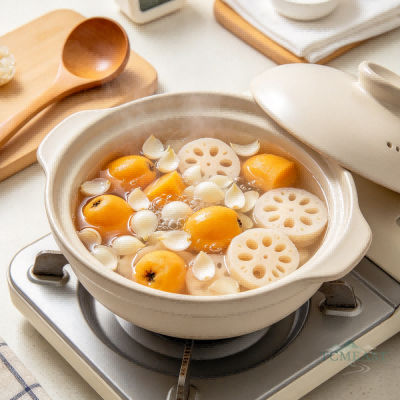
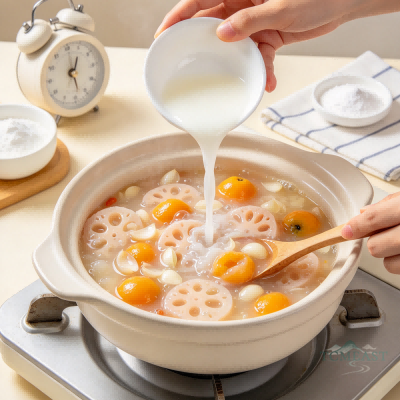
Mix starch with a little cold water and slowly pour into the pot while stirring continuously until the soup thickens to a smooth consistency.
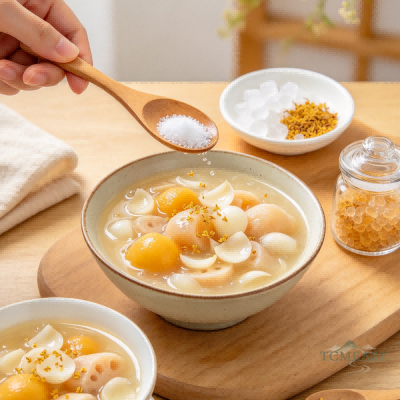
Add a little white sugar or rock sugar to taste, and optionally add a little osmanthus for aroma. Consume at any time, warm or at room temperature.
TCM Notes
Lily Bulb: Sweet in taste, cold in nature; enters the Lung and Heart meridians. Known for nourishing yin, moistening the lungs, and calming the mind. It excels at tonifying lung yin deficiency while clearing lung heat, suitable for dry cough with little phlegm, chronic consumptive cough, and phlegm with blood streaks due to yin deficiency with lung dryness. Rich in polysaccharides, alkaloids, and trace elements, with antitussive, antiasthmatic, sedative, and anti-fatigue effects. Loquat: Sweet and sour in taste, cool in nature; enters the Lung and Stomach meridians. Known for moistening the lungs, relieving cough, generating fluids, quenching thirst, and harmonizing the stomach. Rich in vitamin C, organic acids, and dietary fiber, promoting digestion and relieving throat discomfort. The sweet-tart flavor of loquat balances the slight bitterness of lily bulb. Fresh Lotus Root: Sweet in taste, cold in nature; enters the Heart, Spleen, and Stomach meridians. Known for clearing heat, generating fluids, cooling blood, dispelling stasis, strengthening the spleen, and stimulating appetite. Rich in starch, dietary fiber, and vitamin C, it clears heat, relieves irritability, and strengthens the spleen. Synergistic Effect: Lily bulb moistens the lungs and calms the mind; loquat moistens dryness and relieves cough; lotus root clears heat and generates fluids. One moistens, one clears, one nourishes—nourishing yin and moistening the lungs without being cloying, clearing heat and relieving cough without harming the body, and calming the mind without depleting qi. Total approx. 120-180 kcal (depending on sugar amount)—a low-fat, lung-moistening, cough-relieving medicinal soup.
Suitable for:Those with lung dryness cough, dry cough with little phlegm, and dry itchy throat Those with yin deficiency with internal heat, restlessness, and insomnia Those with autumn dryness affecting the lungs and dry skin Those with lung-heat cough and yellow thick phlegm Those with excess heart fire, insomnia, and excessive dreaming General population for autumn dryness relief and daily wellness
Not suitable for:Those with wind-cold cough – avoid. Symptoms include white thin phlegm, chills, clear runny nose, and itchy throat. Lily bulb, loquat, and lotus root are all cool in nature and may worsen cold cough. Those with Spleen-Stomach Cold Deficiency – avoid or use with caution. Symptoms include abdominal pain relieved by warmth, shortness of breath, fatigue, and loose stools. All three ingredients are cool in nature and may worsen spleen-stomach cold symptoms. Those with damp-heat and excessive phlegm – avoid. Symptoms include yellow greasy tongue coating and excessive sticky phlegm. Diabetes patients – not recommended. White sugar and rock sugar are high in sugar and raise blood glucose quickly; strictly control intake or consult a doctor for sugar substitutes. Pregnant women – use with caution. Lily bulb is cold in nature; avoid large amounts and consult a doctor. Those allergic to lily bulb, loquat, or lotus root – avoid. Loquat pits are toxic – loquat seeds contain amygdalin and are toxic; do not consume them.