
Herbal Teas
Lotus Root Juice (Fresh Lotus Root Juice)
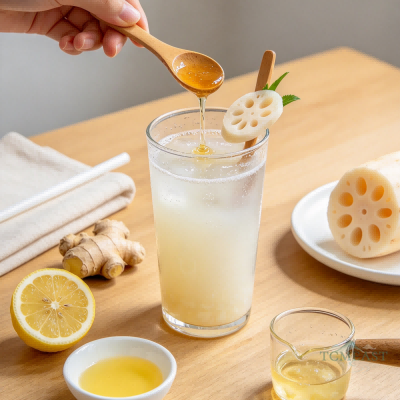
Lotus Root Juice is a classic heat-clearing and fluid-generating drink made from fresh lotus root. Lotus root is sweet in taste; raw lotus root is cold in nature, while cooked lotus root is warm. It enters the Heart, Spleen, and Stomach meridians. Raw lotus root juice clears heat, generates fluids, cools blood, stops bleeding, dispels stasis, and relieves irritability. Cooked lotus root strengthens the spleen, stimulates appetite, nourishes blood, and promotes tissue regeneration. Fresh lotus root juice is milky white with a slight yellow tint, sweet and refreshing, with the distinctive fragrance of lotus root. It is especially suitable for summer heat with thirst, autumn dryness with dry throat, lung-heat cough, and thirst after drinking alcohol. It is a natural plant-based drink that combines great taste with dietary therapy value.

Main Ingredients
- Fresh lotus root 300-500g
- Cool boiled water or warm water 200-300ml
- Honey 1-2 tbsp
- Rock sugar 10-20g
- Lemon juice a few drops
- Ginger juice 2-3 drops
Steps
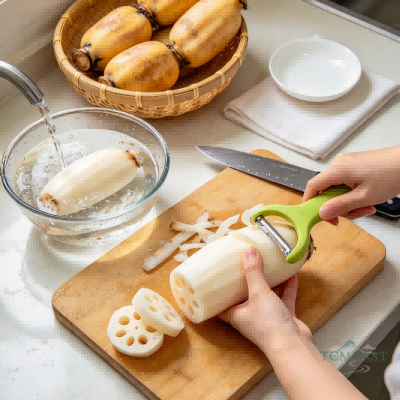
Choose fresh lotus root with yellow-brown skin, thick nodes, no damage, and no off-odor. Crisp varieties have more water and are suitable for juicing. Rinse the lotus root thoroughly, peel off the skin, and remove the nodes. Rinse again to ensure no sand remains.
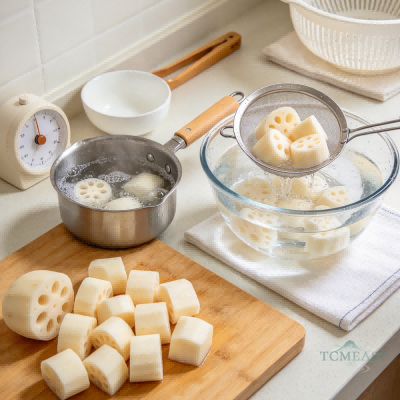
Cut lotus root into 2-3cm pieces. Bring a pot of water to a boil, add the lotus root pieces and blanch quickly for 30 seconds to 1 minute, then remove and rinse with cold water immediately. Note: Blanching reduces parasite risk while preserving the heat-clearing properties. For a completely raw version, ensure the lotus root is from a safe source and thoroughly washed.
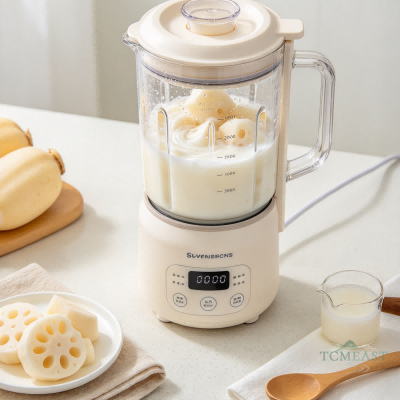
Place lotus root pieces in a blender or high-speed blender, add 200-300ml of cool boiled water or warm water, and blend on high for 1-2 minutes until smooth.
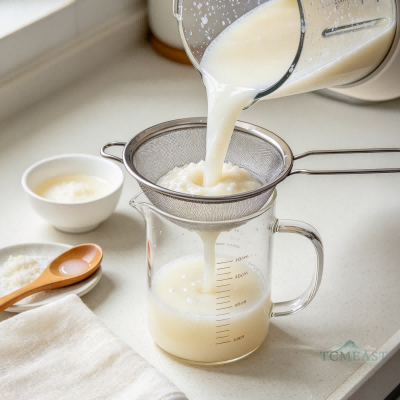
Strain through a fine sieve or cheesecloth to remove residue and obtain clear juice. Leave unstrained for a thicker texture.
Add 1-2 tbsp of honey, a few drops of lemon juice, or 2-3 drops of ginger juice. Drink immediately to prevent oxidation and discoloration. 1-2 times daily, 150-250ml per serving. Fresh lotus root juice is best consumed within 30 minutes.
TCM Notes
Lotus Root: Each 100g of fresh lotus root contains approximately 15-20g carbohydrates, 1-2g protein, 2-3g dietary fiber, 40-50mg vitamin C, and minerals including potassium, iron, calcium, and phosphorus. Raw lotus root is cold in nature, with the effects of clearing heat, generating fluids, cooling blood, stopping bleeding, dispelling stasis, and relieving irritability. Cooked lotus root is warm in nature, with the effects of strengthening the spleen, stimulating appetite, nourishing blood, promoting tissue regeneration, and stopping diarrhea. The tannins in lotus root help with astringent hemostasis, dietary fiber promotes intestinal motility, and vitamin C supports antioxidant and immune function. Honey (optional): Tonifies the middle, moistens dryness, relieves pain, and detoxifies. It balances the slight astringency of lotus root and enhances the lung-moistening and fluid-generating effects. Ginger Juice (optional): Warms the middle and disperses cold, balancing the cool nature of lotus root juice. Suitable for those with a slightly cold spleen and stomach. Overall: Fresh lotus root juice is relatively low in calories (about 80-120 kcal per 250ml without honey), rich in vitamin C, potassium, and dietary fiber—a low-fat, heat-clearing, fluid-generating natural drink.
Suitable for:Those with fever, thirst, dry mouth and throat, and summer heat Those with lung-heat cough, dry cough with little phlegm, and dry sore throat Those with heat-induced nosebleeds, gum bleeding, and coughing blood (adjunctive support) Those with thirst and dry bitter mouth after drinking alcohol Those with poor appetite and indigestion (cooked lotus root juice is better) General population for summer heat relief and autumn dryness relief
Not suitable for:Those with Spleen-Stomach Cold Deficiency should avoid or limit raw lotus root juice – raw lotus root is cold in nature; those with cold intolerance, diarrhea, or abdominal cold pain may worsen symptoms. Cooked lotus root juice or adding 2-3 drops of ginger juice is recommended. Women during menstruation should limit raw lotus root juice – raw lotus root is cool; excessive intake may worsen menstrual pain or impede menstrual flow. Pregnant women should limit raw lotus root juice – raw lotus root is cold; pregnant women should not consume large amounts of cold raw foods. Consult a doctor. Those with wind-cold colds should limit consumption – raw lotus root juice is cool and not suitable in the early stage of wind-cold colds (chills, clear runny nose, white thin phlegm). Diabetes patients should limit consumption – if honey or rock sugar is added, strictly control sugar intake; best to omit sugar and monitor blood glucose. Those with renal insufficiency should limit consumption – lotus root is relatively high in potassium; control intake under medical guidance. Those with diarrhea or loose stools should limit consumption – raw lotus root juice is high in fiber and cold in nature, which may worsen diarrhea. Those allergic to lotus root or honey – avoid. Raw lotus root juice carries a parasite risk – fresh lotus root may carry Fasciolopsis buski metacercariae. For raw consumption, thoroughly wash and peel, and it is recommended to blanch in boiling water before juicing, or choose a reliable source. Infants, the elderly, and immunocompromised individuals should avoid raw consumption.