
Herbal Teas
Shengdi Ergen Drink (Fresh Rehmannia, Imperata & Reed Root Drink)
This formula uses the “three fresh herbs”—fresh Rehmannia, fresh Imperata root, and fresh reed root. All three are sweet and cold in nature, working synergistically to clear heat from the blood aspect, preventing heat from forcing blood to flow abnormally, thereby achieving the effect of cooling blood and stopping bleeding. The decoction is taken as a tea and is a classic simple remedy for blood-heat type nosebleeds.

Main Ingredients
- Fresh Rehmannia root (Sheng Di Huang) 30g
- Fresh Imperata root (Bai Mao Gen) 30g
- Fresh Reed root (Lu Gen) 50g
- Water as needed
Steps
Quickly rinse fresh Rehmannia, fresh Imperata root, and fresh reed root with water to remove surface impurities and sand. Fresh herbs release active compounds easily and do not require pre-soaking.
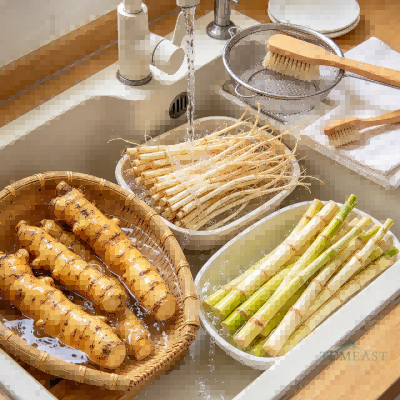
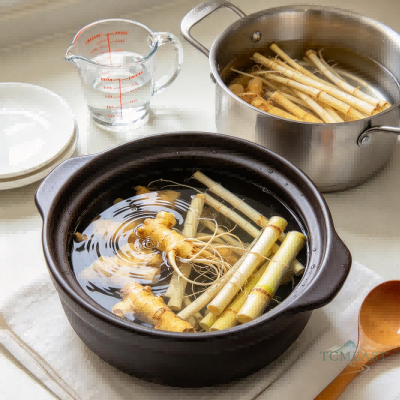
Place the three rinsed herbs together in a clay pot or stainless steel pot. Add approximately 500-600ml of water (about 2-3 bowls). Bring to a boil over high heat, then reduce to low heat and continue simmering for 15-20 minutes to fully extract the medicinal effects.
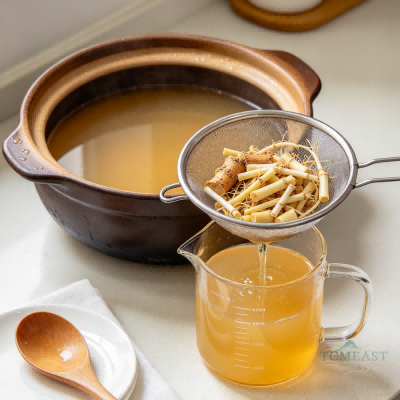
Turn off the heat and strain through a filter to remove the herb residue, collecting the clear liquid.
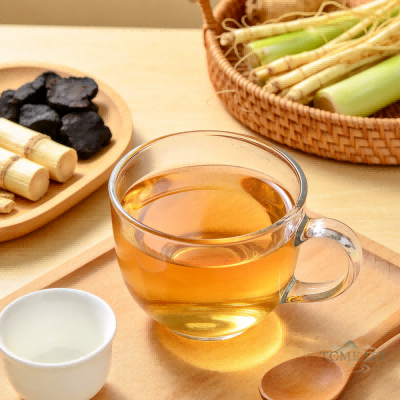
Drink the decoction in divided doses as tea. One dose daily is recommended. It can be taken for 7-10 consecutive days as a short course, observing symptom improvement. The decoction can be consumed warm or at room temperature.
TCM Notes
Fresh Rehmannia (Sheng Di Huang) : Cold in nature, sweet and bitter in taste; enters the Heart, Liver, and Kidney meridians. Its core effects are clearing heat, cooling blood, nourishing yin, and generating fluids. The fresh form is particularly effective at clearing heat and cooling blood, with targeted effects on hematemesis and epistaxis (nosebleeds) caused by heat pathogen damaging yin and blood-heat forcing blood to flow abnormally. Fresh Imperata Root (Bai Mao Gen) : Cold in nature, sweet in taste; enters the Heart, Lung, Stomach, and Bladder meridians. Its core effects are cooling blood, stopping bleeding, clearing heat, generating fluids, and promoting diuresis. It is especially effective at clearing heat from the Lung and Stomach, with good results for epistaxis caused by Lung-Stomach heat excess. Its nature is mild—“sweet and cold without harming the stomach.” Fresh Reed Root (Lu Gen) : Cold in nature, sweet in taste; enters the Lung and Stomach meridians. Its core effects are clearing heat, generating fluids, relieving irritability, stopping vomiting, and promoting diuresis. It clears and penetrates heat pathogens in the qi aspect of the Lung and Stomach. Combined with Rehmannia and Imperata root, it enhances the formula’s heat-clearing and fluid-generating effects, directing heat pathogens out through urination.
Suitable for:Those with blood-heat type nosebleeds: Presenting with bright red nosebleeds, relatively heavy bleeding, possibly accompanied by dry mouth, dry throat, irritability, dry stools, red tongue body, and yellow coating—signs of “heat.” Those with Lung-Stomach heat excess: Accompanied by dry mouth, bad breath, preference for cold drinks, and yellow-scanty urine.
Not suitable for:Those with Spleen-Stomach Cold Deficiency – this is the most critical contraindication. All three herbs are cold in nature; those with spleen-stomach cold deficiency (cold intolerance, abdominal cold pain, loose stools or diarrhea, poor appetite) may experience worsened cold-deficiency symptoms, leading to abdominal pain and diarrhea. Those with wind-cold colds – this formula targets “heat patterns”; those with wind-cold colds (severe chills, clear runny nose, white phlegm) should not use it. Those with yang deficiency constitution – use with caution; those with habitual cold limbs and low energy should not use it. Pregnant women and infants – as a medicinal dietary formula, pregnant women and infants must consult a qualified TCM practitioner before use; do not self-administer. Those with unexplained nosebleeds – nosebleeds may be caused by hypertension, blood disorders, nasal tumors, and other conditions. If bleeding is frequent, heavy, or difficult to stop, seek medical diagnosis first; do not rely solely on dietary therapy.