
Body & Nature
Hot Spring Therapy
Hot spring therapy utilizes the combined chemical (ions, trace elements, radioactive substances) and physical (temperature, hydrostatic pressure, buoyancy, micro-particle massage) effects of mineral water to regulate the nervous system and improve circulation. This article details the characteristics and indications of 11 types of therapeutic springs, systematically explains bathing, drinking, gargling, and inhalation therapy methods, and highlights key contraindications and precautions — a practical guide for safe spa therapy application.
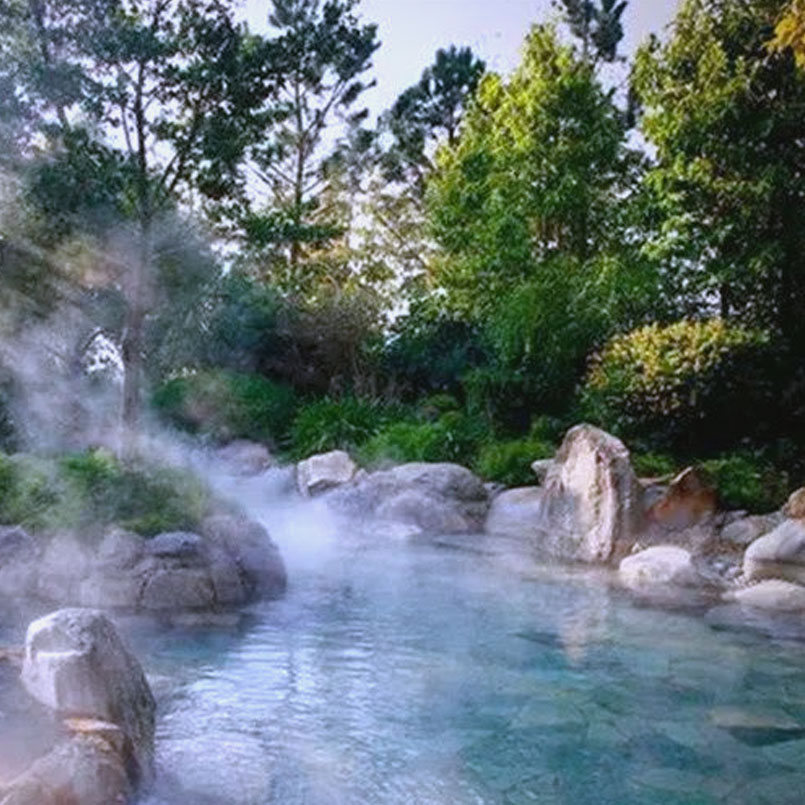
Hot spring therapy is a therapeutic approach that utilizes the combined chemical and physical actions of hot spring water to achieve the treatment and prevention of disease.
The chemical action is manifested primarily in the way the anions and cations, free gases, trace elements, and radioactive substances in the hot spring water continuously stimulate the sensory receptors on the body surface and within the body, improving the regulatory function of the central nervous system. The physical action can be divided into thermal effects and mechanical effects. Thermal effects refer to the beneficial stimulation of skin, the cardiovascular system, respiration, gastrointestinal function, and immune mechanisms by the water temperature. Mechanical effects include the massage-like action on the skin caused by hydrostatic pressure, buoyancy, and the movement of liquid microparticles in the water. These combined effects facilitate the gradual formation of normally coordinated activity in the cerebral cortex, inhibiting and progressively replacing the pathological processes of a disordered organism, thereby enabling chronic diseases to achieve remission or cure.
Currently, the types of hot springs used for medical and healthcare purposes are as follows:
1. Simple Thermals: Water temperature is above 25°C, with free carbon dioxide and total solid content below 1,000 mg per liter. These springs rely mainly on heat for their medical effect. Warm water provides analgesia and accelerates substance metabolism, with certain therapeutic effects on mental and nervous system disorders. Examples include Conghua Hot Spring in Guangdong, Huaqing Pool in Lintong, Shaanxi, and Anning Hot Spring in Yunnan.
2. Carbon Dioxide Springs: Generally refers to geothermal water containing more than 1,000 mg of free carbon dioxide per liter and less than 1,000 mg of solid constituents per liter. This water is colorless, transparent, and refreshing in taste. At low temperatures it can dilate capillaries and lower blood pressure, showing favorable effects on enhancing cardiac function. When used as drinking water, it aids digestion and promotes appetite.
3. Bicarbonate Earth Springs: The combined total of carbon dioxide and solid constituents exceeds 1,000 mg per liter. The main anionic component is bicarbonate, while the principal cations are calcium and magnesium. Calcium ions have anti-inflammatory effects, and besides being effective for mucocutaneous inflammation, they also stimulate the nerves and reduce the permeability of vascular endothelial cells. The spring water can also be used as a beverage.
4. Alkaline Springs: Water containing sodium bicarbonate at over 1,000 mg per liter, colorless, transparent, and pleasant-tasting. The water has a soap-like action, emulsifying sebum and leaving the skin smooth. Moreover, after bathing, body heat is easily dissipated, producing a cooling sensation, hence it is often termed a "cold bath."
5. Salt Springs: Refers to geothermal water with a salt content exceeding 1,000 mg per liter. Based on salt concentration, they can be categorized into weak salt springs, salt springs, and strong salt springs, all producing a pronounced sensation of warmth after bathing. This is because the chlorides of sodium, calcium, magnesium, etc., adhere to the skin forming an insulating layer that prevents body heat loss. Salt stimulation of the skin can dilate cutaneous blood vessels, thereby enhancing surface blood circulation, accelerating sweat and sebaceous gland secretion, and increasing gastrointestinal peristalsis. Salt springs are also very effective for neuralgia, rheumatism, and women's cold sensitivity.
6. Sulfate Springs: Geothermal water containing sulfate salts above 1,000 mg per liter, with a bitter taste. Depending on the type of sulfate, they are classified as sodium sulfate springs, gypsum springs, and bitter springs. Drinking sodium sulfate spring water stimulates the gastrointestinal mucosa, increasing peristalsis and treating constipation. However, long-term consumption may induce chronic enteritis.
7. Iron Springs: Geothermal water containing ferrous bicarbonate. When this water comes into contact with air, iron oxide is produced, forming a red precipitate and turning the water red. The iron in geothermal water largely exists in ionic form, making it readily absorbed and utilized after drinking. The absorbed iron can be utilized for hemoglobin and respiratory enzymes, and can also be stored for future use.
8. Alum Springs: The spring water mainly contains aluminum ions and sulfate ions from aluminum sulfate. This water has anti-inflammatory effects on the skin and mucous membranes and is effective for ulcers and eczema. In addition to bathing, it can be used for inhalation or gargling.
9. Sulfur Springs: Water containing mainly hydrogen sulfide. When the sulfur component contacts the skin, it converts to alkaline sulfide, which can dissolve keratin and soften the skin. Sulfur springs have a killing effect on parasites associated with skin diseases such as scabies and tinea. The vasodilatory effect of this spring water is not only effective on the skin but also has favorable effects on the brain and cardiovascular system. When hydrogen sulfide acts on the mucosa of the trachea and bronchi, it has an expectorant and antitussive effect. Hence, it is sometimes called "expectorant bath water." However, it must be noted that it is not potable.
10. Acidic Springs: Refers to water containing a significant amount of mineral acids. It is particularly important to note that when used for bathing, immersion is generally limited to only 1–3 minutes. Because of its strong irritant effect, ulcers may easily develop in areas such as the armpits. Bathing in this water can increase the number of white blood cells and phagocytes in the blood and enhance the blood's bactericidal action.
11. Radioactive Springs: Springs containing radium and radon at levels above 3.5 ME are termed radioactive springs. These springs generally possess a stimulating effect, particularly exerting a controlling action on tissues with vigorous cell division. Furthermore, they are effective for anemia and bone disorders, and can increase white blood cell count.
This therapy is divided into bathing therapy, drinking therapy, gargling therapy, and spray inhalation therapy.
1. Bathing Therapy: This is further divided into short bathing and long bathing. Short bathing refers to immersion in water at 38°C–39°C for 10–20 minutes per session, or in water at around 42°C for a few minutes per immersion, exiting, resting briefly, and re-immersing, repeated 2–3 times. Long bathing refers to immersion in water at 35°C–37°C for 1–6 hours or even over 10 hours per session. Additionally, it can be categorized into full-body immersion, half-body immersion, hand bath, foot bath, etc.
2. Drinking Therapy: The appropriate type of hot spring and the daily volume are selected according to different clinical patterns, taken 1–2 times a day. Daily volumes are classified as small (100–200 ml), medium (300–400 ml), large (500–600 ml), and maximal (700–1,500 ml). Generally, one starts with a small volume.
3. Gargling Therapy: Warm spring water is placed in a cup for gargling, 3 times a day, each session lasting 2–3 minutes, and the water is expectorated after gargling.
4. Spray Inhalation Therapy: Using a standard nebulizer, the patient opens their mouth facing the jet of atomized spring water vapor, with the mouth approximately 10–15 cm from the nozzle, and breathes deeply. This is done 1–3 times a day, or once every 2–3 hours, each session lasting 10–15 minutes. For those with breathing difficulty, each session is 5 minutes, with 10–15 sessions constituting a course of treatment.
Contraindications and Precautions:
I. Contraindications
- Severe heart disease, tachycardia, extreme debility, acute inflammatory phase, malignant tumors, active tuberculosis, pregnancy, menstrual period, uterine bleeding, etc.
- Severe acute gastrointestinal bleeding, severe hypertension, severe edema, etc.
- Chronic nephritis, significant edema from any cause, liver cirrhosis with ascites, various febrile diseases, severe vomiting, etc.
II. Precautions
- Hot spring therapy is a complex treatment. The selection of the spring, bathing duration and temperature, and the volume of water for drinking therapy must be individualized according to the person and the disease. One must never treat hot spring therapy as ordinary bathing or drinking and proceed casually. A comprehensive medical examination should be conducted beforehand, and the specific spring and therapy should be chosen accordingly.
- During the initial phase (within the first 3–5 days) of hot spring bathing and drinking therapy, a transient (usually lasting several days) phenomenon of lowered health status or disease aggravation, called the hot spring reaction (balneological crisis), may appear systemically or locally. Systemic symptoms mainly include fatigue, malaise, poor sleep, mental unease, palpitations, dizziness, lethargy, lightheadedness, headache, and occasionally fever, vomiting, diarrhea, skin rash, upper respiratory tract infection, and asthma attacks. Local symptoms mainly include intensified pain at the local lesion, limited mobility, local swelling, and local heat. The intensity and specific symptoms of the hot spring reaction vary according to the spring quality, water temperature, and individual constitution. For instance, it is more likely to occur when using hydrogen sulfide springs, sulfate springs, and during very warm bathing; it is also more likely in patients with allergic constitutions, such as those with rheumatic diseases and chronic eczema. If reaction symptoms are mild, adrenocortical hormones and vitamin C can be administered orally or by injection. If the reaction is somewhat severe, hot spring treatment can be paused for a few days. If the reaction is severe or persists for a long duration, it is not considered a hot spring reaction but rather an indication that this therapy is unsuitable and is worsening the condition, and the hot spring therapy must be discontinued promptly.
- Upon arriving at the hot spring therapy (convalescence) site, rest appropriately for a few days before commencing bathing therapy.
- Because bathing on an empty stomach easily leads to collapse, dizziness, and nausea, one should eat before bathing therapy, but avoid overeating.
- Before entering the bath, eliminate any fear or anxiety, and empty the bladder and bowels.
- Plug the external ear canals with cotton balls to prevent bath water from entering the ear canal and causing otitis media.
- Treatment should be suspended under the following circumstances: after violent rage or a completely sleepless night; when body temperature exceeds 37.5°C; within 1–2 days before and 3 days after menstruation; during nausea, overexertion, or palpitations.
- Elderly patients or those with cardiovascular disease should begin with partial baths (half bath, three-quarter bath) before progressing to full-body baths. This is because suddenly immersing the entire body into the bath can abruptly increase the burden on the heart or cause a sharp rise in blood pressure, easily leading to accidents.
- Pay attention to controlling bath temperature and immersion duration, progressing from lower to higher temperatures, and from shorter to longer durations.
- If symptoms such as nausea, palpitations, or dizziness occur during bathing, exit the bath slowly, and rest quietly in a lying position for a while. When entering the bath, the precordial region should remain above the water surface to avoid sensations such as palpitations and chest oppression. Those who are weak should not take cold showers.
