
Body & Nature
Autumn Health in TCM: Preparing for the Season of Metal
As summer heat gives way to autumn dryness, TCM offers a complete seasonal transition guide. Learn how to support your Lungs, protect your immune system, and adjust your diet for the Metal season.
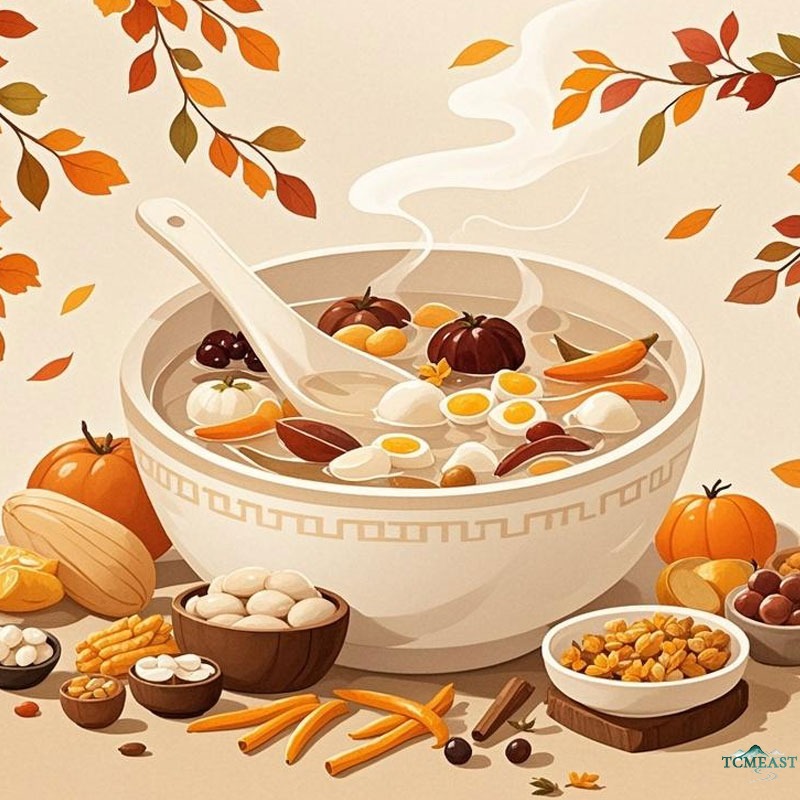
A Personal NoteIn Chinese medicine, each season carries a distinct energy, and autumn is the season of the Metal element — the energy of gathering inward, letting go, and protecting boundaries. The leaves fall, the energy that expanded outward all summer begins to contract, and the body naturally shifts toward storage and conservation. Understanding this seasonal transition has helped me prepare for autumn in ways that simple weather forecasts never could.
Autumn and the Metal Element
In the Five Element system, autumn corresponds to the Metal element, the Lung organ, and the Large Intestine. Its energy is descending, gathering, and releasing.
| Aspect | Autumn Quality |
|---|---|
| Element | Metal (金) |
| Organ | Lung (肺) |
| Paired organ | Large Intestine (大肠) |
| Climate | Dryness (燥) |
| Emotion | Grief / Letting go |
| Color | White |
| Sound | Weeping |
| Direction | West |
The Lung governs the skin and the body surface, making autumn a vulnerable time for the immune system. The dryness of autumn can dry the Lung's protective mucus membranes, and the cooling weather challenges the body's ability to maintain its outer defenses.
Autumn Health Challenges in TCM
Autumn Dryness (秋燥)
The most common autumn pattern. Autumn dryness affects the Lungs first — dry throat, dry cough, dry skin, and dry nasal passages. In TCM, the Lung loves moisture and hates dryness.
Transition from Summer Heat
The body has adapted to summer's heat and humidity. As autumn arrives, lingering dampness from summer may combine with early autumn dryness, creating a transitional period of digestive sluggishness.
Weakened Wei Qi (Defensive Qi)
The shift from warm to cool weather tests the body's surface defenses. Those with weak Lung qi often catch the first cold of autumn as the season changes.
Key Herbs for Autumn Health
Sha Shen (Glehnia or Adenophora, 沙参)
Sweet and cool. Sha Shen is the best herb for autumn dryness. It moistens the Lungs, generates fluids, and stops dry cough. It is specific for the dry, scratchy throat and dry cough of early autumn.
Dose: 10-15g.
Mai Men Dong (Ophiopogon, 麦门冬)
Sweet, slightly bitter, and cool. Moistens the Lungs and generates fluids. Excellent for the combination of autumn dryness and lingering summer heat depletion.
Dose: 10-15g.
Bai He (Lily Bulb, 百合)
Sweet and slightly cold. Moistens the Lungs and calms the spirit. Used for dry cough and restless sleep during seasonal transitions.
Dose: 10-30g.
Xing Ren (Apricot Seed, 杏仁)
Bitter and warm (slightly toxic raw). Soothes cough and descends Lung qi. Use prepared (processed) Xing Ren only.
Dose: 6-10g.
Acupressure for Autumn Health
Fei Shu (BL13, Lung Shu, 肺俞)
Location: 1.5 finger-widths lateral to the lower border of the 3rd thoracic vertebra.
Action: Back-shu point of the Lung. Strengthens Lung qi and protects the respiratory system during the autumn transition.
Lie Que (LU7, Broken Sequence, 列缺)
Location: On the radial side of the forearm, about 1.5 finger-widths above the wrist crease.
Action: The luo-connecting point of the Lung. Releases wind-cold and treats early-stage autumn colds.
Tai Yuan (LU9, Great Abyss, 太渊)
Location: On the wrist crease, on the radial side.
Action: The source point of the Lung. Tonifies Lung qi and is excellent for building respiratory strength.
Zu San Li (ST36, Leg Three Miles, 足三里)
Location: Four finger-widths below the kneecap.
Action: Strengthens the body's defensive qi in preparation for cold weather.
Autumn Tea Recipes
Sha Shen & Mai Men Dong Autumn Moisture Tea
Sha Shen 10g, Mai Men Dong 10g, 1 slice licorice. Simmer in 500ml water for 15 min. Drink throughout the day to prevent autumn dryness.
Bai He & Xing Ren Lung-Soothing Tea
Bai He 10g, prepared Xing Ren 6g, 1 pear (sliced). Simmer in 600ml water for 20 min. Drink warm for dry cough or scratchy throat.
Autumn Dietary Principles
1. Increase Pungent Foods, Reduce Sour Foods
In autumn, the ancient TCM principle is: increase pungent flavors to disperse Lung qi; reduce sour flavors to allow energy to gather inward. Pungent foods include: ginger, scallion, onion, garlic, and peppermint.
2. Emphasize Moistening Foods
- Pears (the quintessential autumn fruit)
- White fungus (snow fungus, 银耳)
- Sesame seeds
- Almonds
- Honey
- Soy milk
3. Reduce Cooling and Raw Foods
As the weather cools, reduce the raw salads and cold foods of summer. Shift toward warm, cooked meals. Congee, soups, and stews support the digestive system as it adjusts to the cooler season.
4. Add Root Vegetables
Autumn is the season of root vegetables — carrots, sweet potatoes, pumpkins, daikon radish, and yams. In TCM, these support the earth element and strengthen the Spleen for the transition.
Letting Go: The Emotional Work of Autumn
Autumn corresponds to grief. This is not accidental — the season naturally invites release. Just as trees let go of their leaves, autumn is a time to let go of what no longer serves us: old habits, unprocessed emotions, accumulated clutter.
In TCM, unresolved grief weakens the Lungs. An autumn practice of intentional release — whether through journaling, meditation, or simply decluttering your physical space — supports both emotional and respiratory health.
