
Demystifying TCM
Medicinal Use of Ground Beetle Requires Sex Differentiation
Tubiechong (ground beetle, Eupolyphaga seu Steleophaga) is an insect-based TCM herb first recorded in the Shennong Bencao Jing. This comprehensive guide covers its name origin, species identification (Eupolyphaga sinensis vs. Steleophaga plancyi), differentiation of females (medicinally used) from males, core actions of breaking blood stasis and healing sinews and bones, clinical applications, modern pharmacological research, and the strict contraindication in pregnancy.
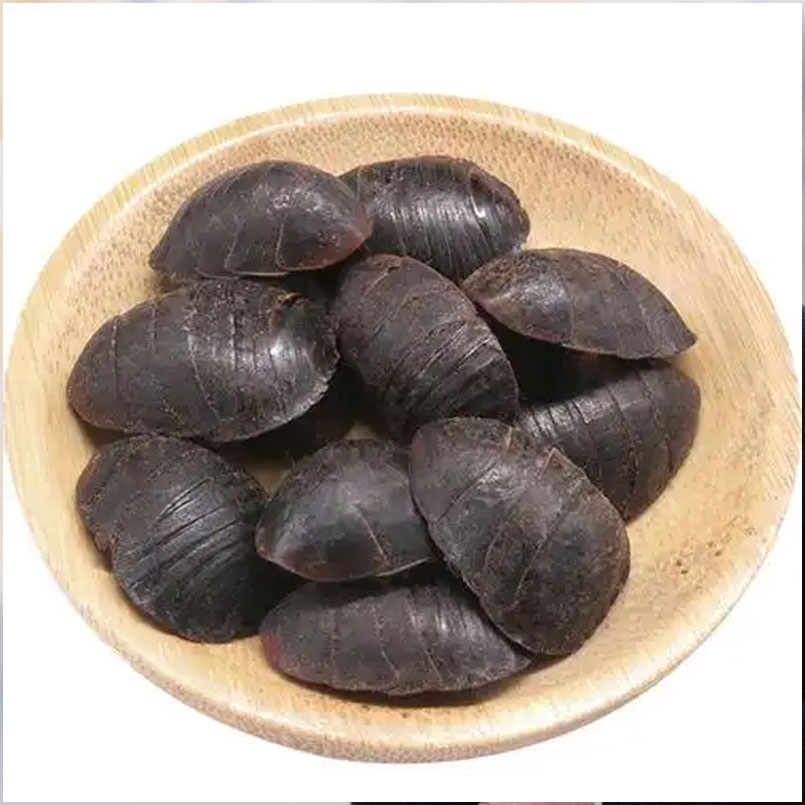
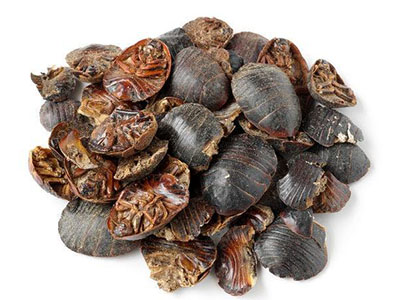
The resources of Chinese materia medica are precious treasures bestowed upon us by nature and traditional Chinese culture. Today, we introduce an insect-based Chinese medicinal — the ground beetle (Tubiechong).
The Origin of the Name Tubiechong
Tubiechong refers to the body of a medicinal insect, also known as Tuyuan, or Zhe Chong. It inhabits the soil. The Bencao Jing Jizhu (Collected Annotations on the Materia Medica Classic) states: "It is flat and resembles a soft-shelled turtle, hence the name Tubiechong (ground soft-shelled turtle insect)." The name derives from its living habits and shape. Tubiechong was first recorded in the Shennong Bencao Jing (Divine Farmer's Materia Medica Classic), where it was listed as a middle-grade herb: "Zhe Chong, salty in flavor and cold in nature. It mainly treats cold and heat in the heart and abdomen, blood accumulation, concretions and conglomerations, breaks hard masses, and resolves blood obstruction. Also called Dibie. It grows in riverine marshlands."
The Source of Tubiechong
This medicinal is the dried body of the female insect of Eupolyphaga sinensis Walker or Steleophaga plancyi (Boleny) of the Corydiidae family. After capture, impurities and soil are removed, and the insects are killed by scalding in boiling water, then dried in the sun or by heat.
Eupolyphaga sinensis: Flat, ovoid shape, 1.3–3 cm long, 1.2–2.4 cm wide, narrower anteriorly and wider posteriorly. The dorsum is purplish-brown, glossy, and wingless. The pronotum is relatively developed, covering the head. The abdominal dorsum has 9 segments arranged in an imbricate pattern. The ventral surface is reddish-brown, the head is small, with one pair of filiform antennae that often detach. The thorax bears 3 pairs of legs with fine hairs and spines. The abdomen has transverse segments. The texture is loose and brittle, easily broken. It has a foul odor and a slightly salty taste.
Steleophaga plancyi: 2.2–3.7 cm long, 1.4–2.5 cm wide. The dorsum is blackish-brown, usually with pale yellowish-brown patches and small black spots along the margins.
Medicinal Use of Female Tubiechong
Tubiechong has the reproductive characteristic of a single mating enabling multiple oviposition cycles — one male can mate with dozens of females. Therefore, when Tubiechong develop to the 7th–9th instar nymph stage, males are culled. This prevents large numbers of long-winged adult males from entering heat and seeking mates, ensuring the peaceful growth of the females. The smaller males that undergo one or two more molts will then coincide in timing with the early-stage females' mating period, allowing them to complete mating.
Differences in Efficacy Between Males and Females
Research on the medicinal efficacy of male Tubiechong is extremely limited, and no definitive results have been found. However, one study has shown significant differences in the content of 17 amino acids between female and male Eupolyphaga sinensis. This provides new scientific evidence for the traditional practice of using only the female insect in medicine.
Differentiating Male and Female Tubiechong
In the marketplace, male Tubiechong nymphs are easily mixed in with female Tubiechong. As mentioned above, only female Tubiechong are used as the medicinal variety, so here are some methods to help distinguish males mixed among the females.
- Distinguishing Point 1: Male nymphs are smaller than females and are slightly lighter in color, appearing brownish.
- Distinguishing Point 2: In lateral profile comparison, the dorsal angle of the male is approximately 40 degrees, whereas the female's dorsal angle is approximately 70 degrees.
- Distinguishing Point 3: The posterior end of the ventral surface is broader in females than in males; males have more transverse ventral segments than females.
- Distinguishing Point 4: Females are wingless. Males, after several molts, develop wings during their final molt and reach maturity.
The Therapeutic Effects of Tubiechong
Tubiechong has the effects of breaking blood and expelling stasis, and reconnecting sinews and mending bones. This medicinal is salty, cold, and enters the blood level, primarily entering the Liver meridian. It has a strong dispersing and wandering nature, allowing it to quicken the blood, reduce swelling, relieve pain, reconnect sinews, and heal bones. It is a commonly used herb in traumatology, particularly for fractures, sinew and bone injuries, and blood stasis with swelling and pain. Clinically, it is often combined with Zi Ran Tong (Pyritum), Gu Sui Bu (Drynariae Rhizoma), and Ru Xiang (Olibanum). In the later stages of fracture and sinew injury, when sinews and bones are weak, it is commonly combined with Xu Duan (Dipsaci Radix) and Du Zhong (Eucommiae Cortex). This medicinal can break blood, expel stasis, disperse accumulations, and unblock menstruation, and is frequently used for patterns of menstrual and postpartum stasis, as well as concretions and conglomerations. For blood stasis amenorrhea and postpartum stasis abdominal pain, it is often combined with Da Huang (Rhei Radix et Rhizoma) and Tao Ren (Persicae Semen).
Modern Research on Tubiechong
Modern pharmacological research indicates that Tubiechong has a health-preserving effect on the cardiovascular and cerebrovascular systems, including lipid-lowering and regulating effects, anticoagulant, and antithrombotic actions. It also has antitumor and antioxidant effects, promotes fracture healing, provides analgesia, and enhances the body's immune function.
Pharmacist's Reminder
Tubiechong and proprietary Chinese medicines containing Tubiechong are contraindicated in pregnancy.
