
Demystifying TCM
"An Nei Rang Wai" (Pacify Within, Repel Without) — How Licorice in Shang Han Lun Inspired a Chinese Idiom
“An Nei Rang Wai” (stabilize the interior to repel external invasion) originates from Zhang Zhongjing’s Shang Han Lun, describing licorice’s ability to fortify the interior while expelling pathogens. This article explores its dual TCM meaning: the therapeutic principle of strengthening zheng qi to eliminate evil, and licorice’s actions of tonifying the spleen, harmonizing medicinals, and more. It also highlights modern findings on licorice’s corticosteroid-like substances and warns against long-term, high-dose use without medical guidance.
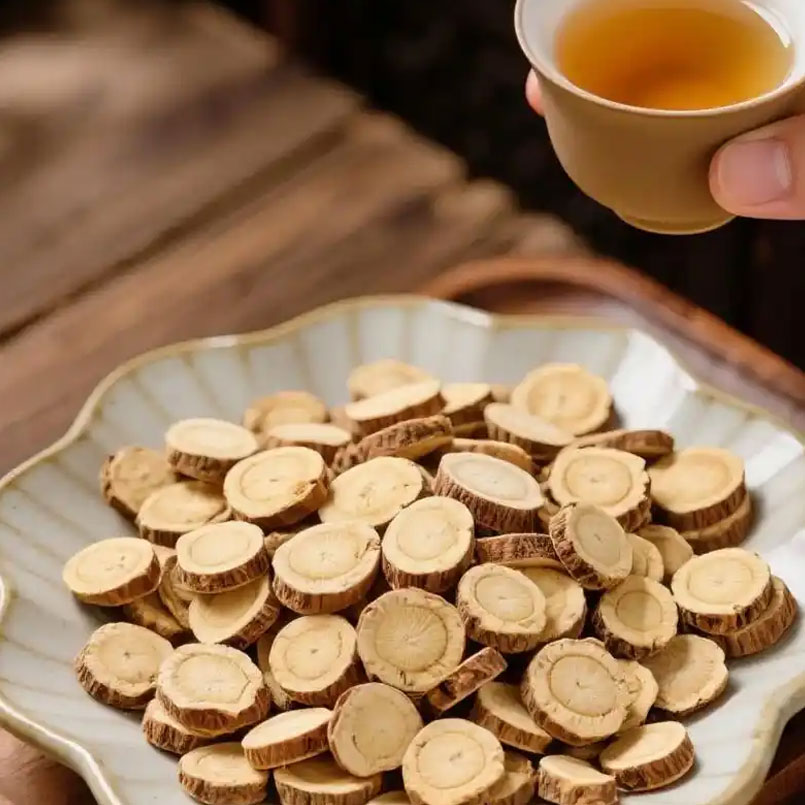
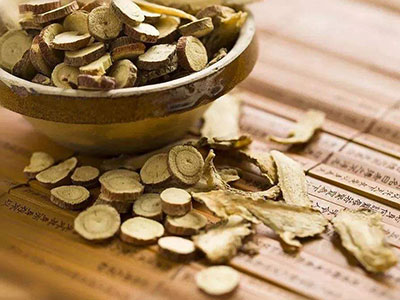
The Chinese idiom “An Nei Rang Wai” (安内攘外) first appeared in Zhang Zhongjing’s Shang Han Lun·Taiyang Disease Part I (Treatise on Cold Damage, Taiyang Disease, Upper Section), which states: “Gancao (licorice) is sweet and neutral; it possesses the ability to stabilize the interior and repel the external invasion (An Nei Rang Wai).” Later, this phrase came to be used more broadly in statecraft, meaning to secure the interior and repel external threats. When extended to Chinese medicine, the idiom carries implications at two levels.
TCM Therapeutic Principle
“An Nei Rang Wai” also reflects the essence of TCM treatment theory. In treating disease, a skilled physician must first understand that while eliminating external pathogens, it is essential to regulate the body’s internal environment. Only when there is sufficient zheng qi (righteous qi) stored within can the elimination of pathogens be achieved with half the effort. The saying, “When the spirit is guarded internally, how can disease arise?” conveys a similar meaning.
The Therapeutic Actions of Licorice
The reason Zhang Zhongjing stated that licorice has the ability to “stabilize the interior and repel external invasion” stems from the sweet and neutral quality of licorice. Licorice is one of the most commonly used medicinal substances in herbal formulas. It functions to tonify the spleen and augment qi, clear heat and resolve toxin, dispel phlegm and stop cough, and relieve spasm and pain. Moreover, it can harmonize and moderate the effects of all other medicinals. Therefore, it has earned the laudatory titles of the “peacemaker” and the “State Elder” (Guo Lao) among Chinese medicinals, holding a considerably high status in Chinese medicine.
Despite its numerous therapeutic effects, prolonged or excessive use of licorice can also lead to toxic side effects. One should not assume that licorice can be used casually simply because of its gentle nature.
Modern medical research on licorice has discovered that it contains corticosteroid-like substances. These substances have the effects of regulating immunity and enhancing resistance. However, long-term, high-dose use can impair the spleen and stomach functions, leading to gastrointestinal disorders; excite the nervous system, causing mental agitation and insomnia; cause water-sodium retention, leading to central (Cushingoid) obesity; elevate blood pressure and blood glucose, resulting in drug-induced hypertension and diabetes; and may also disturb the body’s hormonal balance, potentially leading to drug dependence. Therefore, even though licorice has the therapeutic action of “stabilizing the interior and repelling external invasion,” it must be used rationally under the guidance of a physician. Otherwise, not only will it fail to stabilize the interior and repel external invasion, but it may even endanger health.
