
Demystifying TCM
Theoretical Foundations of TCM Health Preservation
The theoretical foundations of TCM health preservation rest on eight core principles: regulating emotions to nourish the spirit, curbing excessive desires to quiet the mind, moderating sexual activity to preserve kidney essence, adapting to the four seasons to avoid the six climatic excesses, eating and drinking in moderation to protect the spleen and stomach, engaging in regular exercise to promote circulation, according with age-related disposition to gracefully manage aging, and using herbal supplements judiciously to prevent disease. These principles, drawn from classics spanning from the Huangdi Neijing to the works of Tao Hongjing and Sun Simiao, form a systematic framework that cultivates both body and spirit, integrating internal nourishment with external care.
I. Regulating the Emotions (Qingzhi)
For a person to achieve health and longevity, smooth and harmonious emotional regulation is an essential condition. Tao Hongjing, in his Yangsheng Yanshou Lu (Records on Health Preservation and Longevity), stated: “The path of cultivating one's inner nature is to avoid great worry and profound melancholy. This is what is meant by achieving harmony and equilibrium. One who can achieve such harmony will surely enjoy long life.”
II. Restraining Desires
Health preservation requires inner stillness, a state where all myriad anxieties are set aside and only a focused mind remains. It also demands that a person possess noble character and an open, magnanimous heart. Sun Simiao observed: “Those who do not live to a ripe old age, or who suffer untimely death, are all victims of not cherishing themselves — they exhaust their passions and intentions, and pursue fame and profit.” Therefore, those adept at health preservation “do not anxiously chase after their desires,” “hold no reckless thoughts in their hearts,” “in all places and matters, do not seek excess,” and “upon rising in the morning, speak only of good and virtuous matters, not first calculating gains and losses of wealth.”
III. Moderating Sexual Activity
This refers to exercising restraint in sexual life. Human growth and development depend upon kidney essence (jing). When kidney essence is abundant, the life force is strong and resilient, and the body's capacity to resist disease is robust. To protect kidney essence, one must practice moderation in sexual activity. If a person indulges in excessive sexual desire without restraint, essence will inevitably be damaged, the body harmed, and life shortened.
IV. Adapting to the Four Seasons
Humans live within nature, and following the seasonal and climatic rhythms is a vital aspect of health preservation. The Lüshi Chunqiu (Master Lü's Spring and Autumn Annals) states: “Those who attain longevity do not do so by artificially extending a truncated lifespan; rather, they live out their natural term. The task of living out one's natural term lies in avoiding harm.” The term “harm” here refers to unseasonable climatic conditions and extreme weather phenomena such as severe cold, severe heat, severe dryness, and severe dampness — what Chinese medicine calls the “Six Climatic Excesses” (Liu Yin).
V. Practicing Dietary Moderation
The spleen and stomach are the acquired foundation of the body. Irresponsible diet damages the spleen and stomach, leading to frequent illness and premature aging. The Huangdi Neijing extensively discusses the harm caused by dietary intemperance: “The generation of yin is rooted in the five flavors”; “When food and drink are excessive, the stomach and intestines are harmed”; “Excessive consumption of salt causes the vessels to congeal and stagnate, changing their color; excessive bitterness causes the skin to wither and body hair to shed.” Sun Simiao's discussions on dietary principles are even more comprehensive and scientifically grounded. Beyond common knowledge such as “never eat to absolute fullness; food should be simple and measured,” “food should always be warm,” and “prefer light, clear, sweet, and mild items,” he also placed great emphasis on dietary methods and hygiene, writing: “Fine foods should be thoroughly chewed; raw foods should not be coarsely swallowed”; “Do not speak loudly while eating”; “After each meal, massage the face and abdomen with your hands”; “Do not eat raw vegetables, raw grains, small beans, or stale, spoiled items; do not drink unfiltered wine”; “Never eat raw, sticky, or slippery items,” and so forth. These precepts hold positive and significant meaning for avoiding damage to the spleen and stomach, preventing food poisoning and infectious diseases, and even dispelling illness and prolonging life.
VI. Engaging in Regular Exercise
The human body is an organic whole. Regular exercise will keep one's energy abundant and the body strong and healthy. As early as the Han dynasty, Hua Tuo advocated physical training to strengthen the body and prevent disease. He pointed out: “The human body requires physical exertion. Through movement, the essence derived from food is properly digested, the blood and vessels circulate freely, and disease cannot arise.” Sun Simiao, in his Qianjin Yao Fang (Essential Formulas Worth a Thousand Gold Pieces), also wrote: “The path of cultivating one's nature requires constant, gentle exertion”; “The body should be regularly active, but never driven to utter exhaustion.” He urged people to frequently exercise their sinews and bones to dispel illness and extend their years.
VII. Acceding to One's Age-Related Disposition
This means that to achieve health and longevity, one must care for oneself according to the natural patterns of each stage of life. Sun Simiao analyzed the elderly, observing: “For those over fifty, yang qi declines day by day, and losses accumulate with each passing day. Mental strength gradually wanes, forgetting what is behind and mislaying what is ahead; one grows indolent and disinclined to activity, and neither plans nor endeavors prove satisfying. Vision and hearing become unsteady, with more decline than improvement. The days and months pass unevenly, and all affairs seem to wither away. The mind grows listless and weary, prone to forgetfulness and irascibility, and one's very disposition changes.” This reminds us that upon entering old age, a person undergoes a series of physiological and morphological changes. We should care for and show compassion toward the elderly, accommodating their disposition and adjusting accordingly, in order to help them peacefully enjoy their remaining years.
VIII. Taking Herbal Preparations and Supplements
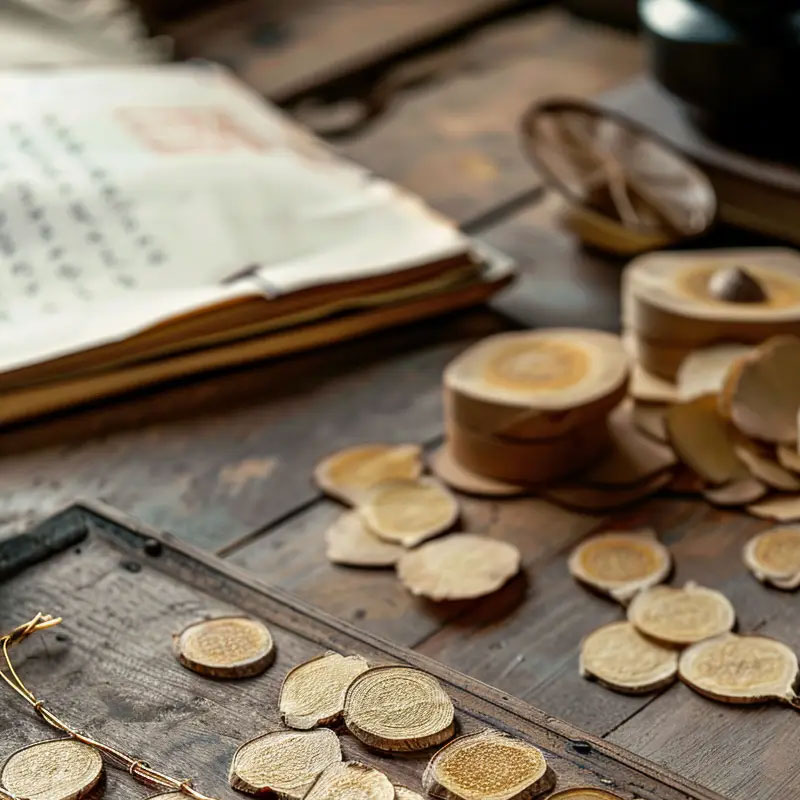
Each person is endowed with a unique constitution at birth, and diseases are merciless and will inevitably cause harm. Therefore, consuming appropriate medicinal preparations and supplements also forms a part of health preservation practice. The ancients valued the use of herbal remedies and supplements to prevent and treat disease, maintain health, and prolong life, devising many longevity-enhancing formulas and elixirs. However, health preservation must not rely solely on taking herbs and supplements. Otherwise, “although one may frequently consume medicinal preparations, if one does not understand the art of cultivating one's nature, it will still be difficult to achieve longevity”; and “even if one drinks jade elixir and golden pills, one cannot thereby extend the lifespan.”
